





















Mounting surveillance lenses around residential properties has become standard practice for household safety, yet using such equipment to watch neighboring premises crosses legal lines. Addressing the friction between property protection and personal boundary rights, the Allahabad High Court ruled that private homeowners cannot angle security devices in ways that spy on the daily comings and goings of adjacent households.
Judicial stance on surveillance boundaries
A division bench comprising Justice Ajit Kumar and Justice Garima Prasad clarified the legal boundaries governing home surveillance technology. The judges underscored that the law gives no resident permission to intrude into another family's domestic domain. Outlining this position in its formal ruling delivered on October 26, the bench noted,
"In our view no private CCTV camera can be installed so as to infringe the privacy of a neighbour."
Pathway monitoring sparked legal battle
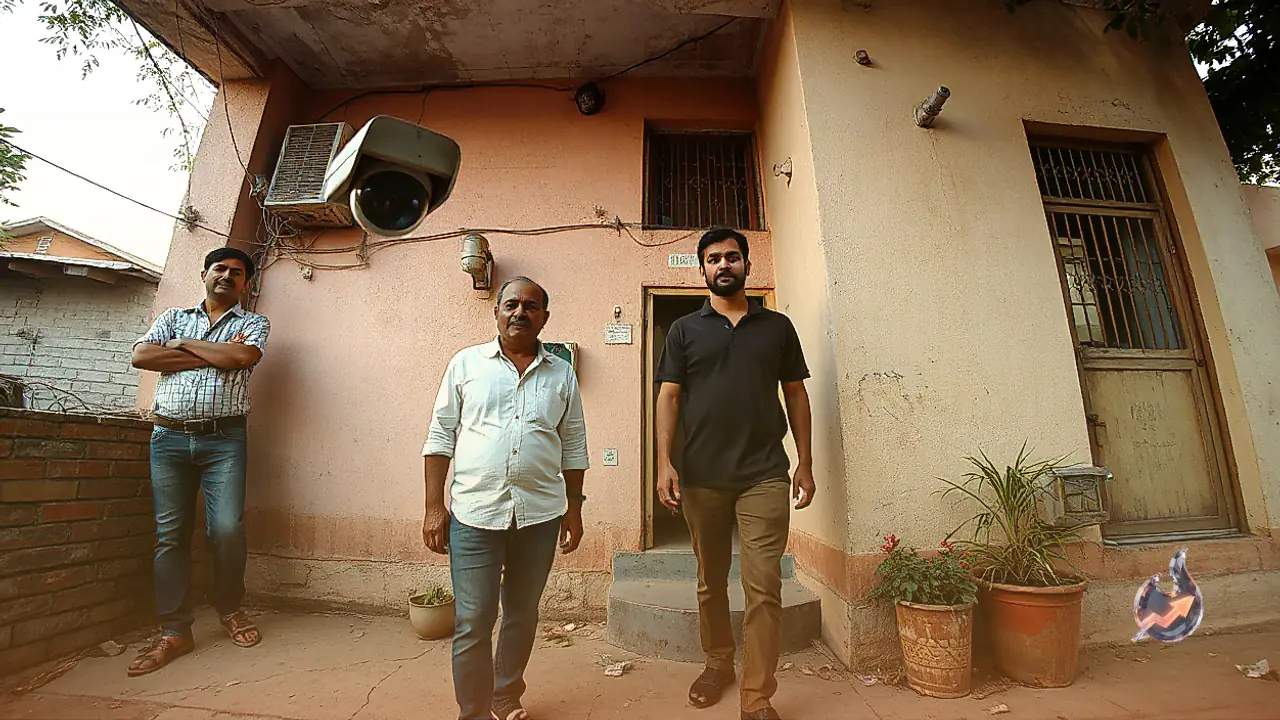
The litigation reached the bench through a writ petition moved by local resident Yogendra Maurya, who challenged the specific positioning chosen by his next-door acquaintance. Maurya pointed out that the lens orientation placed his private entrance and primary transit route under continuous visual recording.
According to the petition, keeping the entry path under constant lens scrutiny effectively monitored family members as well as visiting guests. The complainant argued before the judges that such persistent observation severely compromised everyday domestic life and represented a direct breach of constitutional privacy guarantees.
District administration granted 30 days to resolve issue
After evaluating the submissions placed on record, the high court chose not to issue an immediate blanket direction to dismantle or adjust the hardware directly from the bench. Instead, the division panel opted for a localized administrative resolution mechanism.
The judges instructed the petitioner to present a formal representation before the competent District Magistrate. Under the high court mandate, the administrative chief must examine the factual setup and deliver a final decision within exactly one month from receiving the grievance papers.