




















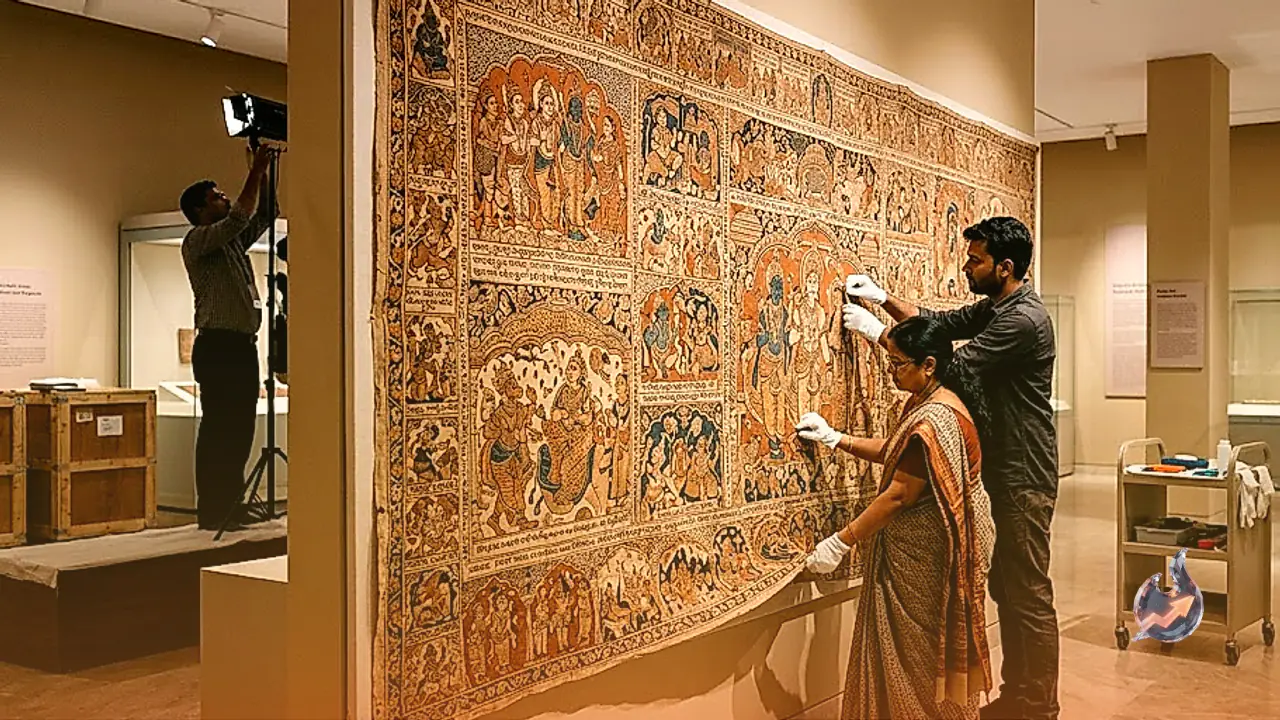

A historic artifact dating back three centuries, portraying the epic narrative of Lord Ram, is being prepared for public viewing at the International Ram Katha Museum in Ayodhya. Crafted in the traditional South Indian Kalamkari tradition, this rare textile artwork captures the entire chronicle of the Ramayana through intricate visual illustrations. The precious piece underwent an intensive six-month restoration and conservation project to protect its delicate fabric, paving the way for its upcoming public unveiling.
Eighteenth-Century Block Printing Heritage
According to registered archival documentation maintained by the museum, the piece dates back roughly 300 years to the 18th century. Executed on woven cotton fabric utilizing traditional block printing methods, the textile portrays diverse episodes and foundational sequences from the epic with meticulous attention to detail. The artifact is notably large, measuring approximately 17.5 feet in length and roughly 6 feet in width. Preserving an entire narrative cycle across a canvas of this magnitude highlights the extraordinary skill of the regional artisans of that era.
The Kalamkari Tradition of South India
Kalamkari represents a celebrated legacy of Indian visual culture rooted in southern regions, with its primary historical centers established at Srikalahasti and Machilipatnam in Andhra Pradesh. Rendering the sacred Ramayana lore on fabric using this ancient craft stands as an enduring reflection of India's cultural heritage and artistic ingenuity. Because natural textiles face progressive deterioration over centuries, dedicated conservation efforts were carried out over the past half-year to stabilize the structural integrity of the cloth and pigment.
Depiction of Ram Darbar and Visitor Access
Sanjeev Singh, Director of the International Ram Katha Museum, shared that this 300-year-old work features an elaborate representation of the complete Ram Darbar. Following careful conservation protocols, the artwork is being safeguarded within the institution's permanent collection. The forthcoming display will offer pilgrims, researchers, and global tourists traveling to Ayodhya an opportunity to study this tangible connection to historical storytelling and craft traditions.