















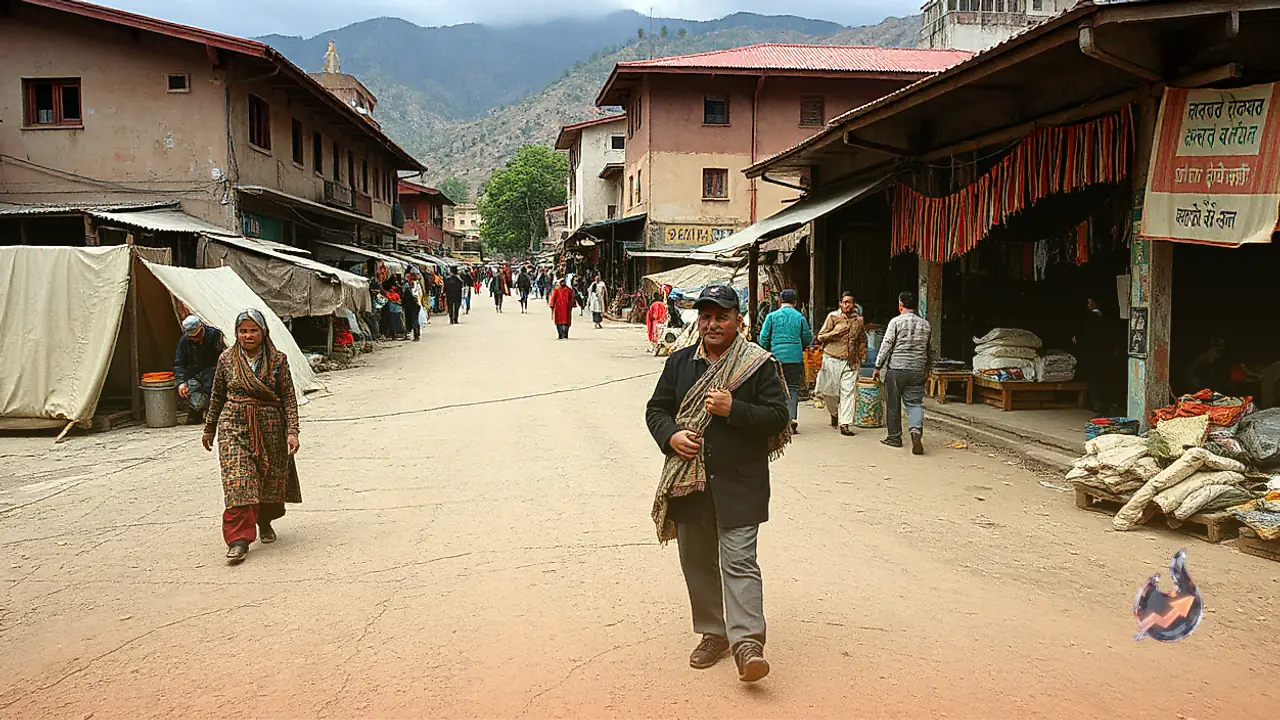

Nainital is globally renowned for its scenic lake, natural beauty, and historical heritage. However, the cultural identity of this hill station is not limited to local mountain traditions alone, as it also bears a distinct imprint of Tibetan culture. The famous Tibetan market in Nainital, its commercial history, and the lifestyle of the Tibetan community hide a compelling tale of struggle, displacement, and survival. The Himalayas have served as a bridge for trade, religious journeys, and cultural exchanges between India and Tibet for centuries. The Kumaon region also maintained long-standing commercial ties with Tibet, through which traders, travelers, and traditions crossed paths. This historical connectivity laid the groundwork for the blending of diverse cultures across Himalayan regions.
The Beginning of Permanent Settlement After 1959
The crucial chapter of the Tibetan community's permanent settlement in Nainital began primarily after the year 1959. Due to political turmoil in Tibet, a large number of Tibetans were forced to leave their homes and seek refuge in India. Subsequently, Tibetan communities settled in various parts of the country. Nainital was among these locations where Tibetan families gradually rebuilt their lives and established a new beginning.
Growth of Tibetan Families Between 1960 and 1970
Yashi Thupten, President of the Nainital Tibetan Market Federation, explains that around 1960, some Tibetans started arriving in Nainital. In the early days, their stay was temporary. They would spend time in Nainital and migrate towards areas like Haldwani, Haridwar, and Dharamshala during the winter season. According to him, the presence of the Tibetan community in Nainital began to increase between 1960 and 1970. However, those families faced major challenges in securing livelihoods and settling down permanently. During the initial period, Tibetans went door-to-door selling woolen products and garments. Many people also hawked goods along Nainital's Mall Road and neighboring areas such as Bhimtal and Bhowali.
Letter to Indira Gandhi and the Establishment of the Market
Yashi Thupten shares that in the early years, Tibetan traders often struggled to secure permission from local administration to set up shops. Recognizing the urgent need to secure permanent employment and trade arrangements for the community, his father established a branch of the Tibetan Youth Congress in Nainital in 1970. According to him, the very first branch of the Tibetan Youth Congress was founded in Dharamshala. Following this, demands for permanent shop allocations for Tibetans living in Nainital were raised, and a letter was sent to the then Prime Minister Indira Gandhi. As Yashi Thupten notes, shops were eventually allocated to members of the Tibetan community in 1983 through the hands of the then Governor of Uttar Pradesh. Since then, shops have operated year-round in the Tibetan market, providing the community with a stable economic foundation.
The Tibetan Community Remains Part of Nainital's Identity
According to Yashi Thupten, around 45 Tibetan families were living in Nainital around 1983. Over time, some of these families moved to Dharamshala in Himachal Pradesh and other cities in Uttar Pradesh. Presently, he states that roughly 38 Tibetan families reside in Nainital. Today, the Tibetan market is not merely a shopping destination, but an integral part of the city's multicultural identity. The shops here narrate the story of the Tibetan community's struggles, hard work, and relentless efforts to keep their traditions alive.