























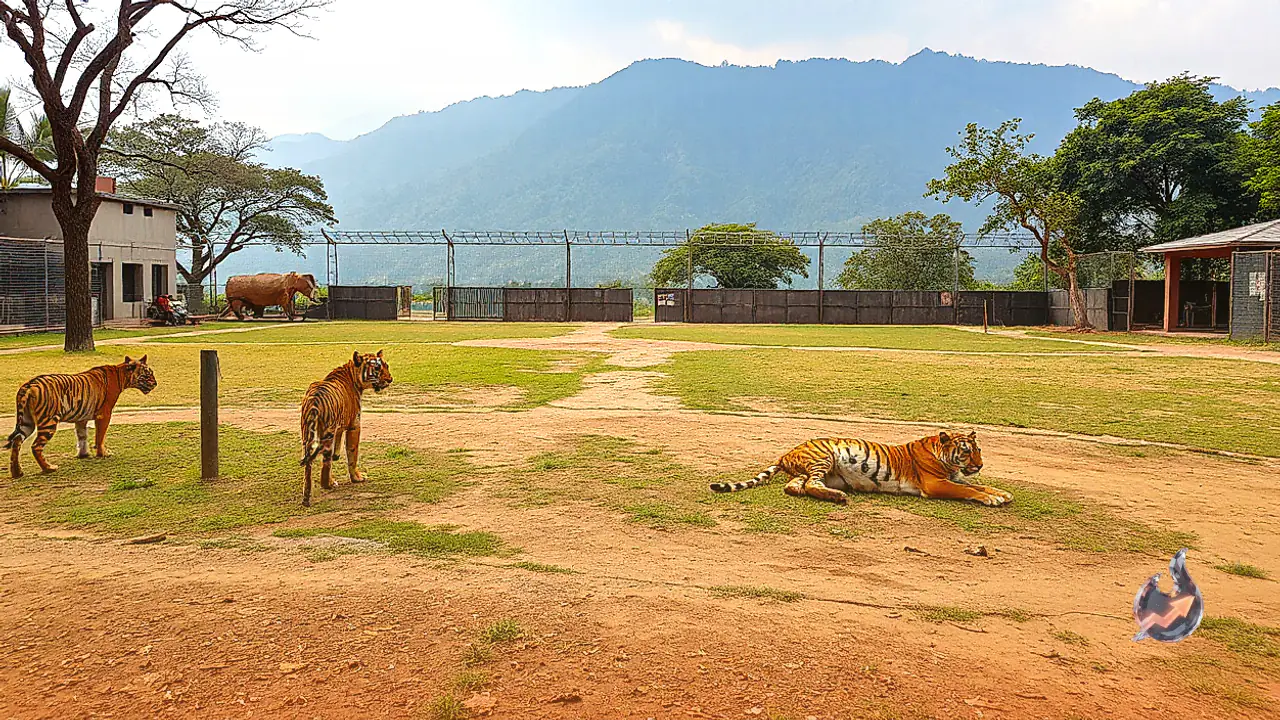

In an effort to keep captive carnivores fit and metabolically healthy, officials at the high-altitude Nainital Zoo and Ranibagh Rescue Centre in Uttarakhand have put their resident tigers and leopards on a carefully controlled dietary regimen. Much like human dietary routines designed for physical wellness, these majestic predators observe a scheduled fasting period once every week. Every Tuesday serves as a mandatory fasting day during which meat supplies are completely paused. The core objective behind this weekly pause is to keep their digestive systems balanced and avoid the dangerous accumulation of excess body fat. The structured diet chart was formulated specifically to address the sharp contrast between hunting in the wild and living within enclosed enclosures.
Wild Hunting Dynamics Versus Life Inside Enclosures
In their natural forest habitats, apex predators such as tigers and leopards must roam across vast expanses of rugged terrain simply to secure their next meal. Tracking, stalking, chasing, and bringing down prey requires immense physical exertion, burning a tremendous number of calories. Their metabolic systems in the wild are naturally conditioned to handle feast and famine cycles. After consuming a heavy kill, wild predators often go without food for several days at a time while resting and digesting. That natural gap provides their gastrointestinal systems with ample time to fully break down heavy meat and eliminate metabolic wastes before embarking on the next hunt.
Life in captivity presents a completely opposite reality. Within the boundaries of Nainital Zoo and the rescue facility in Ranibagh, the spatial movement of these big cats is restricted to fenced paddocks and night shelters. They face zero survival pressure and are not required to exert physical effort to procure food, which arrives on a fixed schedule. If high-calorie meat were provided every single day without interruption, the reduction in physical activity would inevitably trigger severe obesity. Gaining excess fat exposes big cats to lethargy, severe joint stress, cardiovascular strain, and persistent digestive complications. Introducing an intentional gap mimics their evolutionary feeding patterns and maintains their physical vitality.
Formulation Under Central Zoo Authority Norms
According to Dr. Himanshu Pangti, the attending veterinary officer at Nainital Zoo, the nutritional intake of all housed tigers and leopards is strictly calibrated in accordance with regulations established by the Central Zoo Authority. The feeding schedule is designed around the physiological demands of the animals, their respective ages, and their physical conditioning.
Under the established weekly feeding plan, these carnivores receive fresh red meat five days a week, followed by a lighter and easily digestible meal of chicken on one day. On the seventh day, specifically Tuesday, solid food is omitted entirely from their enclosures. Dr. Pangti explained that this weekly rest period allows the animals digestive tracts to recover and resets their metabolic balance. Because conditions inside a zoo cannot fully duplicate the harsh realities of the wild, a scientifically designed diet chart remains the most effective tool for preventing lifestyle diseases among captive carnivores.
Daily Portions Adjusted by Age and Body Size
Rather than providing uniform servings across all enclosures, the zoo administration customizes meal sizes based on individual species requirements and physical condition. Official figures show that an adult tiger is allotted approximately eight kilograms of meat per day. For leopards, the ration depends heavily on size: a large adult leopard receives around five kilograms of meat daily, whereas a smaller or younger leopard is fed approximately two and a half kilograms.
The carnivores currently sheltered across the zoo and the Ranibagh centre range between two and 12 years of age. Veterinary staff regularly track each animal's weight, mobility, muscle tone, and general behaviour. Whenever an individual displays symptoms of illness, stress, or sluggishness, adjustments are promptly made to its portion size and composition. Daily inspections also ensure that the meat served meets rigorous standards of freshness and hygiene.
Resident Population at Nainital Zoo and Ranibagh
At present, the Nainital Zoo houses a total of three tigers, comprising two males and one female, alongside six leopards. In addition, the Ranibagh Rescue Centre cares for one tigress as well as several rescued leopards that were brought in from human conflict areas or situations requiring specialized intervention.
Caregivers take deliberate steps to enrich their enclosures with natural rock formations, trees, and elevated platforms to encourage climbing and movement. Combining environmental enrichment with a structured nutritional calendar helps these animals maintain muscle strength and alertness despite being away from the open wilderness.
Contrasting Life Expectancy Between Forests and Zoos
Anand Lal, a forest range officer at Nainital Zoo, highlighted the marked difference in life expectancy between free-roaming predators and those maintained under managed care. Wild tigers and leopards navigate a relentless series of threats throughout their existence, including territorial clashes with rival predators, seasonal food shortages, poaching perils, and untreated bacterial or parasitic infections. Due to these persistent hardships, a tiger in the wild typically reaches an average lifespan of about 15 to 16 years, while a wild leopard lives for approximately 14 to 15 years.
In a managed zoological environment, however, animals are shielded from fatal territorial battles and environmental deprivation. They benefit from continuous nutritional monitoring, balanced diets, clean drinking water, and immediate medical care whenever an illness or injury arises. Preventive medications and vaccinations further enhance their resilience. As a direct result of this attentive care and disciplined diet management, captive big cats can achieve a life expectancy of 18 to 20 years, far exceeding their wild counterparts.
Responsible Care Beyond Mere Feeding
The operational protocol implemented at Nainital Zoo illustrates that modern wildlife management involves much more than simply keeping feeding troughs full. Effective conservation and animal husbandry require an in-depth understanding of animal biology, energy expenditure, and digestive physiology. Instituting a weekly fasting day is neither an act of deprivation nor arbitrary cost-cutting; it is a medically proven wellness practice that safeguards these powerful predators against obesity and metabolic strain, ensuring they enjoy long and robust lives in human care.