



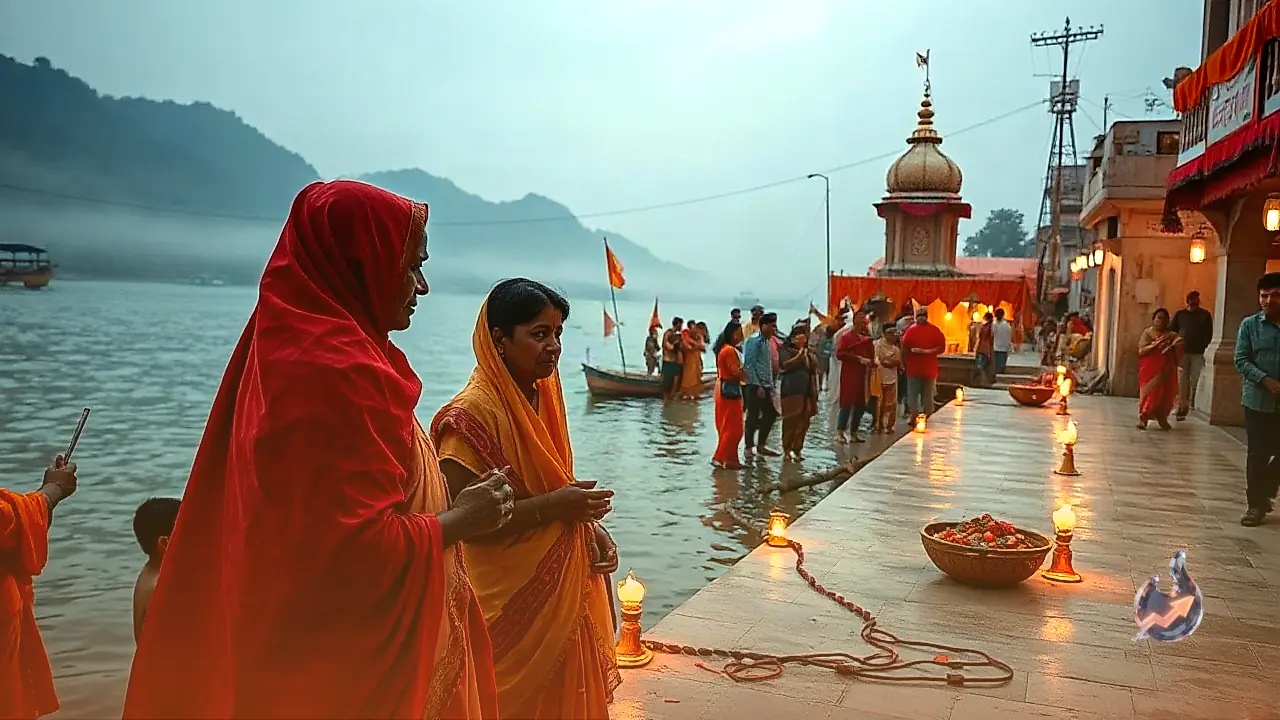
















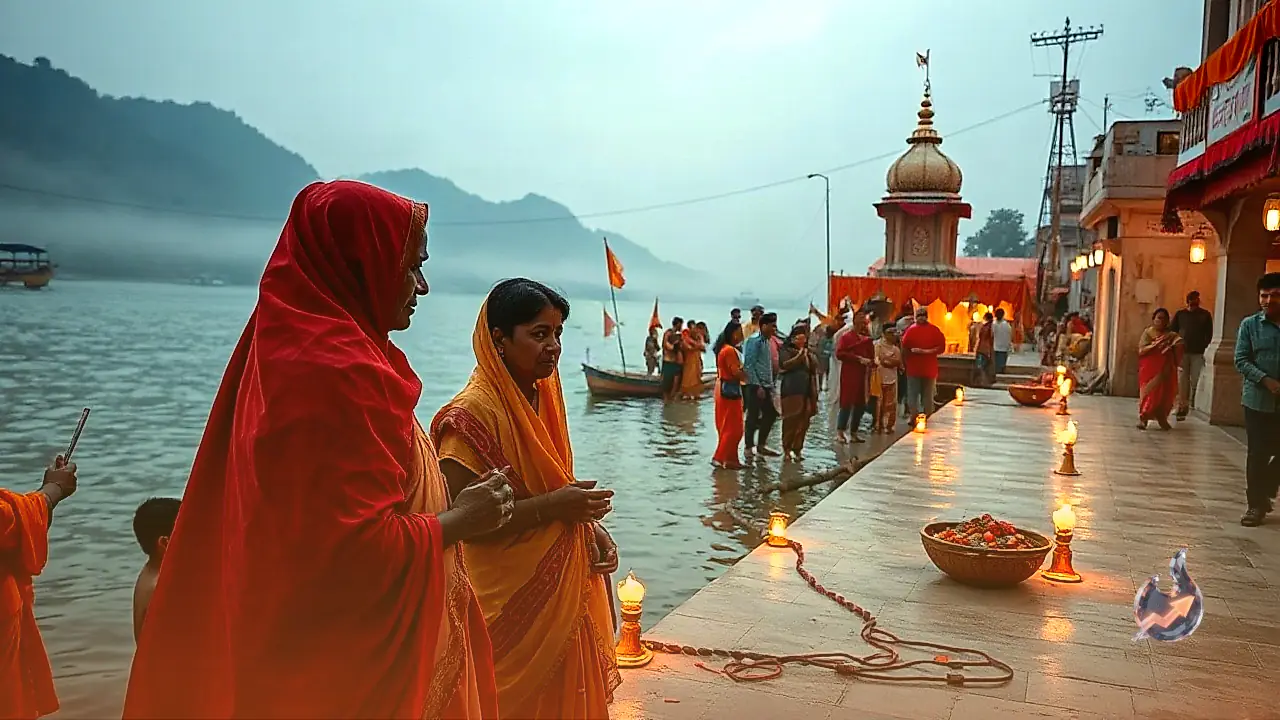

A family from the Pilibhit district of Uttar Pradesh formally embraced Sanatan Dharma during a religious ceremony conducted at Chandi Ghat along the banks of the Ganga in the pilgrimage city of Haridwar. Mahid traveled to Haridwar accompanied by his wife, Sabina, and their three children to complete the transition through traditional Vedic practices, including holy dips, Ganga worship, and sacred havan rituals. The spiritual transition took place under the guidance and inspiration of Sant Ramvishal Das from the Teerth Seva Nyas.
Vedic Ceremonies and Renaming on the Riverbank
The religious proceedings took place on Thursday beside the sacred river, where the family took part in purification bathing followed by structured fire offerings and prayers. In accordance with traditional customs, an official naming ceremony was also carried out for the family members. Following the rituals, Mahid was given the new name Mohit, while his wife Sabina Bibi was designated with the name Khushi.
Voluntary Decision and Personal Faith
Addressing the gathering after concluding the rituals, Mohit stated that his decision to adopt Sanatan Dharma was entirely voluntary and taken of his own free will without any external pressure. He remarked that he was deeply moved by the compassion, mutual respect, and benevolence intrinsic to the faith, which motivated him to take this step alongside his household.
Observing Cultural Traditions over Time
His wife, Sabina alias Khushi, explained that their inclination toward Sanatan traditions was not sudden, as the family had already been participating in Hindu customs and celebrating its festivals for an extended duration. She noted that these practices provided a sense of spiritual calm and mental peace, leading them to bring their children to Haridwar to formalize their integration into the community.
Guidance by Sant Ramvishal Das
Sant Ramvishal Das of Teerth Seva Nyas confirmed that the family arrived at this resolution after understanding the tenets of Sanatan Dharma independently. He explained that once the holy bath in the Ganga and the havan rites were concluded, the formal naming ceremony was administered to mark their complete transition into the religious fold.