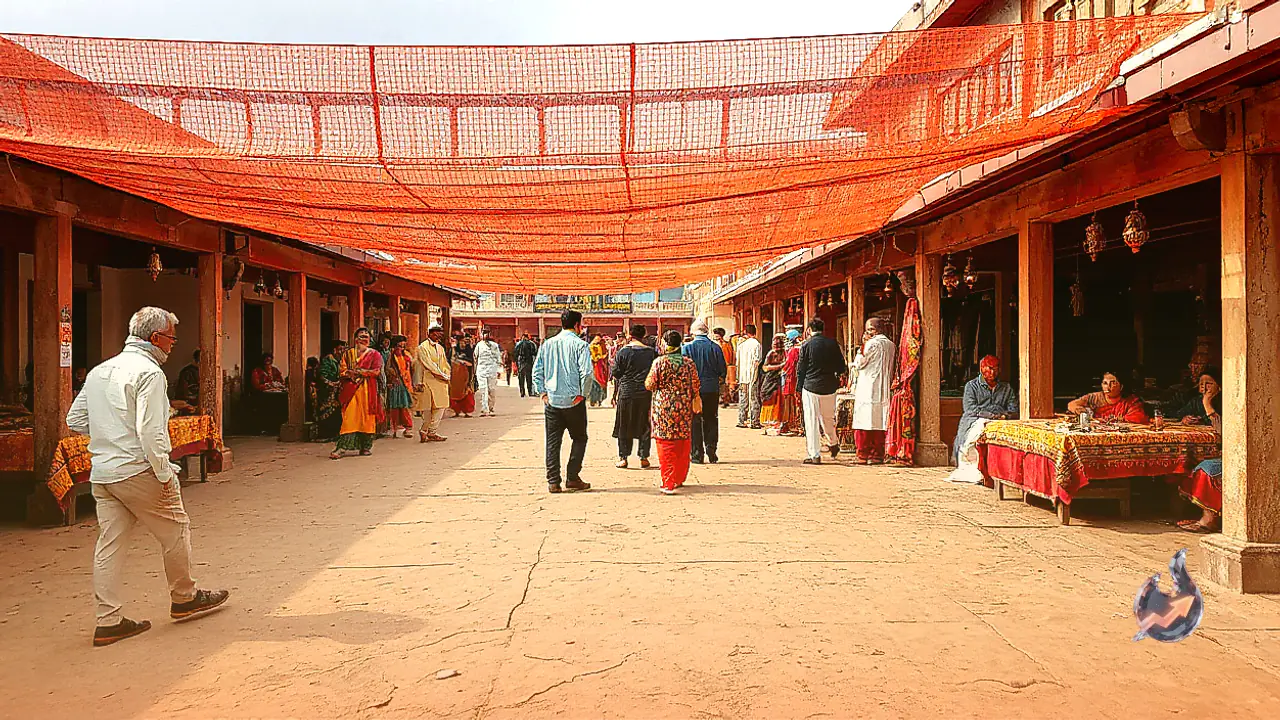





















Local products originating from the mountains of Uttarakhand hold a distinct identity of their own. The pure mountain honey found here is widely recognized not only for its rich taste but also for its natural quality. Visitors frequenting the Saras Market in Bageshwar often purchase this honey directly from local farmers and women associated with self-help groups. This honey represents far more than just a sweet condiment as it remains deeply tied to the hard work of villagers and traditional mountain livelihoods.
Three Annual Harvest Seasons
Santoshi Devi, a local trader, explains that a wide variety of local goods are sold at the Saras Market, with mountain honey standing out as a primary item. Farmers and villagers in rural areas extract honey using traditional methods, which is then transported to the market via self-help groups. This structured channel gives villagers a reliable platform to sell their produce. Honey in these mountainous regions is extracted during three specific months of the year, namely April, July, and November.
Why November Honey Commands a Premium
Among all seasonal extractions, the honey harvested in November is considered the finest in quality. While standard honey sells during normal months for ₹1200 per kilo, the specialized November harvest fetches up to ₹1500 per kilo in the market. Santoshi Devi, who operates a shop in the Bageshwar Saras Market, sources this honey directly from villages to sell to consumers. This arrangement ensures that rural producers find a ready market for their harvest while local women secure valuable employment opportunities.
The Role of Women Self-Help Groups
Honey extraction in the villages primarily takes place around July and October, periods that witness higher availability. Women in these self-help groups procure the honey from rural producers during these exact months, storing it before bringing it to the marketplace. Proper preservation of honey is equally vital, requiring it to be stored in clean, dry places inside tightly sealed containers to maintain its integrity.
Checking Quality and Source
The overall quality of honey depends heavily on its purity, moisture content, and storage conditions. Consequently, buyers must inquire about its source and quality parameters before making a purchase. This practice guarantees that consumers receive genuine traditional mountain produce while continuing to support the livelihoods of hardworking rural women.
Distinguishing Pure Honey from Adulterated Variants
Consumers purchasing honey often wonder whether the product they are buying is authentic or fake. Relying solely on color, thickness, or taste is never sufficient to determine the purity of honey. Buyers should always ask shopkeepers about the exact origin of the honey and the person responsible for producing it. When buying packaged honey, checking the listed ingredients, packaging date, and other essential details is strongly advised.
Laboratory Testing is Most Reliable
The color and thickness of honey can vary depending on the types of flowers visited by bees and changing seasonal conditions. Merely observing a thick consistency does not prove that honey is entirely pure. Common household methods, such as dropping honey in water or attempting to burn it, cannot reliably establish authenticity. Laboratory testing remains the single most trustworthy method to accurately detect any adulteration present in honey.