














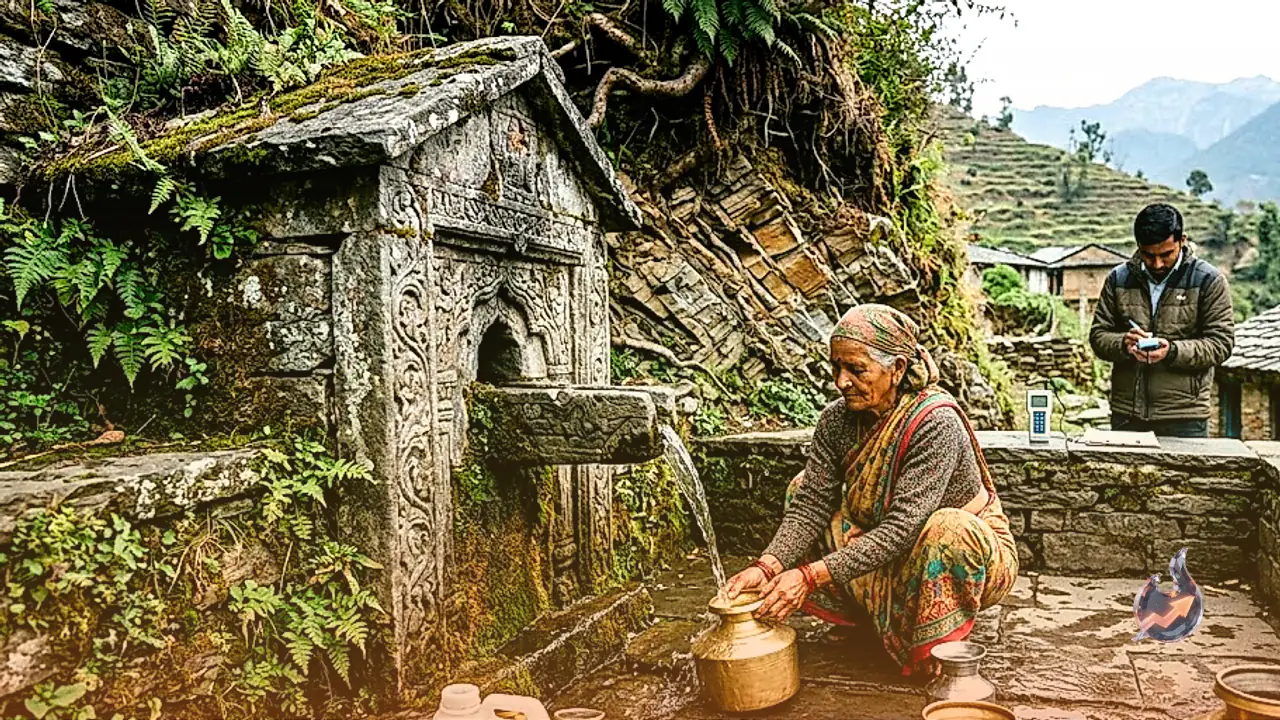

Across the mountain hamlets of Uttarakhand, natural freshwater springs have quenched the thirst of mountain communities for generations. In rural valleys, traditional spouts known as dhaaras, stone-built step springs called naulas, and small cascading streams remain an inseparable part of daily subsistence and rural heritage. Even during the scorching summer months when many surface rivers run low, several of these natural outlets continue to yield cold, clear water without interruption. Behind this enduring mountain flow lies the natural hydrological cycle, the intricate geological structure of Himalayan rock formations, and the silent mechanisms of deep subsurface water accumulation. However, not every mountain spring maintains a perennial discharge throughout the year.
The Subsurface Hydrogeology of Mountain Spring Water
Understanding how mountain springs survive demands a closer look at seasonal precipitation patterns across higher elevations. According to Kishan Malra of Bageshwar, monsoon cloudbursts and heavy winter snowfall provide the fundamental water volumes that feed these natural reserves. While a portion of the rainfall cascades down mountainsides into ravines and river valleys as surface runoff, a substantial share filters downward through forest topsoil, woodland floors, and fracture lines within underlying bedrocks.
As moisture percolates into the subterranean terrain, it accumulates within rock fissures, joint networks, and permeable sediment layers. This natural underground retention process creates a dynamic groundwater reservoir. Whenever subterranean moisture navigates downward through internal inclines and intercepts an opening on the slope face, it re-emerges at the ground surface as a freshwater spring, streamlet, or traditional spout.
Why Mountain Springs Continue Flowing Through Arid Summers
Even when summer heat peaks and rainfall becomes rare, select mountain outlets continue discharging consistent streams of water. Kishan Malra explains that the primary reason rests in the gradual, regulated release of subterranean aquifers. Water absorbed deep beneath the ground during the monsoon season and chilly winter months gradually seeps through subterranean fissures, maintaining stream flow for long stretches of time.
Dense broadleaf canopies, rich soil moisture levels, and the natural orientation of bedrock fractures exert a direct influence on how efficiently surface precipitation sinks into the terrain and traverses the underground strata. In valleys where natural subsurface water storage remains intact and undisturbed, natural spouts can sustain steady water discharge over extensive seasonal periods.
Cultural Reverence and Architectural Heritage of Naulas and Dhaaras
In Uttarakhand, traditional naulas and dhaaras represent far more than ordinary drinking water installations; they remain deeply intertwined with local folklore, heritage, and sacred community bonds. Kishan Malra observes that ancestral villagers constructed elaborate stone chambers around naulas using dressed masonry. In numerous settlements, spiritual motifs, protective stone carvings, and deities were installed near the water reservoir to instill a sense of shared veneration.
By treating these water sanctuaries as sacred cultural spaces, local communities cultivated a collective duty of stewardship. Village communities regularly maintained, cleaned, and guarded these freshwater precincts against contamination. Consequently, water preservation became an intrinsic habit of local culture and communal life for generations across the region.
Environmental Pressures and the Urgent Need for Water Safeguards
In modern times, changing climate dynamics, erratic rainfall patterns, forest degradation, and intensifying infrastructure construction have placed immense pressure on these vital mountain water systems. Safeguarding and rehabilitating these natural water bodies has therefore become paramount. Preventing garbage dumping near natural springs, halting dirty runoff discharges, and eliminating damage to upstream catchment areas are critical interventions needed today. Protecting indigenous vegetation and natural forest cover is equally essential to keep the broader hydrological system functioning smoothly.
Furthermore, even water that seems crystal clear to the naked eye can harbor pathogenic microbes or other concealed contaminants. Routine physical cleaning of the spring structures, regular chemical and biological testing of the water supply, and appropriate household water purification steps are essential safeguards. Traditional dhaaras and naulas form an invaluable hydrological legacy of the mountains that requires active community protection.