





















In an unprecedented turn for modern American military justice, the United States is preparing to carry out a capital sentence in full public view. Nidal Malik Hasan, the former army officer convicted of massacring 13 individuals at the Fort Hood military installation in Texas back in 2009, is scheduled to receive the death penalty before a watching world through a live broadcast. Publicly visible executions largely disappeared from American practice nearly a century ago and remain confined to a minimal handful of territories worldwide, including Iran, North Korea, and Taliban-led Afghanistan.
Defense Department Directive and Execution Timeline
United States Secretary of Defense Pete Hegseth stated that on December 3, a military firing squad will execute Nidal Hasan, and the entire proceeding will be streamed live. Such televised military executions have virtually no parallel in modern legal jurisdictions. Capturing and broadcasting the termination of human life on camera has historically been associated with violent militant factions, most notably the Islamic State, which gained global notoriety for releasing recorded killings of captives who never received legitimate legal hearings or formal criminal trials.
The Deadly 2009 Rampage at Fort Hood
The capital punishment order stems directly from the catastrophic violence unleashed on American military personnel seventeen years ago. Major Nidal Malik Hasan utilized his personal handgun inside the Texas military base of Fort Hood, killing 13 people and leaving 32 others wounded. Out of the 13 victims who lost their lives in the gunfire, 12 were soldiers. The rampage stands as the deadliest shooting ever carried out within a domestic United States military base, sending shockwaves through the armed forces hierarchy that resonated for years.
Historical Parallels and Public Capital Punishment
State-sanctioned executions conducted before spectators are extraordinarily rare in the modern international arena. Human rights monitor Amnesty International has documented instances across Iran and Saudi Arabia where public hangings were filmed by onlookers using personal mobile devices. However, the systematic broadcasting of killings has otherwise remained the signature tactic of extremist insurgent groups rather than established legal systems. Within the United States, the final public execution occurred in August 1936, when Rainey Bethea, a young Black man convicted of raping an elderly white woman, was hanged before an assembled gathering of roughly 20,000 spectators.
Technical Protocol of an American Firing Squad
Executing an inmate via a firing squad follows an exact physical protocol designed around mechanical precision. The condemned prisoner is secured into a designated chair using heavy leather straps fastened firmly around the waist and head. A dark hood is placed over the individual's face. A medical physician then utilizes a stethoscope to pinpoint the exact location of the prisoner's heart, affixing a circular white cloth target directly over the cardiac position.
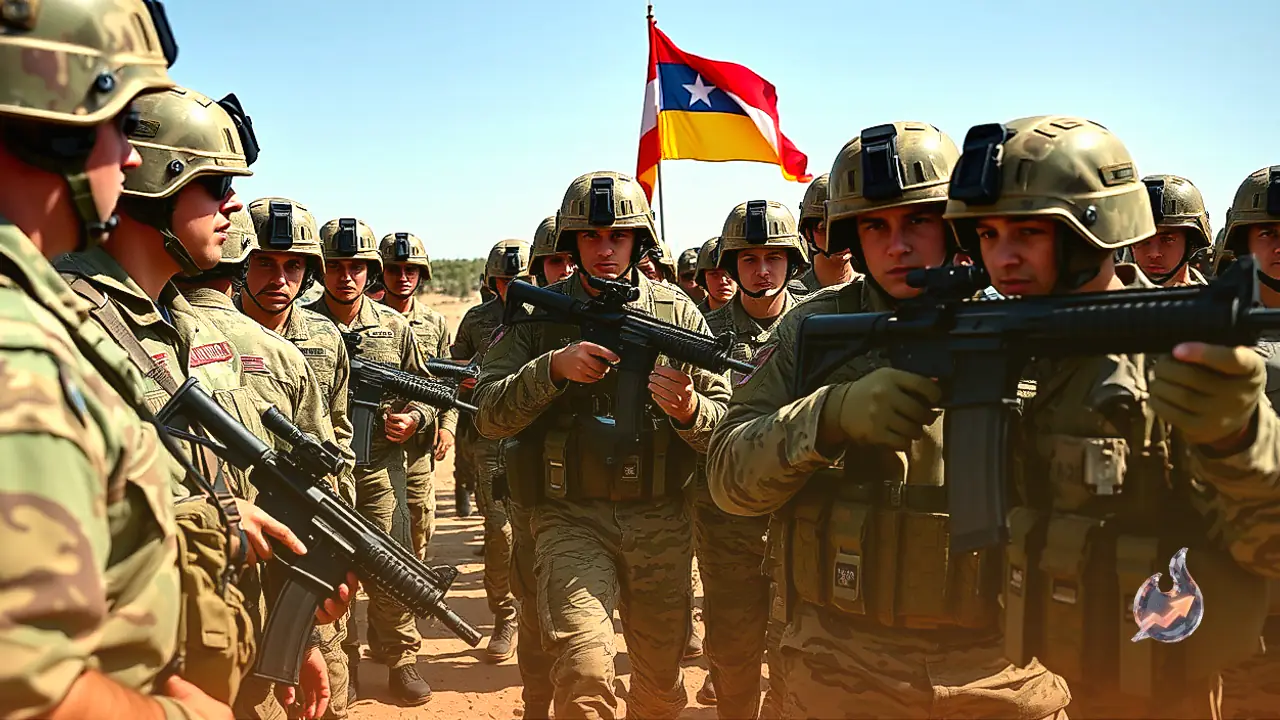
Standing exactly 20 feet away within an enclosure, five designated riflemen take aim with.30 caliber rifles, each weapon chambered with a single round. Crucially, one of the five firearms is deliberately loaded with a blank cartridge rather than live ammunition. None of the five marksmen is informed about who holds the blank cartridge. This procedural ambiguity ensures that each participant can harbor the plausible psychological belief that their trigger pull was not the lethal shot that ended the inmate's life. Across the United States, only 6 individuals have been put to death through a firing squad since 1976.