






















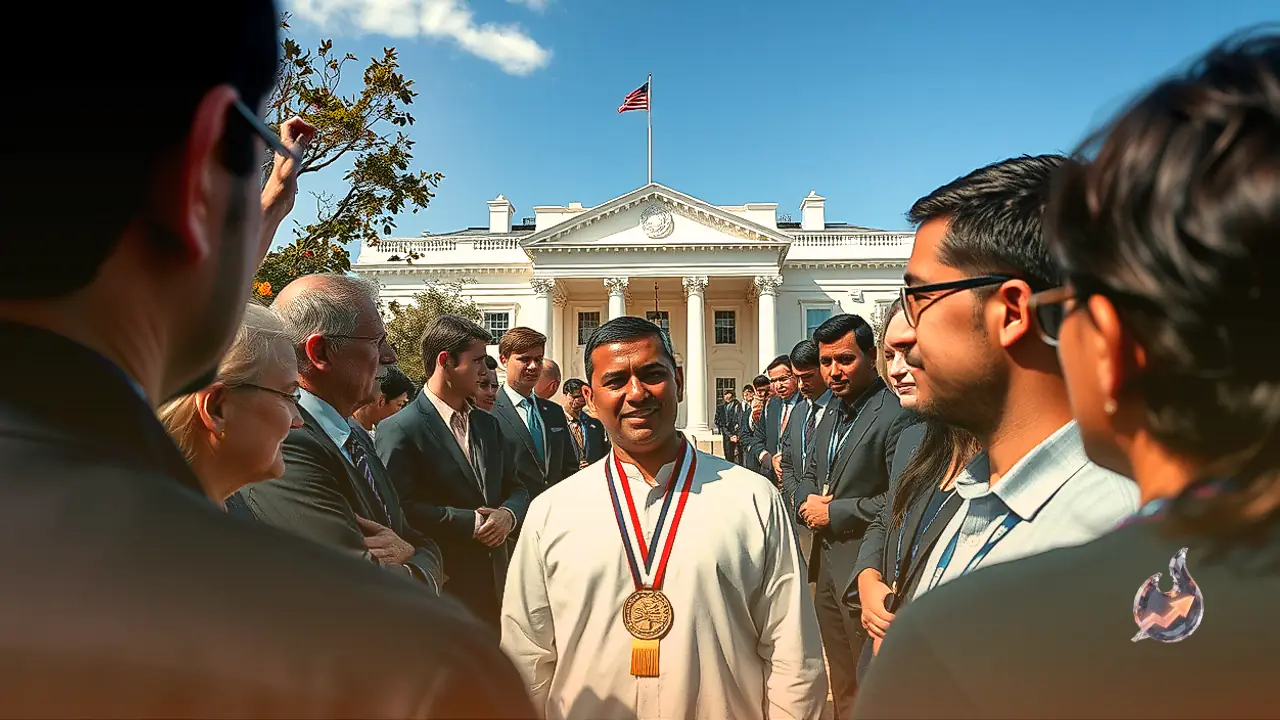

A high-profile White House gathering celebrated the achievements of prominent figures in technology and scientific discovery. During the ceremony, President Donald Trump presented Microsoft CEO Satya Nadella with the prestigious National Medal of Technology and Innovation. The event unfolded against a complex backdrop, as Vice President JD Vance had announced enforcement measures against Microsoft earlier that same day over the company's utilization of the H-1B work visa framework.
Top Innovators Recognized at White House Gathering
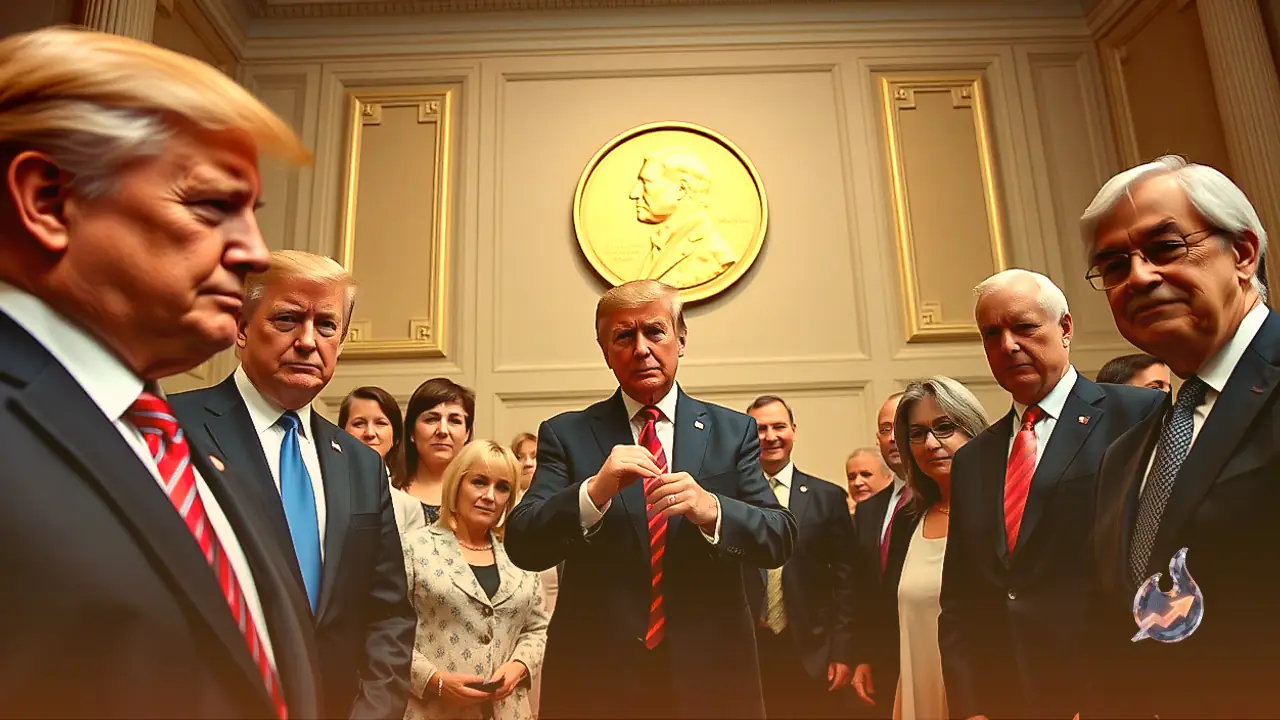
The formal presentation took place during an event titled 'Science: A New Golden Age', where six distinguished leaders from technology and academia received recognition. President Donald Trump praised Satya Nadella for expanding Microsoft and helping drive its technical products across international markets. Michael Dell, founder and chief executive of Dell, also received the National Medal of Technology and Innovation alongside Nadella.
Four other leaders received the National Medal of Science for their breakthrough work in research and development. This group included Elon Musk, Google co-founder Sergey Brin, NVIDIA CEO Jensen Huang, and AMD CEO Lisa Su. In his remarks, Trump described the honorees as national treasures and highlighted their critical advancements in the field of artificial intelligence.
Trump drew an explicit parallel between Elon Musk and renowned historical inventor Thomas Alva Edison, referring to Musk as a modern-day Edison. Edison remains famous worldwide for developing the practical incandescent electric light bulb, among numerous other patents. The recognition also reflected a broader immigrant narrative, as five of the six honored figures came from families that had moved to the United States from other countries.
Enforcement Action Announced Against Microsoft
Just hours before the awards ceremony, Vice President JD Vance announced that Microsoft had been removed from a specific federal program. That government initiative assists foreign professionals working on H-1B visas in navigating the application pathway toward lawful permanent residency, commonly known as a green card. Obtaining a green card permits foreign nationals to reside and work permanently inside the country.
Vance alleged that Microsoft had improperly used the H-1B system to substitute domestic personnel with international labor. In making the case, he asserted that Microsoft dismissed 6,000 American personnel while taking on 6,300 workers on H-1B visas. Vance argued that corporations must prioritize hiring American citizens over relying on non-immigrant work permits.
Microsoft Outlines Its Employment Data
Microsoft publicly contested the vice president's assertions. The technology corporation stated that it had submitted roughly 6,000 H-1B petitions during the previous financial year. Crucially, the company clarified that 80 percent of those filings did not involve onboarding new staff, but were instead extensions or status amendments for professionals already employed across its teams.
The company noted that the remaining 20 percent of petitions pertained to candidates who were already legally living within the United States before accepting employment at Microsoft. These individuals were not new arrivals, and the entire group represented roughly one percent of the company's overall workforce based in the country. Microsoft affirmed that all of its filings strictly satisfy statutory requirements and eligibility thresholds.
The Broader Debate Over the H-1B Program
The H-1B category provides a legal mechanism for American enterprises to hire skilled workers from countries such as India for specialized positions. Indian information technology workers and software engineers represent the largest beneficiary group within the program. Federal policymakers, however, continue to emphasize that foreign hiring should focus strictly on unique expertise that domestic candidates cannot supply.
Administration officials maintain that companies should not utilize non-immigrant visas to recruit lower-cost workers for roles that domestic employees are qualified to perform. Supporting this policy, the administration defended recent fee increases for visa petitions, arguing that higher application costs encourage companies to pursue overseas recruitment only when absolutely necessary.