
Tucked away within the mountainous terrain of Tokushima prefecture, a quiet rural community presents a surreal sight where streets, fields, and doorways are populated primarily by handmade effigies rather than living people. As younger residents relocated to urban centers in search of employment and older generations passed away, the village of Nagoro saw its population steadily decline. To cope with the overwhelming emptiness and isolation, a local artist began crafting life-sized figures by hand, eventually populating the entire settlement with creations that vastly outnumber the actual human inhabitants.
The unique project had surprisingly humble beginnings around 2002, when Tsukimi Ayano returned to her hometown from Osaka to look after her elderly father. Initially, the figures were not created to memorialize anyone, but rather to protect a garden patch from marauding crows. She fashioned a crude scarecrow using her father old garments and propped it up outdoors. The resemblance was so striking that passing neighbors mistook the figure for her real father and greeted it, sparking the idea to create more figures to populate the quiet surroundings.
These creations serve a deeper purpose than mere decoration, acting as physical reminders of former residents who have either died or moved away. Each figure is modeled after a specific individual and placed in a location where they once spent their time, such as working in a field, fishing by the river, or waiting patiently at a bus stop. Due to weathering and wear, older figures deteriorate over time, leaving an estimated 150 dolls currently scattered across the settlement, which still outnumbers the remaining flesh-and-blood locals by a wide margin.
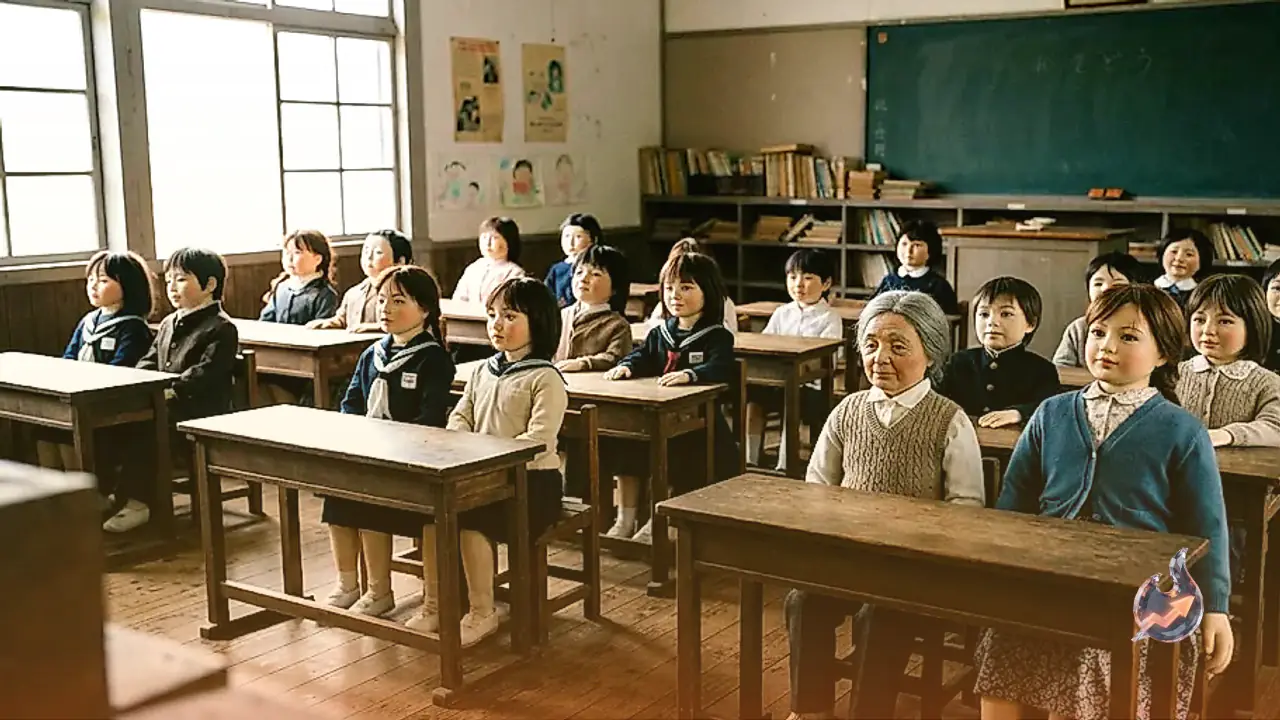
The village school tells a similar tale of depopulation, having shut its doors permanently in 2012 after its final two students completed their studies. Instead of letting the classrooms sit entirely abandoned, Ayano filled the desks with smaller doll students while placing a teacher figure at the front by the chalkboard. Furthermore, an annual sports day is organized within the settlement, bringing together the few remaining villagers, visiting guests, and the stationary figures in a collective gathering.
This peculiar situation reflects a broader demographic crisis facing rural areas across Japan as birth rates continue to decline. Data from the National Institute of Population and Social Security Research projects that the national population will drop below 100 million by 2054 due to low fertility rates. With younger generations moving toward major cities for work, mountainous regions and farming towns are left predominantly with aging populations.
What started as a private artistic outlet eventually captured international attention after German filmmaker Fritz Schumann released a short documentary titled Valley of the Dolls in 2014. Following the release, travelers from across the globe began visiting the remote village to walk among the silent figures and observe the unusual artistic landscape firsthand. The influx of visitors brought unprecedented global visibility to a place that was slowly fading into obscurity.
Now past the age of 60, Ayano remains one of the youngest individuals residing in the area and continues her painstaking craft. She has expressed an intention to keep making the figures for as long as her health permits, ensuring that memories of her father and the community remain visible. For her, the project stands as a dedicated effort to preserve the spirit of a disappearing hometown against the relentless passage of time.