























A seismic shift is unfolding in Asian geopolitics. After years of maintaining a cautious distance from turbulent maritime disputes, New Delhi has definitively stepped into the fray, signaling an end to Beijing's unchecked aggression in heavily contested international waters. India’s forceful entry into the geopolitical theater of the South China Sea has sent shockwaves through the corridors of power in Beijing, shattering Xi Jinping’s strategic calculations. For the beleaguered Asian nations that have long endured Chinese intimidation, this development offers a crucial lifeline. Diplomatic observers are pointing to a multifaceted framework of five Chanakya-inspired strategies that New Delhi is deploying to dismantle the Dragon's overarching ambitions, fundamentally altering the maritime power dynamic across the region and empowering nations troubled by China.
The Economic Imperative and a Vision for Peace
New Delhi’s position is unambiguous: all regional disputes must be resolved through peaceful diplomatic dialogue rather than military coercion. India has repeatedly stressed that strict adherence to international law is the non-negotiable foundation for maintaining a free, open, and secure Indo-Pacific. While India historically preferred to keep out of these specific territorial entanglements, the explosive growth of the Indian economy has irreversibly broadened its strategic horizons. Currently, more than half of India's maritime commerce traverses these exact shipping lanes. Consequently, any spike in regional hostilities poses a direct, existential threat to India’s economic trajectory. This is no longer merely a matter of interfering in distant geopolitical conflicts; it is a critical necessity for protecting India's own national and economic interests. As Indian industries and markets become increasingly reliant on foreign trade, securing maritime routes has escalated to a top-tier priority. Because its vital interests are at stake, New Delhi asserts its absolute right to monitor regional developments and voice its opposition to aggressive maneuvers. As far as India is concerned, Beijing possesses zero moral or legal authority to dictate terms or issue warnings to New Delhi regarding its maritime engagements.
Defying the International Tribunal
The sheer scale of Beijing’s arrogance was laid bare in 2016. That year, an International Arbitration Tribunal delivered a landmark verdict that categorically dismantled China’s infamous nine-dash line, declaring its expansive claims over the vast ocean completely illegal. Displaying a shocking disregard for global norms, Beijing brazenly dismissed the historic ruling as a mere piece of waste paper. The tribunal, established under the United Nations Convention on the Law of the Sea, explicitly stated that China possessed absolutely no legal or historical rights over the contested waters. Yet, the Chinese administration relentlessly propagated the narrative that the judicial outcome was entirely invalid and null. When a major superpower so openly tramples upon global regulations, it sets an incredibly dangerous precedent for the entire world. China's attitude served as direct evidence of an imperialistic mindset, demonstrating a stark refusal to accept any rule or court as holding authority over its own ambitions. The international community continues to grapple with the underlying question: who granted China the unilateral authority to invalidate a legally binding verdict delivered by a legitimate United Nations maritime court?
A Mockery of the Law and a Calculated Boycott
The origins of this protracted legal battle trace back to 2013, when a deeply frustrated Philippines initiated proceedings against China at the Permanent Court of Arbitration. Ironically, the lawsuit was rooted in the very maritime legal framework that China itself had enthusiastically embraced. China was among the earliest signatories to the convention in 1982 and formally ratified the treaty in 1996. Championing lofty promises at international summits on one hand, while flatly refusing to abide by those same rules when they apply to itself on the other, has entirely obliterated China's diplomatic credibility. Had Beijing genuinely believed in the validity of its claims, it could have easily participated in the judicial process. It had the option to field a team of expert lawyers and present its purported historical archives before the five-judge panel, potentially swaying the outcome. Instead of facing the music like the Philippines did, China completely boycotted the proceedings. When the verdict inevitably went against it, Beijing simply rejected the outcome and accelerated its agenda. Relying heavily on its massive naval modernization, vast financial resources, and a manufactured version of history, China began forcibly seizing and occupying disputed islands in blatant defiance of the law.
The Cost of Global Silence and Salami-Slicing
The aftermath of the 2016 legal victory for the Philippines revealed a grim reality. Rather than uniting to enforce the ruling, the world’s major economic powers chose to remain silent, prioritizing their lucrative trade and economic relationships with Beijing over international law. The heavy price for the world's willful blindness, driven by greed for commercial profit, is now being paid by these smaller nations. This selfish global paralysis swiftly empowered China. It rolled out an insidious gray-zone warfare strategy heavily reliant on salami-slicing—the calculated, gradual seizure of neighboring territories in increments too small to provoke a full-scale declared war. Under this overarching strategy, Beijing launched a relentless campaign of intimidation and sovereignty violations against its smaller, vulnerable neighbors, aggressively bullying the Philippines, Vietnam, Malaysia, Brunei, Indonesia, and Taiwan.
ASEAN’s Paralysis and Western Limitations
The severity of the crisis has been significantly compounded by internal fractures within the Association of Southeast Asian Nations. While ASEAN member states desperately want to implement a unified Code of Conduct for the disputed waters, deep-seated disagreements over sovereignty and border demarcations have repeatedly derailed consensus. The nations that should have stood together as an impenetrable wall instead became entangled in minor internal disputes, inadvertently paving an easy path for China. The tragic irony is that five of the six nations actively contesting China’s maritime claims are ASEAN members. Despite this shared threat, they have consistently failed to forge a united, forceful front. Beijing has masterfully exploited this internal disunity and factionalism to advance its expansionist agenda across the sea. Simultaneously, Western intervention has proven largely ineffective. The United States boasts the most formidable naval presence in the Indo-Pacific and is backed by powerful strategic partners including Japan, South Korea, and Australia. Yet, this formidable coalition has failed to completely halt Beijing's aggressive militarization of the contested islands. Even though American and Philippine forces regularly conduct high-profile naval drills, these traditional military exercises have consistently fallen short when it comes to neutralizing China’s sophisticated gray-zone tactics.
The BrahMos Ring: A Strategic Chokehold
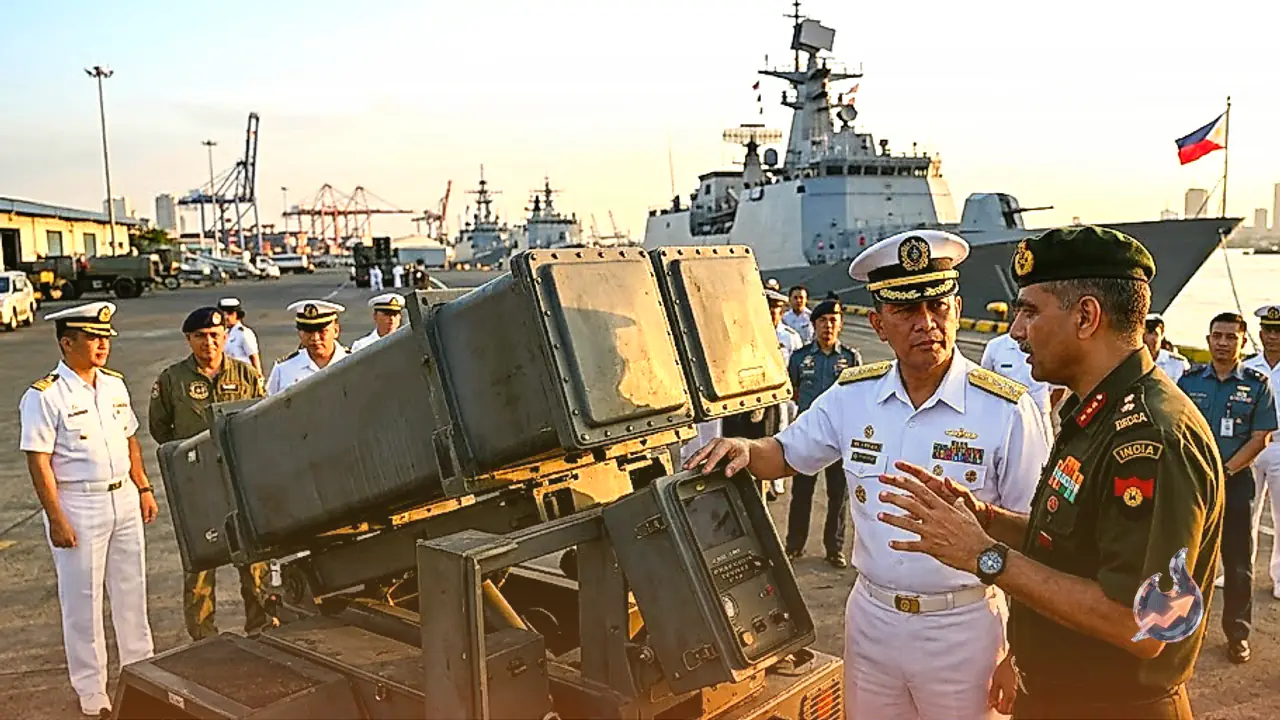
Against this backdrop of regional helplessness, India’s robust entry into the highly sensitive waters has triggered absolute panic within the Chinese leadership. For years, Beijing operated under the assumption that the vast sea was its private domain, unilaterally imposing its dictates on smaller neighbors like the Philippines, Vietnam, and Malaysia. Now, deploying the most crucial step among its five strategic maneuvers, India is systematically crushing China’s dream of establishing uncontested hegemony over the Indo-Pacific region. The most devastating blow to Chinese military supremacy stems from the BrahMos missile shield. New Delhi has successfully exported its lethal, supersonic anti-ship BrahMos missiles to the Philippines, while advanced negotiations regarding this state-of-the-art system are already underway with Vietnam and Indonesia. Historically, the Chinese navy has designed its defensive systems primarily to counter subsonic threats. Facing a barrage of incredibly fast supersonic BrahMos missiles presents a nearly insurmountable operational nightmare for Beijing's naval forces. Once fully deployed across the Philippines, Indonesia, and Vietnam, these advanced weapon systems will effectively forge an impenetrable ring of firepower directly across the critical entry and exit chokepoints of the South China Sea. Furthermore, India’s independent intervention definitively strips Beijing of its favorite propaganda tool. China can no longer peddle the lie that regional resistance is merely an American plot to throw dust in the eyes of the world.
Beijing's Dilemma and the Future Diplomatic Landscape
India’s bold and unprecedented maneuvering has forced Beijing’s policymakers into a frantic reassessment of their regional strategies. While China remains heavily entangled in broader global rivalries, this direct Indian intervention in its strategic backyard has emerged as its most complex diplomatic headache. For years, the Chinese administration operated under the deeply flawed assumption that its massive economic and military weight would perpetually terrify the rest of Asia into submission. However, New Delhi’s active involvement is dismantling that narrative. By not only supplying advanced weaponry to frontline states like the Philippines, Vietnam, and Indonesia, but also providing them with a robust diplomatic backbone, India is reshaping the geopolitical map. This unfolding scenario conclusively demonstrates that the future of the Indo-Pacific will no longer be dictated by the unilateral whims of a single superpower. Looking ahead, these calculated Chanakya-inspired policies will not only restore a critical balance of power in the South China Sea but also broadcast an unambiguous message to the global community: a rules-based international order must be universally respected. For China, continuing its legacy of maritime bullying without fear of consequence is rapidly becoming an impossible proposition.