















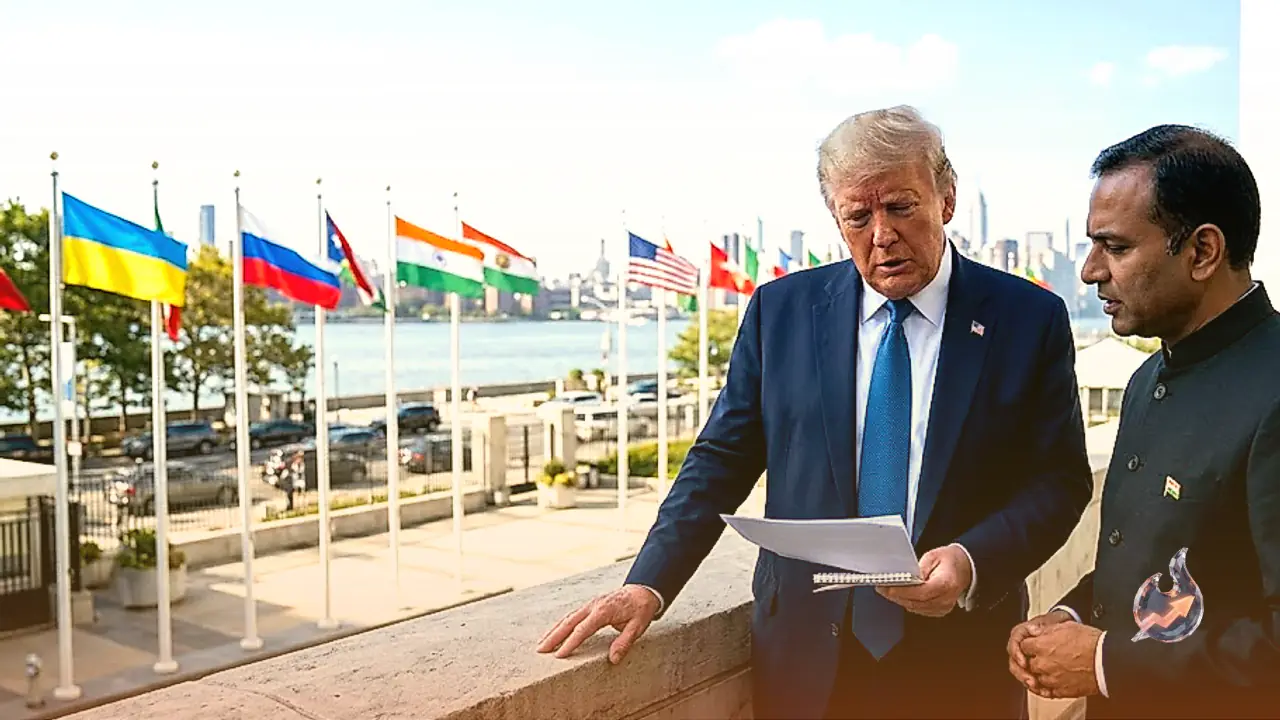

US President Donald Trump finds himself entangled in a complex web of overlapping geopolitical crises as initial promises to swiftly resolve global conflicts encounter stubborn realities on the ground. While the administration initially sought to bring a rapid end to the hostilities between Moscow and Kyiv through heightened diplomatic pressure and allied coordination, the conflict remains persistently deadlocked. Compounding these diplomatic hurdles, open confrontation and rising tensions involving Iran in West Asia have introduced an entirely new layer of strategic difficulty for Washington. As American involvement on the Ukrainian front becomes increasingly convoluted, the distinct positioning of India within this unfolding drama has captured international attention.
Navigating a Balanced Diplomatic Course
Amidst these shifting global dynamics, New Delhi has charted a uniquely independent path, carefully avoiding rigid alignment with either opposing camp. India has neither severed its historic ties with Moscow nor distanced itself from its deepening partnerships with Western nations. Prime Minister Narendra Modi directly addressed the imperative of ending the bloodshed during a high-profile interaction with Russian President Vladimir Putin. On the sidelines of the Shanghai Cooperation Organisation summit in Bishkek, Modi conveyed that the international community must transition away from endless hostilities and actively pursue a definitive end to the war. This direct diplomatic engagement underscored that India's strategic autonomy allows it to maintain robust ties with Russia while simultaneously advocating for a peaceful resolution at the highest level.
Extending Outreach to Kyiv and Both Sides
India's diplomatic engagement is not limited to Moscow, as demonstrated by high-level outreach inside the Ukrainian capital. External Affairs Minister S. Jaishankar traveled to Kyiv, where he held substantive discussions with Ukrainian President Volodymyr Zelenskyy and Foreign Minister Andrii Sybiha. During these meetings, Jaishankar reiterated that India stands ready to provide any constructive assistance necessary to alleviate the suffering and explore pathways toward peace. Ukrainian leadership has openly acknowledged and appreciated these diplomatic overtures. Official statements from the Ministry of External Affairs have further confirmed that New Delhi remains in constant touch with both belligerent nations, actively formulating ideas and practical suggestions aimed at mitigating or ultimately resolving the crisis.
The Limits and Potential of Third-Party Engagement
The conflict between Russia and Ukraine has dragged on for over four years, marked by sweeping Western sanctions, extensive military support for Kyiv, and persistent diplomatic friction. Despite repeated Western initiatives, the core demands of both warring parties remain starkly divergent, with Moscow maintaining its security imperatives and Kyiv refusing to compromise on territorial integrity. This entrenched stalemate highlights the unique value of India's diplomatic reach, as New Delhi retains open channels of communication with all major stakeholders involved in the crisis. Although India has refrained from officially designating itself as a formal mediator, its ability to converse credibly with both sides positions it as a vital bridge-builder capable of fostering conditions for future dialogue.