




















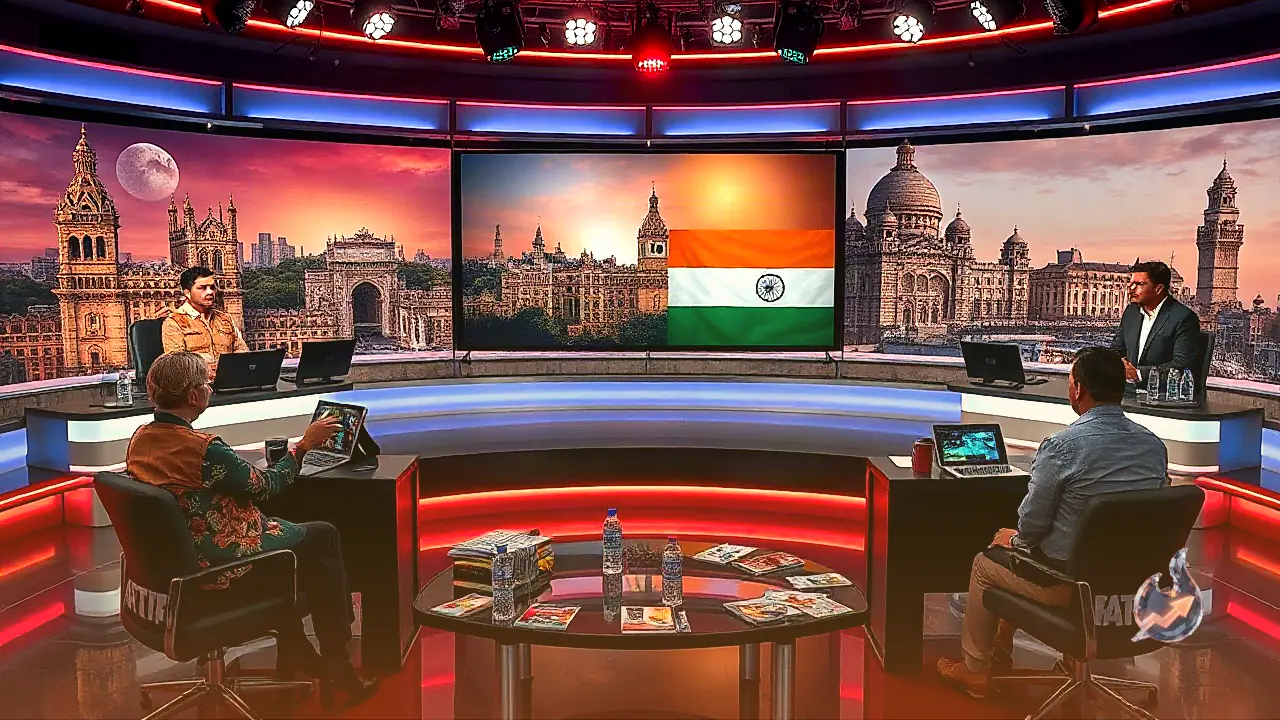

A recent televised debate witnessed intense clashes between Indian and Pakistani commentators over the upcoming Financial Action Task Force (FATF) review. The discussion centered on Pakistan’s frantic strategies to remain off the global watchdog's grey list, alongside its continuous failure to neutralize internationally designated terrorists operating within its borders. The highly charged exchange highlighted the diplomatic and strategic friction between the two South Asian neighbors, with Indian experts exposing the systemic protection granted to terror masterminds by the state apparatus in Pakistan.
Clash Over FATF Review and Terror Financing
The debate commenced with a sharp question directed at Pakistani journalist Raja Faisal. He was asked whether Pakistan was merely engaging in cosmetic changes, such as raising the monitored financial limits or penalties related to terrorists from 50 to 70, solely to satisfy upcoming FATF inspections. The questioning also highlighted the glaring contradiction where Islamabad claims to have no knowledge of the whereabouts of figures like Imran Masood, despite frequent public sightings and rallies indicating their free movement across the country. This opening segment set a confrontational tone, exposing the persistent gap between Pakistan's official denials and the reality on the ground.
The Absurdity of Terrorist Location Claims
In response to these pointed inquiries, Raja Faisal asserted that such terrorists hold no active presence inside Pakistan. He argued that if these individuals were indeed operating on Pakistani soil, Western intelligence and American forces would have detected them during their extensive military footprint in the region. He went on to speculate that these operatives might have aligned themselves with external global terror syndicates such as Boko Haram, Al-Shabaab, or ISIS. In an attempt to deflect responsibility, Faisal further claimed that because New Delhi currently enjoys relatively better diplomatic channels with the Taliban administration in Kabul, Indian authorities are in a far superior position to pinpoint the exact location of Jaish-e-Mohammed chief Masood Azhar.
Anchor Targets Pakistan's Reliance on Global Powers
The television anchor fiercely rejected the arguments presented by the Pakistani journalist, suggesting that many political analysts in Pakistan are well aware of these operatives on a personal level but choose to maintain public silence. Pointing to the scheduled arrival of an FATF assessment team in October, the anchor emphasized that the upcoming evaluation would inevitably bring the truth to light. Furthermore, the host took a swipe at Pakistan's historical dependency on external powers, particularly the United States, suggesting that Pakistani commentators often lack a deep understanding of geopolitical history and facts. The anchor concluded this counter-argument by referencing India’s 5000-year-old heritage, reminding the panel that Pakistan was ultimately carved out of Indian territory.
Indian Defence Experts Expose Dual Standards
Participating Indian military and strategic experts, including Major General A K Siwach and Colonel Danveer, dismantled the arguments put forth by the Pakistani delegation. They highlighted several key aspects of Pakistan’s duplicitous counter-terrorism policies:
- Grey List and Dependency on the US: The experts pointed out that Pakistan previously managed to exit the FATF grey list only after pleading for diplomatic intervention from Washington. They observed that despite escaping severe economic sanctions back then, the establishment in Islamabad has failed to reform its fundamental approach toward harboring regional militant groups.
- Internal Security Backlash and Civil Unrest: The panel explained that the terror infrastructure nurtured by Pakistan has now turned into a domestic security nightmare. This internal crisis is evident in parts of Pakistan-occupied Jammu and Kashmir (PoJK), such as Muzaffarabad and Mirpur, where widespread public protests have pushed the region toward civil-war-like conditions.
- Terrorists as Strategic Assets: Strategic analysts noted that the Inter-Services Intelligence (ISI) continues to shield high-profile terror leaders like Masood Azhar and Hafiz Saeed in secure hideouts. They argued that raising financial bounties on these individuals is a superficial gesture aimed at pleasing global watchdogs, while in reality, these commanders remain prized assets used to disrupt peace in Jammu and Kashmir.
- Fomenting Regional Instability: The Indian experts also highlighted Pakistan’s role in destabilizing its immediate neighborhood. This includes its strained relations with the Taliban in Afghanistan and escalating tensions along the Iranian border due to the activities of groups like Jaish al-Adl.
Allegations and Counter-Evidence from BRICS
When the discussion turned to Pakistani panelist Uzma Kardar, she was directly asked about the whereabouts of UN-listed terrorists, including Masood Azhar, Hafiz Saeed, and Syed Salahuddin. Rather than addressing the question directly, Kardar attempted to turn the tables by leveling unverified accusations against India. She claimed that New Delhi was violating international frameworks by providing weapons and financial assistance to banned outfits like the Tehrik-i-Taliban Pakistan (TTP) and the Balochistan Liberation Army (BLA).
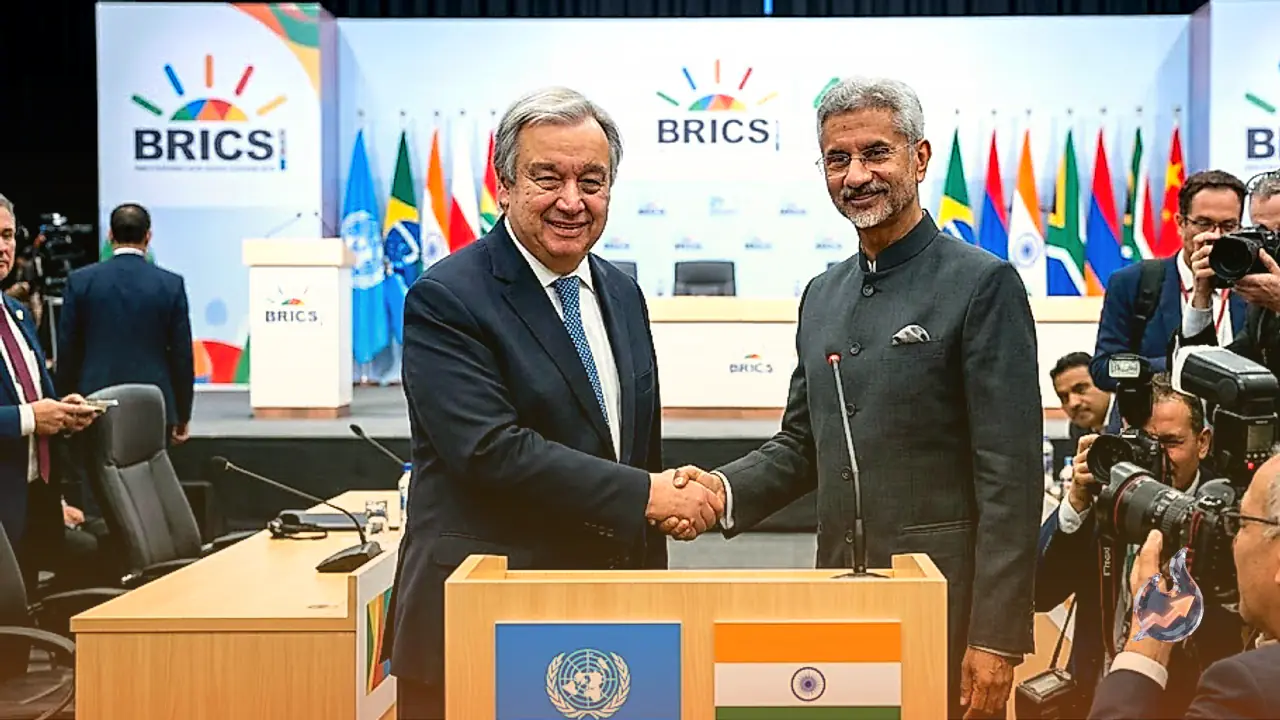
The anchor immediately intervened, demanding that Kardar present credible international journalistic reports or verified documentation to substantiate her claims. To counter Kardar's narrative, the anchor highlighted the recent joint statement issued by the BRICS alliance, which was signed by key global players including Russia and China. This joint declaration explicitly condemned cross-border terrorism, leaving Pakistan diplomatically isolated on the global stage. The host also referenced previous operational developments, such as Operation Sindoor, and past admissions by Pakistani leaders to dismiss the allegations made by Kardar.
The Question of Global Credibility
Colonel Danveer took a satirical swipe at Kardar's arguments, remarking that she appeared to have memorized a pre-written handout prepared by the ISI. He questioned how Pakistan could deny harboring terrorists when the entire world knows that Al-Qaeda chief Osama bin Laden was discovered living under the protection of the military establishment near a premier cantonment area. The colonel challenged the Pakistani representatives, asking why Islamabad has never submitted a formal dossier to the United Nations if it possesses any actionable intelligence against India. He added that the dwindling global reputation of the Pakistani passport speaks volumes about the country's international standing.
In her closing defense, Kardar stated, "I have just returned from a trip to the United States and the United Kingdom, and Pakistan still holds immense respect globally." This claim was promptly dismissed by the anchor, who brought the debate to a close by stating that the international community is fully aware of Pakistan's ground realities.
Masood Azhar’s History of Terror and Bounties
Amid these heated geopolitical exchanges, the status of Jaish-e-Mohammed chief Masood Azhar remains a critical point of contention. Pakistan's Federal Investigation Agency (FIA) continues to maintain a bounty of 70 lakh rupees for information leading to his arrest, listing him among its most wanted individuals. However, Indian authorities view this as an insincere effort. Azhar has been the mastermind behind numerous devastating attacks in India, including the audacious 2001 attack on the Indian Parliament. Following the 2008 Mumbai terror attacks, India renewed its demand for his custody, placing him at the top of a list of 20 fugitive terrorists whose extradition has been repeatedly sought from Islamabad.