






















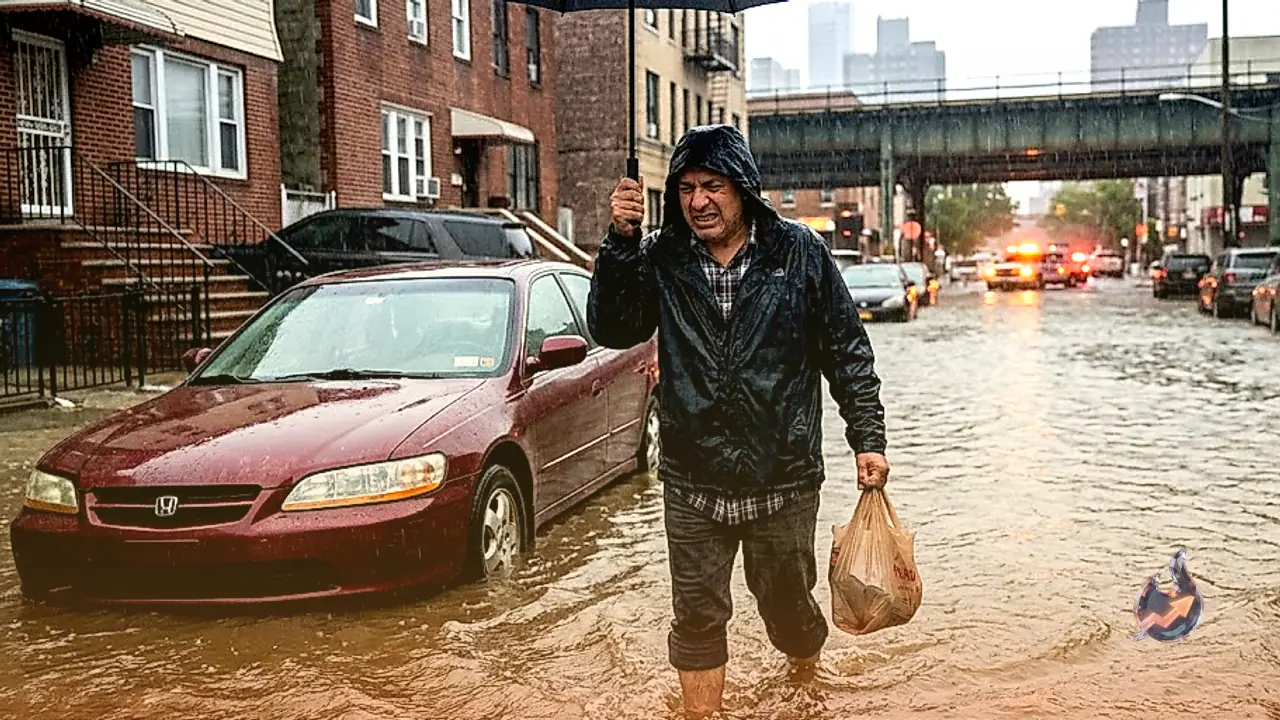

A severe downpour struck New York City on Thursday evening, drastically altering the landscape of multiple neighborhoods in a matter of minutes. The intense rainfall caused streets to swell and overflow like rushing rivers, catching residents and emergency services off guard. The hardest-hit areas included Queens and Brooklyn, where massive amounts of water accumulated rapidly on roadways. Countless vehicles became stranded in the mounting waters, bringing traffic to a complete standstill and causing severe gridlock across major thoroughfares. Numerous videos capturing the chaotic scenes have circulated widely online, documenting the severity of the weather event.
According to regional reports, several inches of rainfall were recorded across parts of Long Island. The situation led to massive vehicle backups along the Long Island Expressway, where transit came to a grinding halt. Conditions deteriorated to the point where personnel from the Fire Department of New York had to wade directly through the floodwaters to assist with unfolding situations. In multiple locations, the water rose high enough to submerge the ankles of responding personnel. Officials from New York City Emergency Management confirmed that around 7:30 p.m. on Thursday, authorities were forced to shut down the Long Island Expressway in both directions near Francis Lewis Boulevard due to the worsening inundation.
In Brooklyn's Bushwick neighborhood, the torrential downpour overwhelmed local drainage systems, which failed to handle the sudden surge of water volume. Disturbing visuals surfaced on social media platforms, showing various locations grappling with deep inundation. Footage captured individuals attempting to push their stalled cars through waterlogged streets, while others sought refuge by climbing onto the roofs of their vehicles to escape the rising tide. The rapid accumulation of floodwaters in Brooklyn made navigating the streets nearly impossible for both drivers and pedestrians, creating dangerous conditions throughout the affected zones.
The impact of the severe weather extended far beyond the boundaries of New York City, severely affecting neighboring regions as well. In Newark, New Jersey, numerous individuals became trapped by the rising floodwaters, requiring urgent intervention. Rescue operations in Newark included the deployment of a life raft to safely evacuate a trapped driver from the rising inundation. Meanwhile, other residents were spotted wading through knee-deep water as they struggled to reach higher ground and safety. The widespread water accumulation severely disrupted daily routines and transit networks across the entire metropolitan area.
Meteorological agencies had anticipated the severe weather, issuing warnings ahead of the storm. A flash flood risk level of 3/4 had been issued for New York City and parts of central and northern New Jersey. Additionally, a tornado watch was active across regions housing over 1.5 million people, encompassing areas in Delaware, Washington D.C., Maryland, New Jersey, Philadelphia, and Virginia. Despite the advance notices, the sheer intensity of the rainfall managed to submerge streets within hours, presenting immense hurdles for everyday citizens and emergency responders alike.