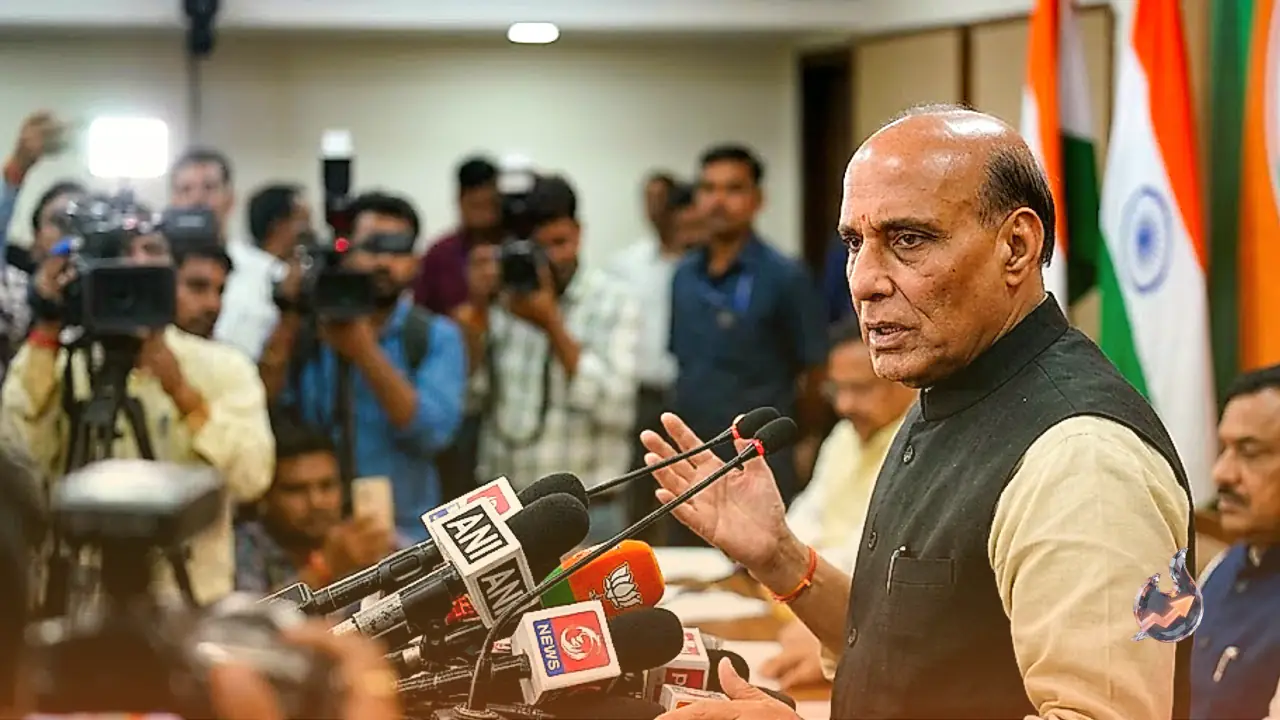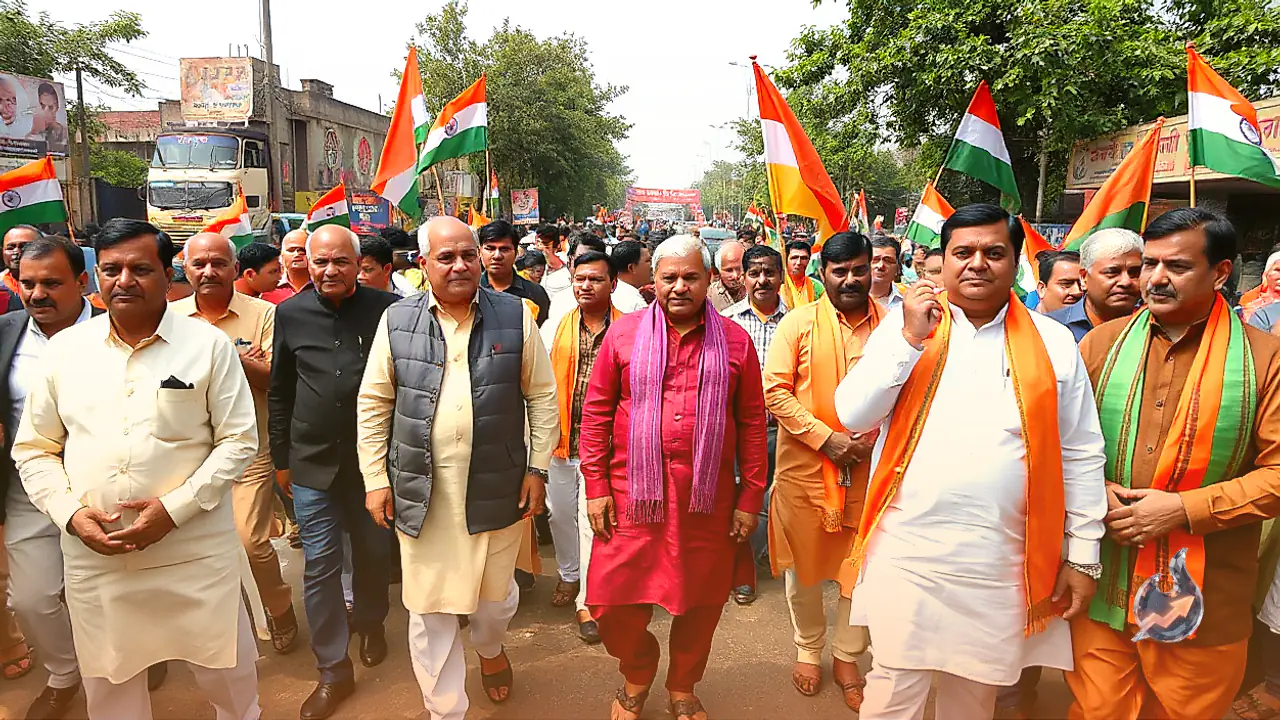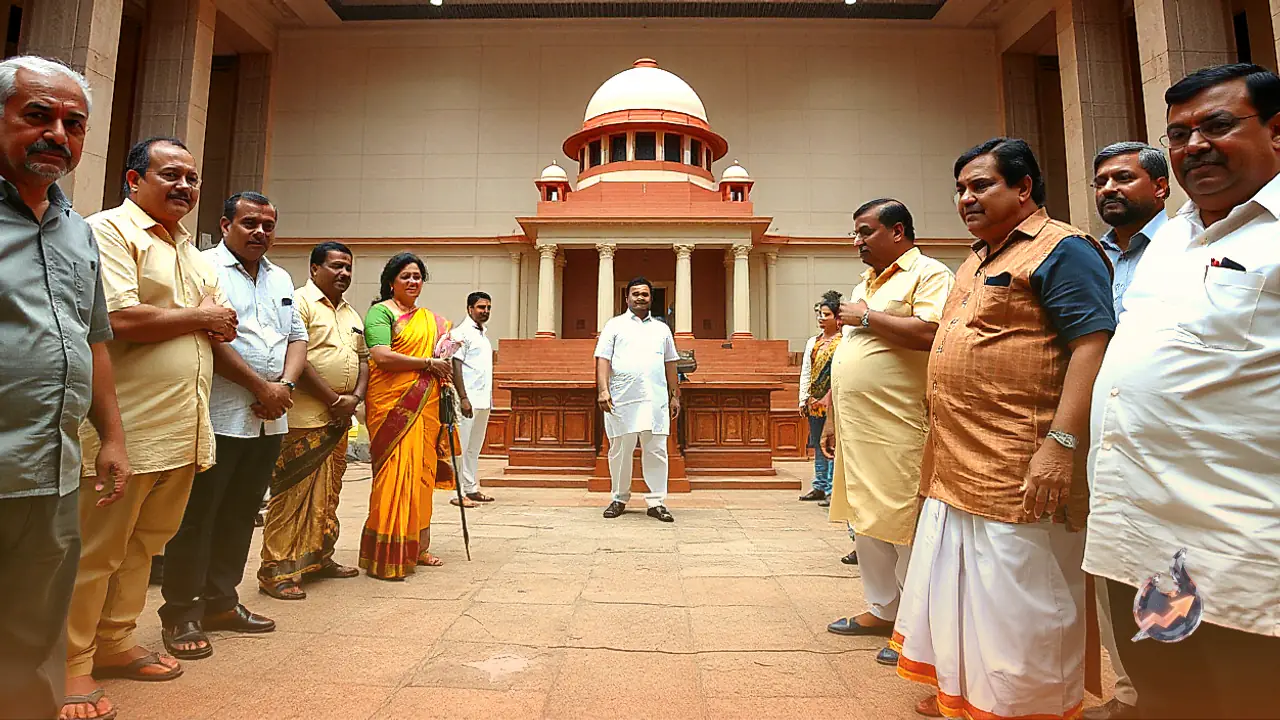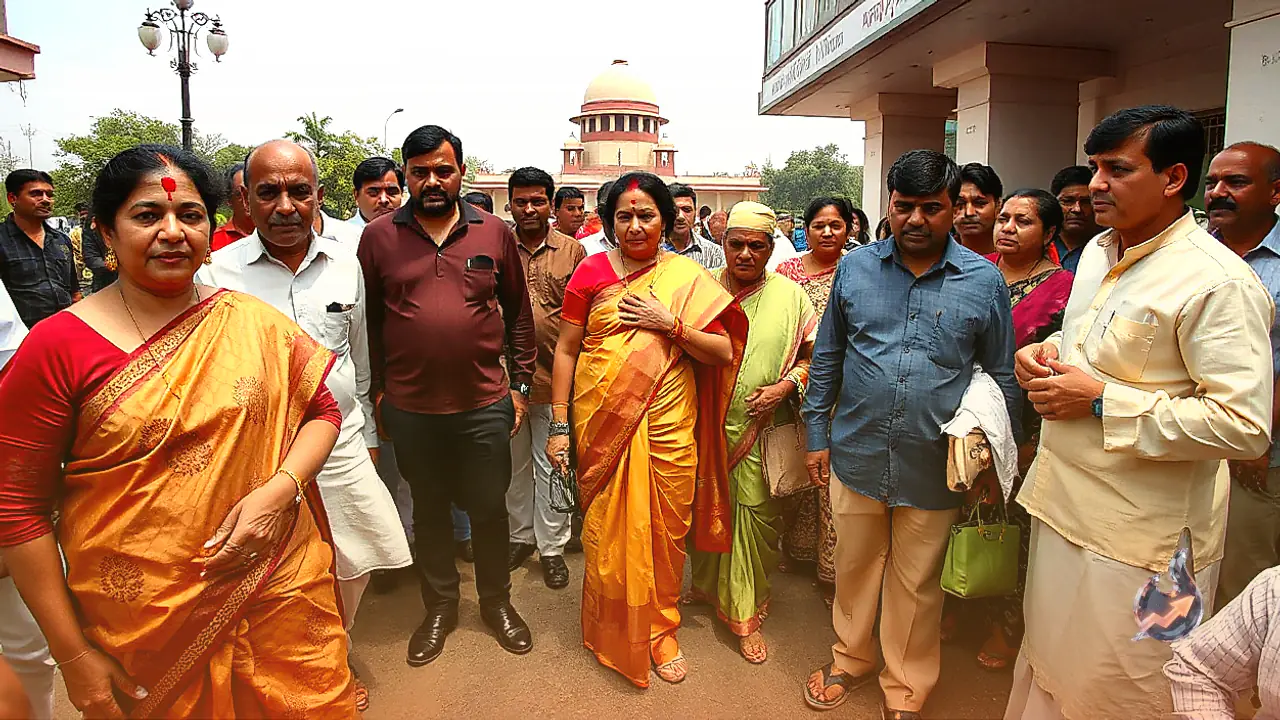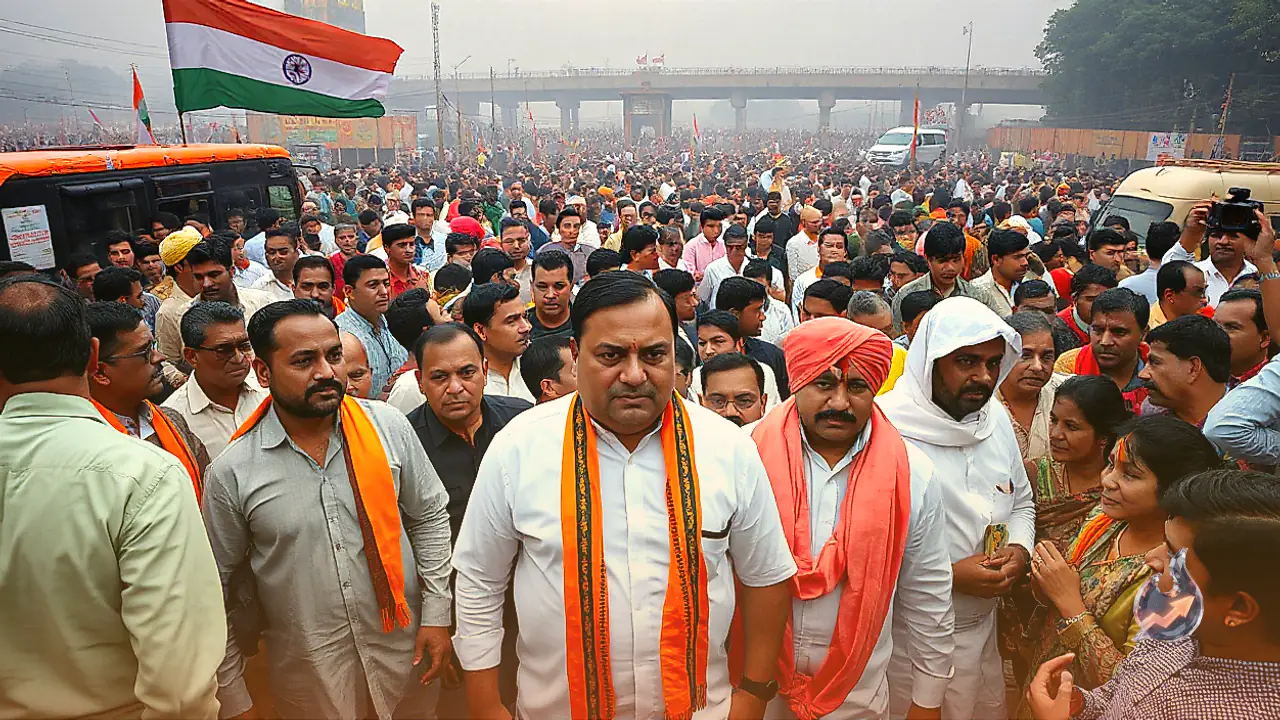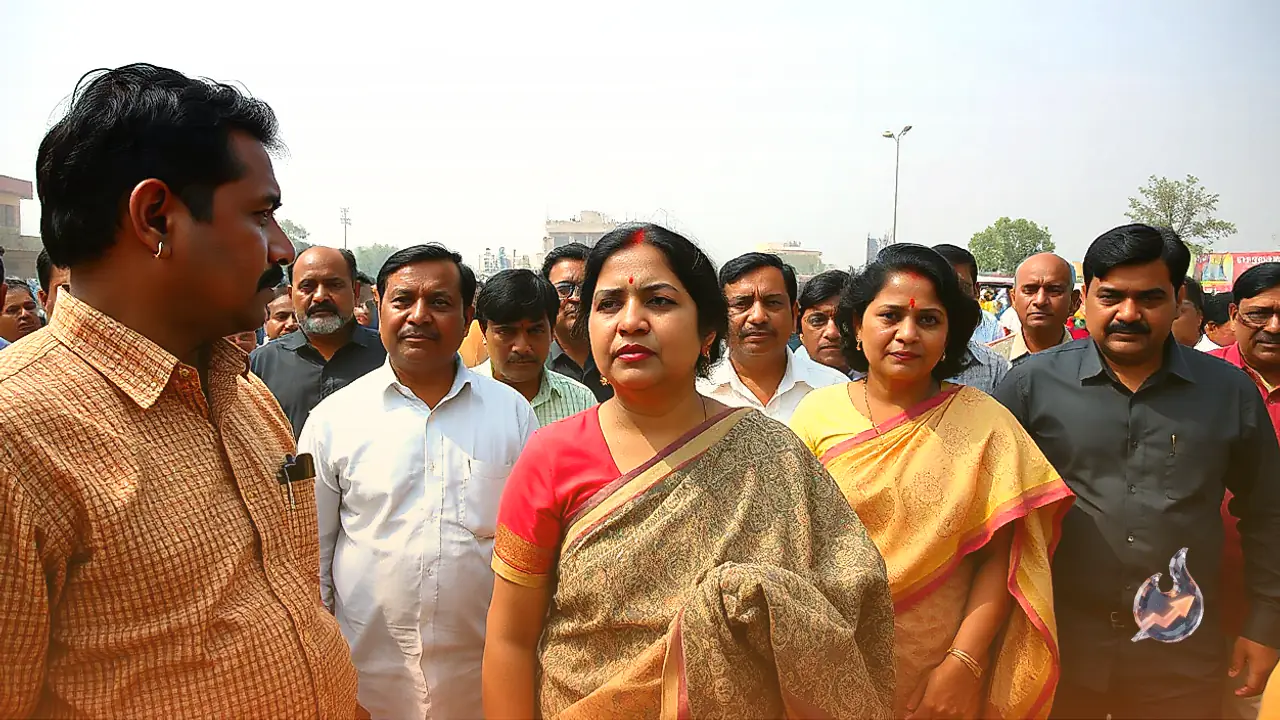
















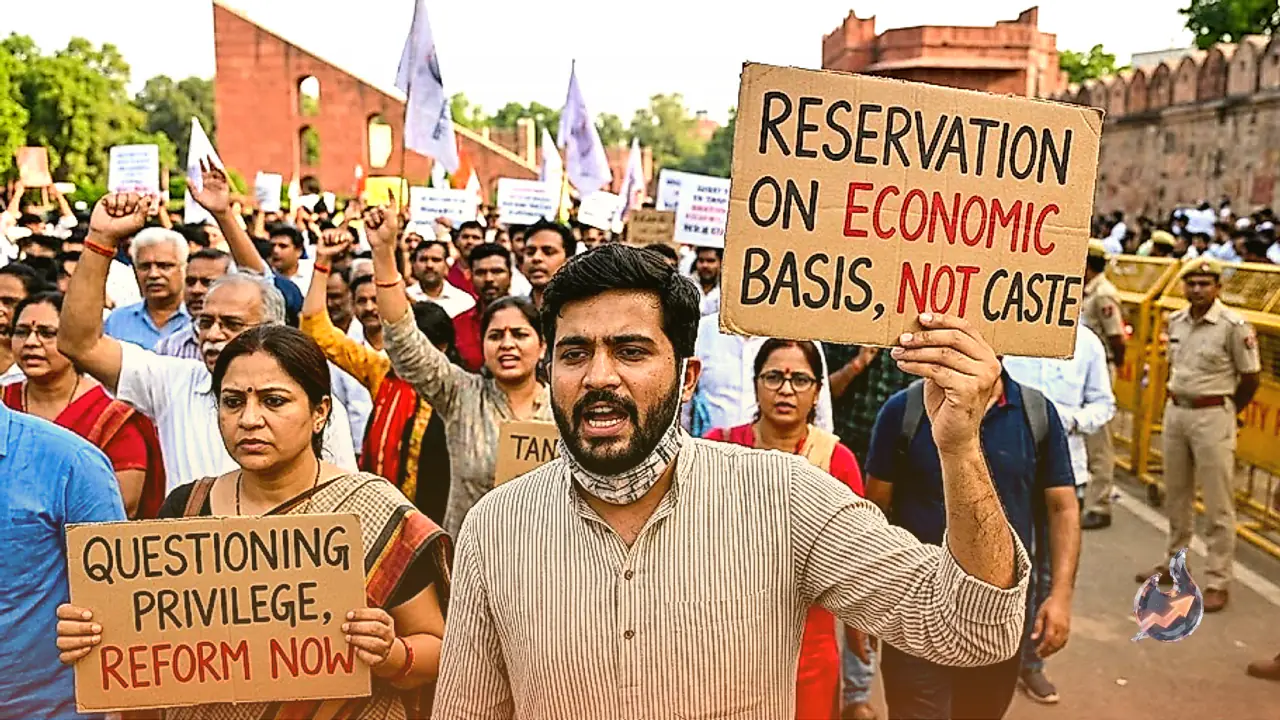

A large-scale protest took place at Delhi's historic Jantar Mantar to demand sweeping changes to the reservation system. Gathered under the banner of the 'Reservation Hatao Andolan', the demonstrators strongly urged that economic status, rather than caste, should be made the primary basis for government assistance and reservations. They argued that poverty does not discriminate by caste, and therefore, government welfare schemes, educational opportunities, scholarships, and other facilities ought to be extended solely to economically disadvantaged individuals.
Support From Various Organizations and Social Media
The demonstration saw participation from multiple groups, including the 'Reservation Reform Andolan', General Sena, Chanakya Sena, and Karni Sena. Extensive efforts were made to garner widespread support for this movement through social media platforms. Reports indicated that the protest was organized under the leadership of NEET aspirant Harsh Dubey, while several prominent speakers, including YouTuber Ajit Bharti, addressed the gathered crowd.
Caste Survey and Poverty Statistics
A statement made by speaker Aditya Raj Singh from the Jantar Mantar stage drew significant attention on social media. Citing Bihar's caste-based survey, he pointed out that the findings revealed a massive number of Bhumihar and Brahmin families possessing zero land. He questioned why, if the government considers economic criteria crucial for eradicating poverty, a poor person should be excluded from facilities purely on the basis of caste.
Aditya stated that the Bihar government had announced plans to distribute land to those lacking it following the caste survey. The survey reported that 27% of Bhumihar Brahmins in Bihar did not own an inch of land. He noted that while he and leaders like Prashant Kishor stood at the forefront of those facing police action, it raises a fundamental question: while uplifting historically backward communities to the level of the presidency is correct, doing so strictly by looking at caste while ignoring economic realities makes little sense.
Questions on the President's Children and Privileged Poor
Adding to his critique, Aditya remarked that despite being poor, Harsh Dubey would be considered upper-caste simply because he is a Brahmin. He noted that even if someone like him had to borrow money just to travel to Delhi or arrived in an auto-rickshaw, they would still be labeled affluent upper-caste individuals. In contrast, he questioned the existing system where President Droupadi Murmu's children receive reservations for the IAS exams, calling the current setup questionable.
Demand for Economic Status as the Basis of Reservation
The core demand echoed by the participants was to anchor all government support in financial standing. Demonstrators emphasized that poor students, regardless of their caste, deserve quality education, coaching, scholarships, fee waivers, and other essential provisions.
A protester stated that children from rural areas and financially weak families must receive better educational opportunities to grow into doctors, engineers, and other professionals. Participants questioned how the government can achieve its goal of a developed nation without balancing talent and economic necessity.
Calls for Quotas Within Quotas and the Creamy Layer
The demonstrators also pressed for a comprehensive review of the current reservation framework, arguing that assessments must be made to check whether benefits truly reach the most backward and needy segments. Discussions revolved around concepts like 'quotas within quotas' and the creamy layer. They maintained that the government must evaluate the entire system to ensure a fair distribution of reservation benefits, with some demanding a 'white paper' on reservation outcomes over past decades.
Enhanced Support for the EWS Category
Protesters raised demands for greater facilities for the Economically Weaker Section (EWS), questioning why tangible relief does not accompany the EWS designation. They demanded concessions in application fees, hostel fees, and course fees for EWS students, asserting that mere classification solves nothing without practical educational support.
Minimum Marks in IITs and IIMs
Higher education admissions were also brought into question, with YouTuber Ajit Bharti advocating for minimum qualifying marks for admissions into premier institutions like IITs and IIMs. The argument was that building a developed nation requires upholding educational standards and competitiveness alongside aiding financially weak students.
Opposition to SC-ST Act and UGC Rules
Beyond reservations, some demonstrators also voiced opposition to the Scheduled Caste and Scheduled Tribe (Prevention of Atrocities) Act and UGC equity rules, alleging potential misuse. However, opinions among the protesters varied on these specific demands, keeping the primary focus on economic criteria and reservation reforms.