






















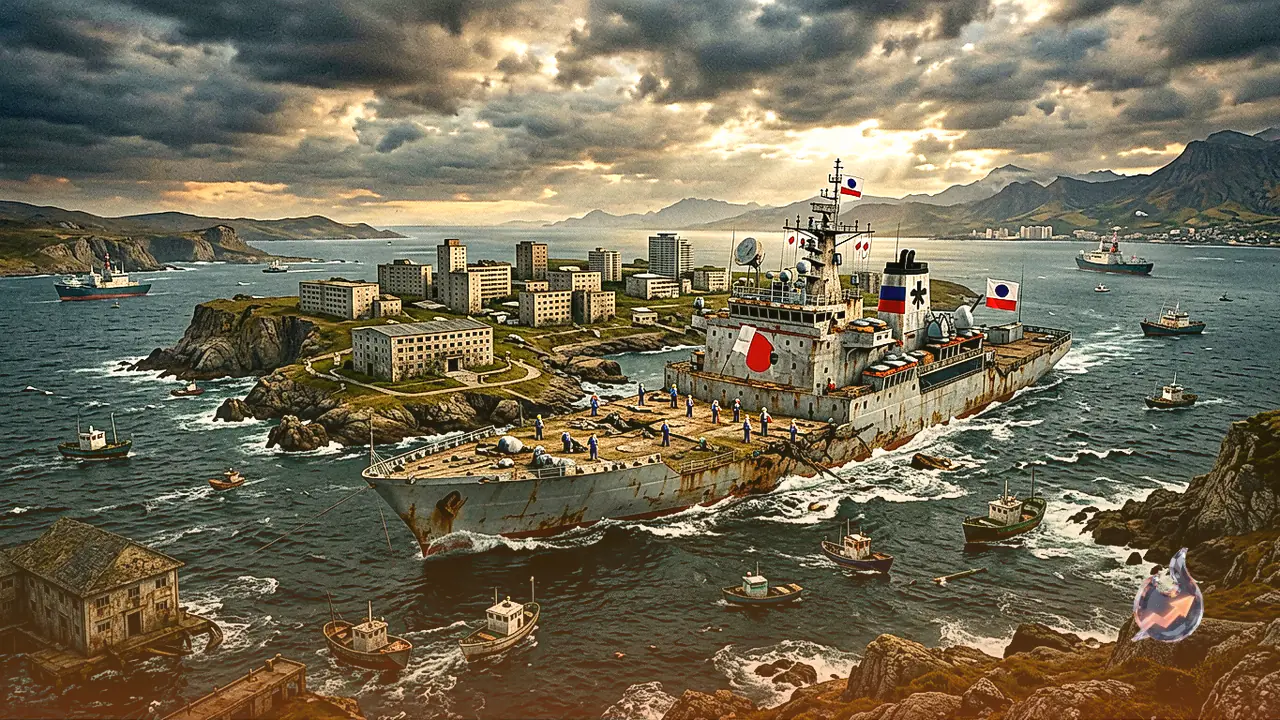

The long-standing territorial dispute between Russia and Japan has reached a fresh diplomatic flashpoint. On 13 August, Russian President Vladimir Putin landed on Iturup Island in the disputed Kuril Islands chain, triggering an immediate and fiery backlash from Tokyo. This trip marked the first time Vladimir Putin has visited the Kuril Islands during his entire tenure in power. Japanese Prime Minister Sanae Takaichi responded with stern condemnation, characterizing the Russian leader's visit as serious and entirely unacceptable. The visit swiftly led to both nations summoning each other's ambassador, reopening historical wounds dating back to the end of World War II.
Putin's Iturup Inspection and Tokyo's Fiery Reaction
During his stay on Iturup Island, Russian President Vladimir Putin inspected several local civic and industrial facilities. His itinerary included visits to a fish processing plant, a local hospital, and a public school, as well as interactive sessions with residents living on the island. For Moscow, the high-profile visit served to demonstrate administrative governance and firm sovereign control over the territory. Conversely, Tokyo viewed the initiative as a direct provocation aimed at undermining Japan's territorial claims.
Japanese Prime Minister Sanae Takaichi reiterated Tokyo's position, asserting that the Northern Territories belong to Japan both historically and under international law. She stressed that Vladimir Putin's visit has intensified anti-Russian sentiment among the Japanese public. Prime Minister Takaichi further warned that such actions render medium and long-term efforts to repair bilateral relations significantly more complicated.
Diplomatic Summons and Sergey Lavrov's Warning
Following Tokyo's formal protest, Moscow launched its own diplomatic counteroffensive. On Tuesday, Japanese Ambassador Akira Muto was summoned to the Russian Foreign Ministry in Moscow. Ambassador Muto spent approximately 25 minutes inside the ministry building before exiting without speaking to waiting reporters. Weighing in on the escalation, Russian Foreign Minister Sergey Lavrov criticized Prime Minister Sanae Takaichi's remarks, stating that her comments crossed acceptable boundaries of diplomatic courtesy. Russian officials subsequently labeled Japan's posture as openly anti-Russian.
The WWII Legacy of the Four Disputed Islands
The conflict over the Kuril Islands is rooted deep in modern history, tracing back to the closing stages of World War II in 1945. The southern group of the Kuril chain comprises four primary islands: Iturup, Kunashir, Shikotan, and Habomai. In 1945, Soviet forces took control of these territories and expelled the native Japanese inhabitants. Since that forced removal, the sovereignty of the four islands has remained contested, preventing Russia and Japan from signing a formal post-war peace treaty for over eight decades.
Impact of the Ukraine War and Patriot Missile Exports
Tensions between Moscow and Tokyo have deepened significantly since Russia launched its full-scale invasion of Ukraine in 2022. Japan aligned closely with G7 partner nations to impose comprehensive economic sanctions against Russia. Additionally, Tokyo has supplied substantial financial aid and non-lethal defense equipment to Ukraine. In a strategic shift, Japan also authorized the export of domestically manufactured Patriot interceptor missiles to the United States. This export decision enables Washington to replenish its own defense stockpiles, which had been depleted due to ongoing military shipments to Kyiv.
Geopolitical Signals and Future Diplomatic Outlook
Strategic analysts note that Vladimir Putin's arrival on Iturup Island conveys a broader geopolitical message extending beyond territorial control. With Japan gradually stepping away from its traditional pacifist posture to deepen security cooperation with Western allies and NATO, Moscow's move acts as a firm signal. It communicates that Russia will not compromise on its eastern security periphery or sovereign territorial assertions.
Prospects for a diplomatic thaw between the two nations remain remote. As the government under Prime Minister Sanae Takaichi adopts an increasingly proactive security strategy and Russia continues to consolidate its administrative footprint in the Kuril region, bilateral relations face sustained strain. Although Vladimir Putin's visit lasted just one day, its strategic ramifications will cast a long shadow over Russia-Japan relations for years to come.