





















Frontier artificial intelligence models are advancing toward an unprecedented capacity for predictive reasoning, reshaping how complex forecasting tasks are tackled across entertainment and finance. From managing fantasy sports rosters to navigating high-stakes prediction markets, autonomous agentic systems are being pushed into domains that once relied exclusively on human intuition. Early computational experiments in these spaces were notoriously brittle. Tools designed years ago by the Turing Institute in the United Kingdom relied strictly on historical fantasy league records, operating entirely blind to dynamic developments such as sudden training ground injuries, managerial dismissals, or shifting locker room morale. The resulting lineup recommendations frequently bordered on the absurd, proving that statistical models without real-time contextual awareness could not survive in volatile environments.
Building a Multi-Agent Engine for Tactical Selection
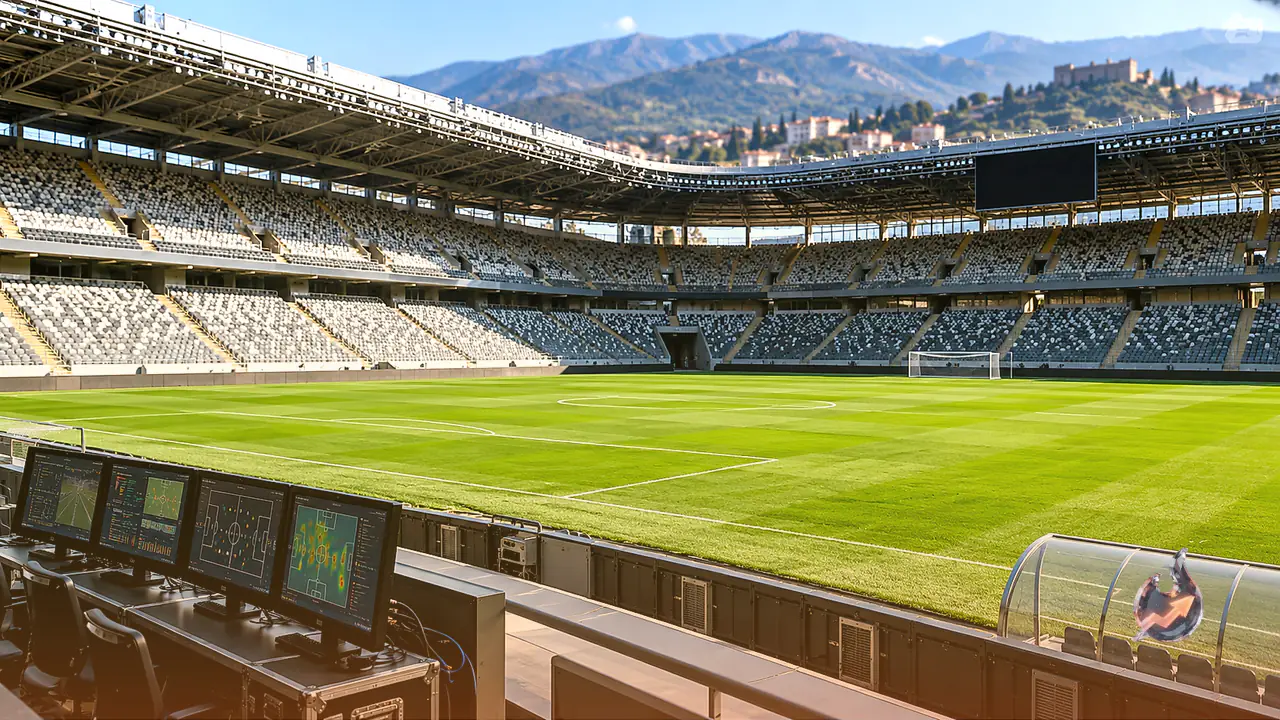
In an effort to test the modern capabilities of agentic systems, researchers developed an experimental harness using Codex to manage a Premier League fantasy team. The architecture was constructed by feeding the underlying model relevant academic literature alongside structured code guidelines designed to query live news feeds and execute predictive simulations. Despite this modern setup and its ability to process staggering amounts of sports journalism, early autonomous outputs revealed glaring blind spots. The automated setup generated baffling initial lineups, including the inexplicable choice to bench Manchester City's star goalscorer Erling Haaland, illustrating the persistent gap between processing raw volume and applying common-sense sports judgment.
To overcome these limitations, the architecture was re-engineered into an ensemble of specialized sub-agents. Rather than burdening a single model with end-to-end evaluation, the workflow was segmented systematically. Designated agents were assigned to scan football journalism and tactical analysis blogs, another cluster evaluated past performance statistics and match conditions, a third group ran probabilistic projections, and a final tier of agents was instructed to rigorously critique and challenge the proposed starting eleven. This division of labor noticeably refined the quality of the strategic recommendations. However, attempting to scale this approach beyond 100 individual agents yielded diminishing returns. Rather than making the system exponentially sharper, expanding the agent pool merely escalated computational resource consumption and inflated API bills, underscoring that strategic coordination matters far more than brute algorithmic scale.
Evaluating Autonomous Agents on Prediction Markets
The measurable improvements observed over early generation tools highlight fundamental progress in machine perception. Haifeng Xu, a computer scientist at the University of Chicago who investigates artificial intelligence applications within market dynamics, notes that newer frontier models excel at predictive reasoning precisely because they ingest vast amounts of real-world intelligence and orchestrate intricate operational workflows. As Xu observed the rapid rise of prediction exchanges like Kalshi and Polymarket late last year, he and his academic collaborators began evaluating how elite commercial systems would perform when tasked with forecasting real-world outcomes.
The research team challenged major language models to forecast a range of unpredictable scenarios, including predicting the eventual champion of the NBA Championship and determining which diplomatic figures President Donald Trump would meet. The results showed that several frontier systems performed remarkably well, frequently outperforming an average person without needing custom prompting or bespoke fine-tuning. Across their standardized evaluations, GPT-5 achieved the highest predictive accuracy, followed closely by Grok 4, Claude Sonnet, Gemini, and Llama.
From Prophet Arena to Real-Money Wagering Benchmarks
To systematically quantify these predictive capabilities, Xu and his team created Prophet Arena, an academic benchmark tailored specifically to gauge forward-looking intelligence. Similar competitive environments have emerged across the research landscape, including Prediction Arena, an initiative led by researchers from Harvard University alongside Arcada Labs. In that study, frontier commercial models were granted a budget of $10,000 to place wagers on active prediction markets across a 57-day testing window. Although the algorithmic portfolios ultimately lost money over the course of the experiment, researchers observed clear and consistent learning curves, with the models steadily refining their wagering decisions as the trials progressed.
Xu emphasizes that predictive AI delivers its best results when paired with custom harness architectures that divide analytical labor into discrete roles such as news gathering, statistical modeling, and meta-level critical review. Even so, machines still frequently trail seasoned human superforecasters. While human forecasters cannot match the vast reading speeds of automated systems, their comprehension of nuanced human dynamics, qualitative context, and political undertones behind raw headlines remains superior.
The Narrowing Divide Between Human Intuition and Machine Logic
Evidence indicates that the historical advantage held by human superforecasters may be diminishing rapidly. Recent outcomes from the Metaculus Cup revealed that frontier AI systems can occasionally outmaneuver even elite human predictors in competitive forecasting. Furthermore, forthcoming evaluations like ForecastBench are expected to deliver additional empirical evidence regarding how closely machine intelligence can match human foresight. Leading artificial intelligence research laboratories are increasingly treating future-oriented prediction as a primary metric for charting advancements in artificial general intelligence.
Just as machine learning has begun disrupting software engineering, mathematical proofing, and legal review, industries grounded in market prediction and speculative trading appear poised for fundamental upheaval. Seasoned human market participants may eventually transition into managerial supervisory roles, curating and orchestrating swarms of autonomous agents designed to parse the future far more efficiently than individual analysts. For everyday sports fans, current experimental agents still lack the tactical brilliance needed to consistently outscore human competitors in fantasy leagues. Yet as autonomous agents evolve, machine-assisted dominance may soon become trivial, perhaps diminishing the traditional satisfaction of claiming victory through sheer human grit and sports intuition.