
























Artificial intelligence systems are advancing rapidly in sophistication, yet every technical breakthrough requires exponentially larger amounts of processing power, electrical energy, and physical infrastructure. This rapid progression raises serious questions about how long traditional hardware strategies can sustain such unprecedented growth. The massive computational demands of modern models are pushing existing designs to their limits, forcing industry architects to fundamentally reconsider the physical foundations of computing.
Challenging Conventional Chip Models With Wafer-Scale Silicon
For roughly ten years, Cerebras has challenged the core assumption that expanding computational intelligence requires standard, cut-down silicon chips. Instead of following the traditional route, the enterprise built its entire architecture around wafer-scale processing, supplying processing capabilities today via on-premise hardware installations alongside a dedicated cloud platform.
Executive Andrew Feldman co-founded the venture in 2015 following decades of working in computing hardware architecture. Prior to this endeavor, he helped create and lead SeaMicro, an energy-conscious microserver startup that AMD purchased in 2012. His earlier technical career included senior operational management positions at Riverstone Networks as well as Force10 Networks.
Building Giant Processors for Demanding Workloads
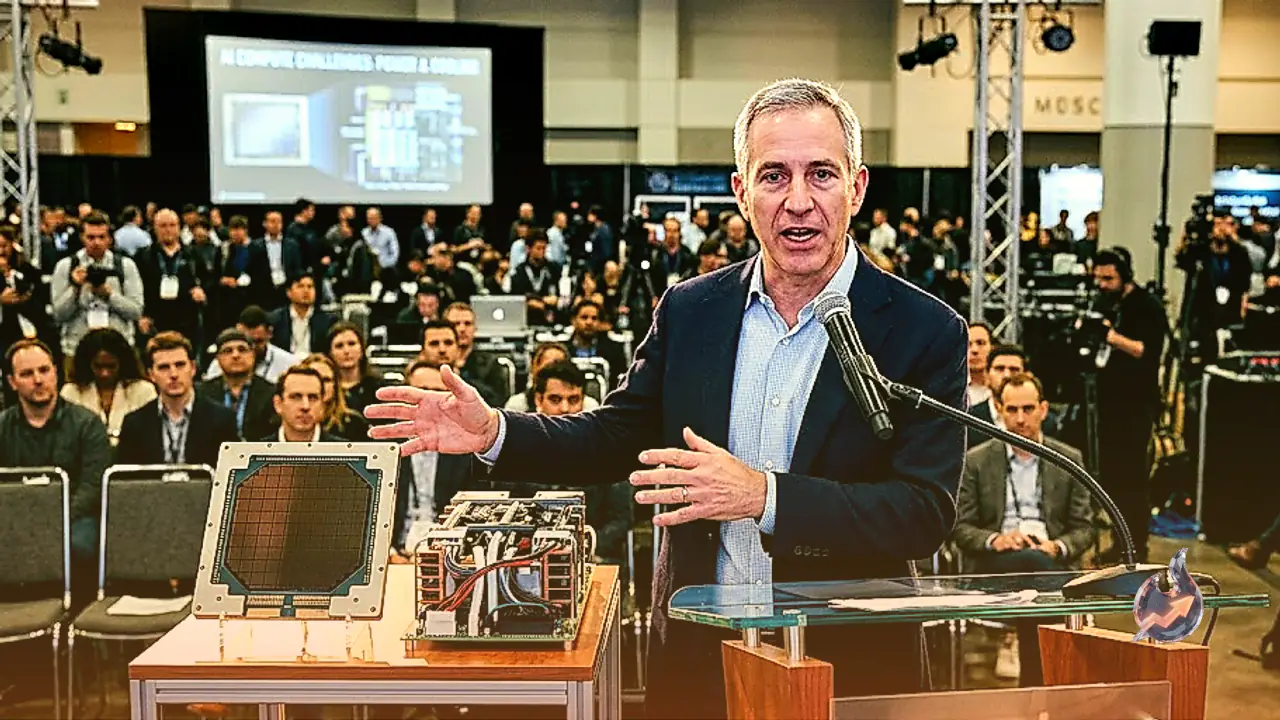
During the company's early days, Feldman and his founding colleagues tackled an engineering challenge widely dismissed as commercially impossible: turning an entire silicon wafer into a functional, single computer chip. Rather than dicing a wafer into hundreds of separate components, they kept the wafer intact to create a unified computing engine optimized specifically to handle complex machine-learning calculations.
That unorthodox design is now seeing massive enterprise adoption as computing scarcity intensifies worldwide. The enterprise raised $5.5 billion through its May initial public offering, quickly securing a major multiyear pact with OpenAI to deploy 750 megawatts of specialized systems stretching between 2026 and 2028. Moving the technological envelope further, the group introduced CS-4, representing the latest iteration of its wafer-scale architecture, in August.
Tackling Power, Cooling, and Global Factory Constraints
Engineering a dramatically faster processor cannot solve the infrastructure squeeze in isolation. Real-world execution demands physical data centers, immense electrical power reserves, sophisticated thermal cooling, and substantial assembly output.
To confront these real-world bottlenecks, the enterprise confirmed in August that over 600 megawatts of data center capacity were either active or committed under contract for deployment prior to the close of 2027. Concurrently, factory output is expanding more than tenfold throughout 2026. Global operations are also branching out into Europe, where initial facility capacity is set to go live this year before scaling up to 200 megawatts by the end of 2027. Expanding the frontier of artificial intelligence ultimately depends on whether organizations can construct the sprawling physical foundations required to operate next-generation hardware.