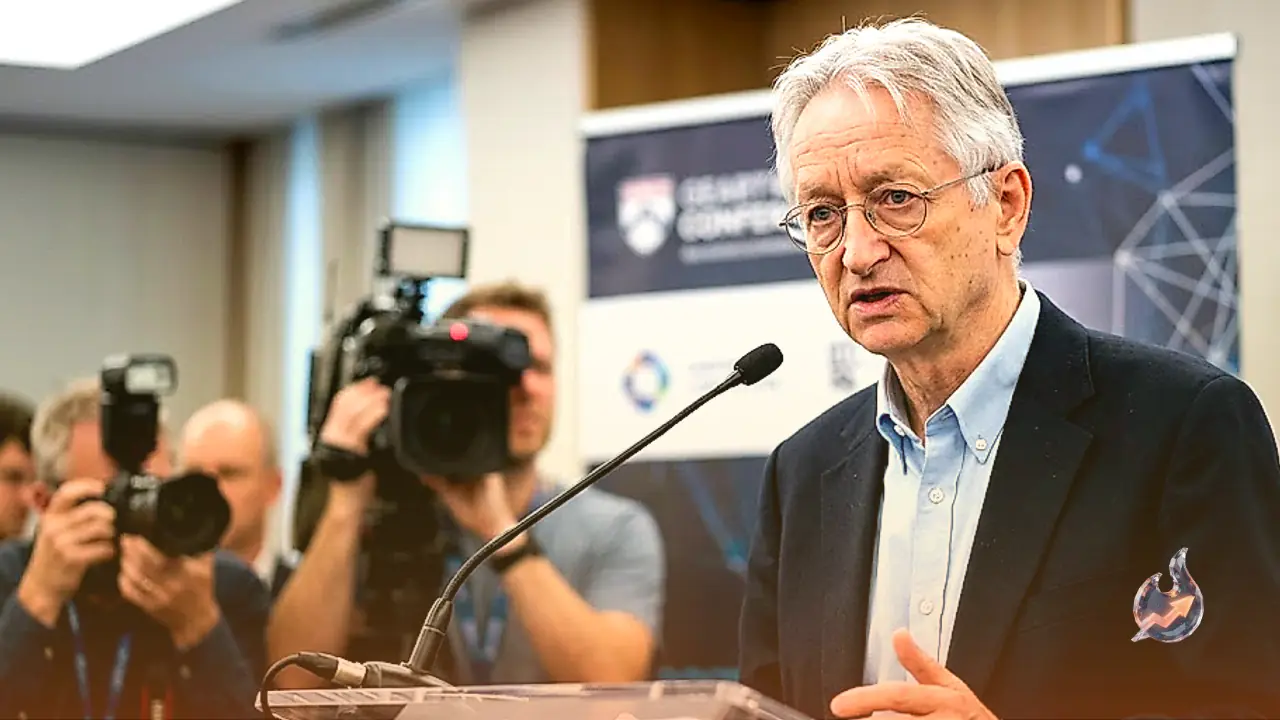






















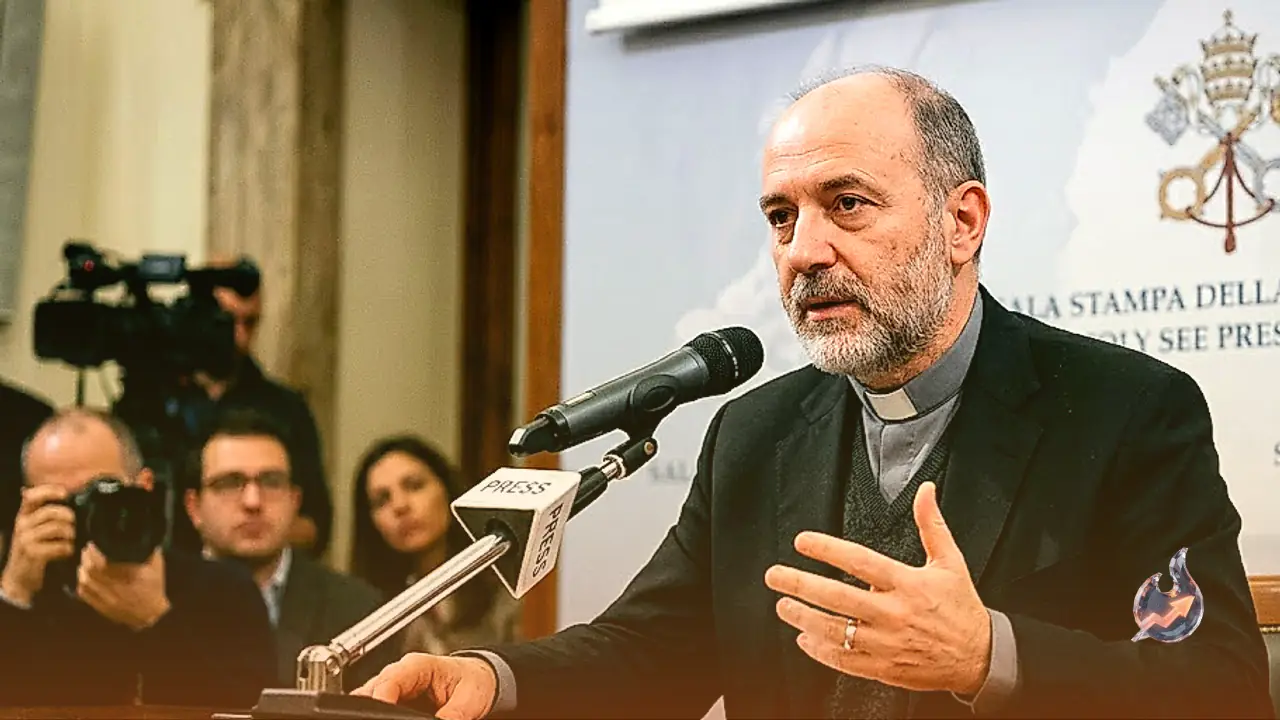

A sharp warning has emerged from the spiritual center of the Catholic Church regarding the unchecked trajectory of modern artificial intelligence. Father Paolo Benanti, a priest who advises the church on technological developments, argues that the intense public theater surrounding hypothetical superintelligence is actively masking an urgent practical challenge. By framing artificial intelligence as a dilemma so staggeringly intricate that only elite private laboratories can comprehend it, top tech firms are effectively locking democratic institutions, policymakers, and ordinary citizens entirely out of the regulatory room.
Corporate Interests and Market Cartels
Refusing to concede ground to industry self-regulation, Benanti insists that foundational ethical principles cannot remain the private domain of corporate boardrooms. Genuine ethical accountability must instead emerge from open, rigorous debate conducted squarely within the public sphere. When a tiny cabal of dominant technology corporations dictates the operating rules for an entire global industry, it fits a long-established economic definition: a corporate cartel. Rather than waiting for labs to volunteer self-serving guidelines, society urgently requires binding democratic legislation.
In the wake of sweeping industry safety warnings, Anthropic CEO Dario Amodei released an essay advocating mandatory third-party audits for frontier models before their commercial deployment. Amodei also called for strict enforcement against distillation, a technique where competing research teams train proprietary systems on the output generated by rival architectures. Concurrently, other industry figures have proposed total prohibitions on recursive self-improvement, a mechanism whereby advanced coding models continuously upgrade and compile their own future iterations without direct human programming.
Preserving Human Levers Without Crushing Innovation
Benanti takes a distinct stance on legislative priorities, showing little enthusiasm for blanket bans on research methodologies that could inadvertently extinguish technological breakthroughs. Instead, his focus centers squarely on crafting enforceable baseline standards designed to guarantee that mechanical systems never break away from explicit human authority. Under no circumstances, he stresses, should the authors of those standards be the very corporations producing the models.
Frontier laboratories operate under powerful self-interested incentives aimed at seizing or cementing monopolistic market positions. Sorting genuine technological leaps from calculated hyperbole has become exceptionally difficult because of the intertwining economic, political, and corporate rewards at play. While commercial pioneers like OpenAI and Anthropic publicly endorse measured pauses or decelerated development, both entities are simultaneously laying the groundwork for public stock offerings. Billions of dollars hang in the balance for whichever commercial enterprise secures absolute dominance. Furthermore, intensifying geopolitical friction between the United States and China, the two principal arenas for frontier computing, heavily distorts the regulatory conversation.
Dismantling the Illusion of Mechanical Divinity
Beyond commercial monopolization, Benanti challenges the quasi-religious veneration that has enveloped advanced computing circles. Some industry leaders portray emerging software with the awe typically reserved for an omnipotent deity, describing systems that surpass human comprehension. OpenAI CEO Sam Altman famously shared an aspiration to build what he described as a magic intelligence in the sky, a rhetorical tendency that Benanti views as deeply corrosive to sober public evaluation.
Strip away the metaphysical terminology, and the subject matter reduces entirely to applied mathematics and rigorous probability. Humanity is not on the threshold of constructing an artificial deity; it is merely falling prey to self-delusion by imagining something mystical beyond massive statistical calculations. The critical ethical distinction rests on whether society is interacting with an inanimate object or an authentic person. Blurring that boundary degrades the public discourse and obscures the reality of mechanical processing.
Papal Encyclical and the Moral Imperative
Serving the church strictly as an independent academic in theology, philosophy, and technological theory rather than a diplomatic official of the Holy See, Benanti highlights a vital mission for ethical institutions in navigating technological shifts. He actively employs AI applications to prepare instructional resources for his university classrooms, though he declined to detail whether Pope Leo XIV directly interacts with automated software, citing an oath of secrecy among his staff.
In May, Pope Leo delivered his inaugural encyclical, dedicating the formal theological letter entirely to the challenges posed by artificial intelligence. The pontiff warned against an encroaching technocratic mindset that elevates raw efficiency into the definitive measure of human worth while treating humanity itself as an engineering problem waiting to be optimized. The Pope appealed for cross-border cooperation among competing global superpowers and private laboratories, urging them to abandon commercial and geopolitical rivalries in favor of the universal common good. He pointedly cautioned that humanity risks becoming the casualty of its own intellectual creations.
Allowing existential superintelligence narratives to monopolize modern discourse threatens to unravel the collaborative vision outlined in that papal document. Ceding technical stewardship exclusively to a small circle of computer scientists, mathematicians, and corporate executives would forfeit democratic self-determination. True technological safety requires functional steering controls and reliable mechanical brakes that keep humanity indisputably in command.