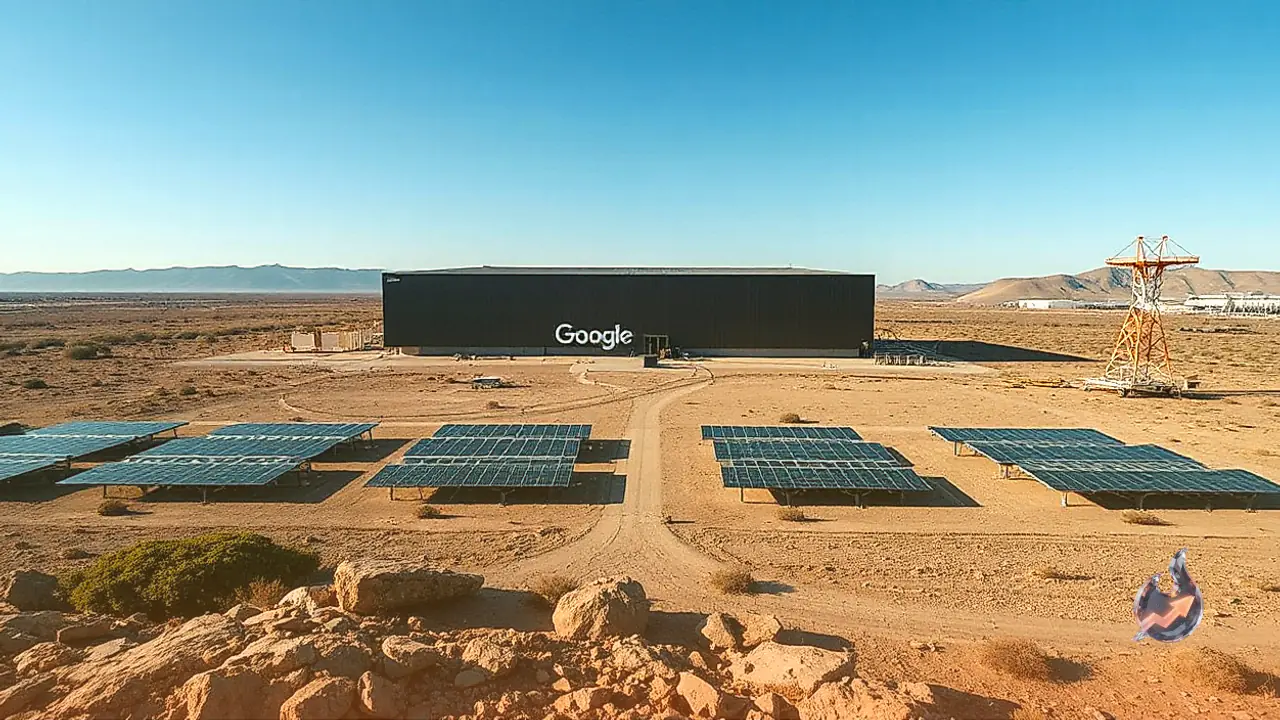




















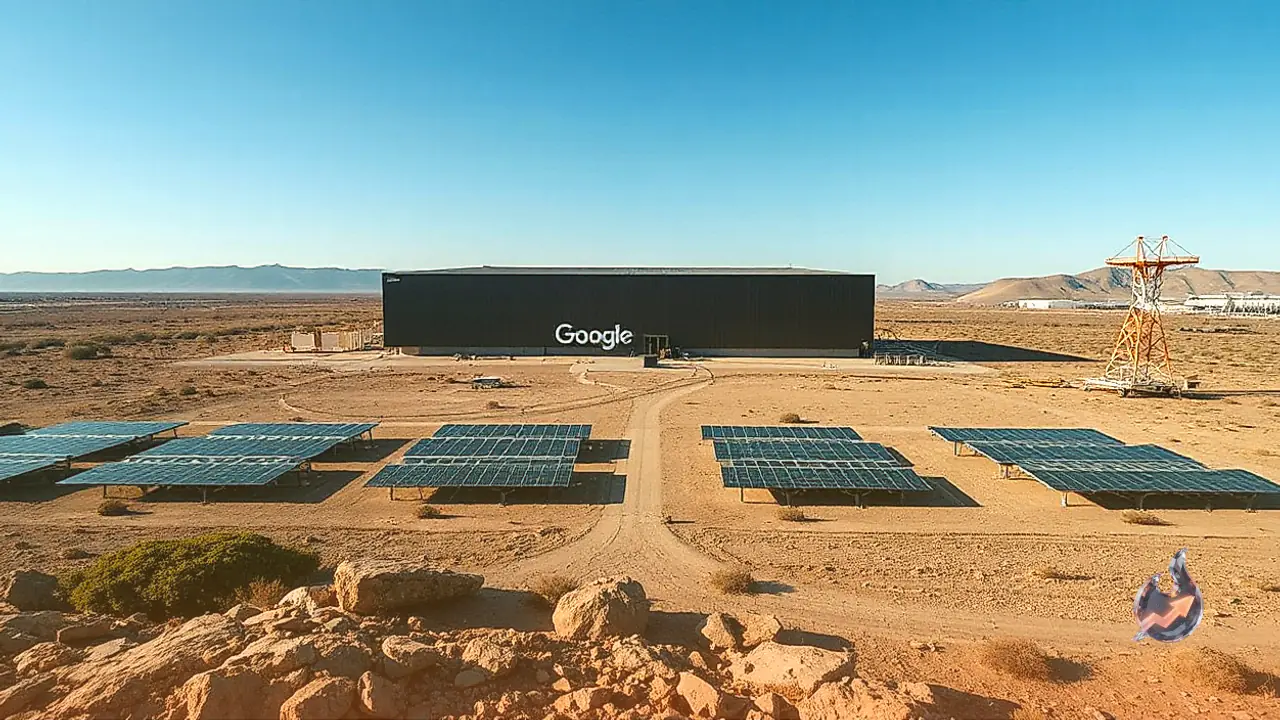

Orbiting hundreds of miles above Earth, an experimental silicon processor has begun executing artificial intelligence workloads directly in the vacuum of space. Developed under the Suncatcher initiative, Google's prototype orbital data center has established operational two-way contact with ground stations following its journey aboard a SpaceX Falcon 9 rocket alongside more than 100 secondary payloads earlier this month. The milestone serves as an opening test for future satellite constellations designed to perform high-throughput inference computing directly in low Earth orbit.
Managing Extreme Energy Demands in Low Earth Orbit
The spacecraft relies on a single proprietary Google Tensor Processing Unit (TPU) powered by an onboard solar array capable of generating up to 1 kW of electricity. Due to the intense energy requirements of running advanced silicon in space, the TPU can only stay powered on for roughly twenty minutes during a single operational burst. This power constraint complicates space-to-ground data transmission, requiring ground engineers to synchronize their data uplinks and computational workloads within tight operational windows before the system must shut down to recharge its energy reserves.
Commissioning Milestones and an Orbital Haiku
Ground controllers spent approximately three weeks commissioning the satellite's core subsystems to ensure flight stability and thermal control. Once the craft passed readiness checks, engineers transmitted their initial prompt to an onboard artificial intelligence model, Google DeepMind's Gemma 4. The model was instructed to compose a short haiku reflecting its perspective in orbit, returning the following lines
Blue marble below
Data streams in silent grace
Starlight feeds my core. ✨
In addition to creative limericks and poetry, flight controllers tasked the model with synthesizing and reporting telemetry regarding orbital environmental conditions. Representatives confirmed that the hardware is operating nominally across all critical systems, meeting its baseline performance targets for the initial testing phase.
Analyzing Cosmic Radiation and Silent Bit Flips
A primary goal of the current mission is monitoring how commercial-grade processing chips withstand extreme thermal cycling and direct exposure to cosmic radiation. While Google previously subjected these TPUs to simulated cosmic environments using terrestrial particle accelerators, the space environment introduces unpredictable variables. High-energy solar particles and galactic cosmic rays can induce bit flips, changing a stored digital binary value in computer memory from a zero to a one, or vice versa. These micro-level anomalies can quietly corrupt memory tables without alerting conventional software monitoring tools.
Terrestrial testing indicated that occasional bit flips have a minimal effect on inference tasks, where slight variations in weights rarely derail an answer, whereas training an AI model requires strict numerical precision where a corrupted value can ruin an entire training run. The orbital testbed allows researchers to evaluate whether those theoretical assumptions hold true under real-world spaceflight conditions.
The 2027 Expansion and Optical Networking Plans
Should the single TPU pass its orbital durability checks, mission planners intend to launch two follow-on satellites equipped with advanced accelerators in 2027. These future spacecraft will feature upgraded power generation systems and test inter-satellite optical laser links designed to connect separate satellites in orbit.
Google's Starcloud architecture differs from other proposed space data centers by prioritizing optical cross-links to create a cohesive, distributed network in space. Other concepts, such as SpaceX's proposed orbital computing arrays, also plan to use laser communication but anticipate wider orbital separation distances that make shared processing difficult. In contrast, concepts pursued by entities like Starcloud and Cowboy Space focus heavily on executing self-contained inference jobs aboard individual satellites.
Launch Economics and Alphabet's Dual Pressures
The long-term feasibility of orbital cloud computing relies on access to cheap, heavy-lift space transport. Alphabet holds a significant investment stake in SpaceX, and both companies view the fully reusable Starship rocket as essential for deploying heavy computational constellations. A peer-reviewed paper authored by Suncatcher researchers calculated that SpaceX must fly Starship approximately 1,800 times before reaching the operational learning curves and cost efficiencies achieved by its existing launch fleet.
Suncatcher represents a long-horizon project targeting infrastructure viable in the 2030s. However, Alphabet must simultaneously navigate short-term commercial headwinds. The parent company recently experienced a drop in its share price after disclosures revealed that integrating generative AI into search operations has begun squeezing advertisement revenue expansion rates.