






















User reviews and feedback platforms are reflecting a deep wave of frustration from workers within the insurance sector. One representative review states that pushing artificial intelligence to the point of asking humans not to use their thoughts and brains is a major turn-off. Another review simply demands an end to forcing the technology onto everyone, while a third blunt comment declares that the artificial intelligence applications used by a specific company are entirely trash.
These reviews do not originate from journalists or educators, but rather from insurance claims adjusters. In fact, recent research conducted by Glassdoor found that claims adjusters who mention artificial intelligence in their posts are critical a staggering 98 percent of the time, earning them the title of the biggest artificial intelligence detractors in the American workforce. Typically, insurance adjusters voice complaints about leadership obsessed with the technology, forcing error-prone systems onto both employees and their clients. Adjusters explain that when the technology falls short in this line of work, they are left to clean up the resulting human mess.
Consider the experience of Ahmad Jackson. Approximately a year ago, he was employed within the claims department of a major insurance company. His employer made the decision to implement artificial intelligence for initial loss reporting, a process involving the setup of claims and the gathering of information when an incident is first reported. This was intended to benefit both employees and policyholders by streamlining straightforward claims while routing more complex situations to human staff. Instead, Jackson recounts that he and his colleagues suddenly faced an influx of misclassified claims that necessitated redirection to the proper departments.
He encountered artificial intelligence-driven hallucinations while reviewing claims summaries, and when he inadvertently passed those errors along to claimants or their attorneys, he absorbed the full force of their anger. He resigned from the company shortly thereafter, transitioning to a different insurance carrier. Jackson notes that the technology is getting things wrong and creating additional labor for the adjusters. Geoffrey Conrad, a claims executive based in Mobile, Alabama, describes a prevailing sense of fatigue, noting widespread exhaustion regarding the sheer volume of technology being pushed upon them.
Chris Martin, a senior economist at Glassdoor, did not anticipate such an intense level of animosity toward the technology from claims adjusters. Upon reviewing the data, he performed a double-take and initiated a deeper investigation, ultimately concluding that the entire profession is undergoing a significant reckoning. In the year 2024, the Bureau of Labor Statistics reported expectations that the number of claims adjusters in the United States would decline by 18,900, representing a 5 percent drop over the decade. Data from the bureau further indicated that employment within the sector plummeted by a staggering 21 percent between May 2025 and May 2026.
For early-career professionals, the contraction was even more severe, with entry-level job postings dropping by 50 percent since 2025 according to Glassdoor figures. The Bureau of Labor Statistics pointed to technological advancements as a primary driver behind this downward trend. Over recent years, artificial intelligence startups like Liberate and Pace have secured millions in funding based on pledges to reinvent the insurance industry, while established carriers have expanded automated claim handling. In practical terms, this operational shift can manifest as interacting with a chatbot rather than a human representative to file a claim.
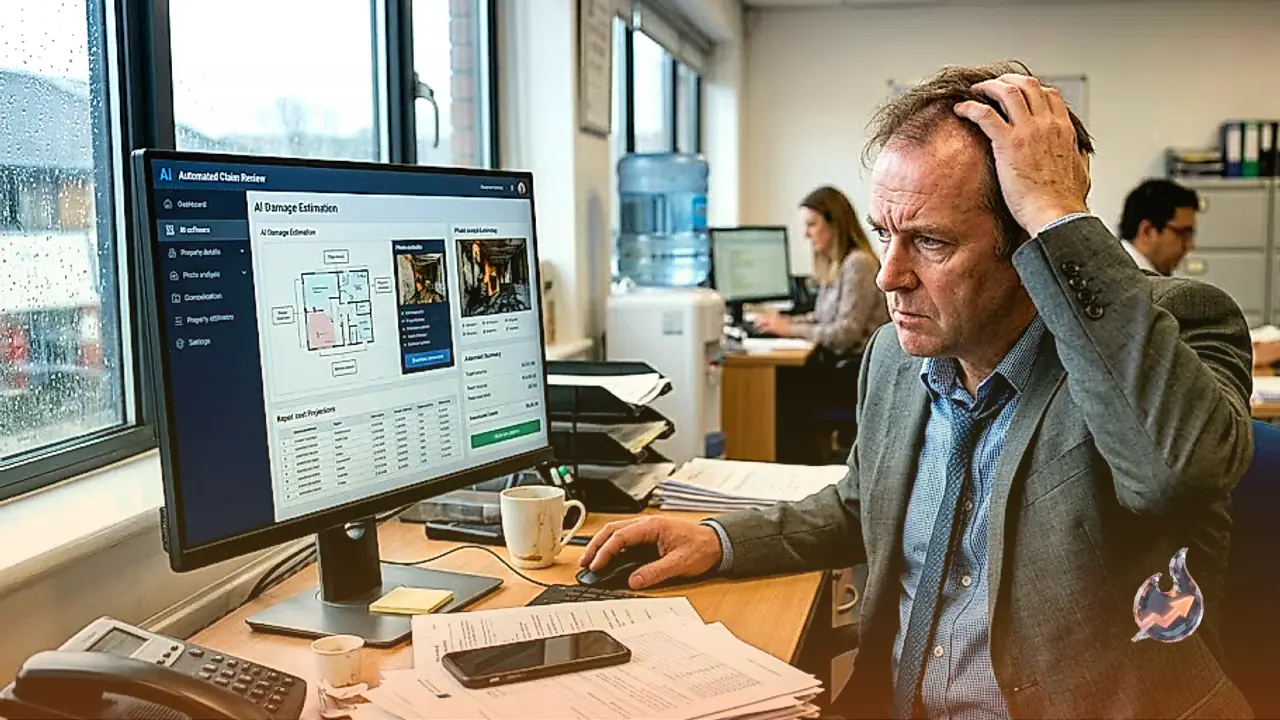
Instead of deploying personnel to inspect property damage, automated tools might analyze visual media to generate payout estimates. Extensive medical records containing hundreds of pages can be condensed by automated systems to extract critical details. Alternatively, an insurer's digital tool might process uploaded policyholder documentation, photographs, videos, and receipts to issue a payout within seconds. This represents the core objective of Lemonade, an insurance company that has promised to replace bureaucratic processes with bots and machine learning since its founding in 2015.
By the close of last year, its proprietary chatbot, AI Jim, managed initial reports in 96 percent of instances, with automation handling roughly 55 percent of all claims overall. While more traditional carriers such as State Farm emphasize that claims processing requires a combination of human and digital expertise, some adjusters remain apprehensive that they are actively training their own replacements. Paul Staats, a spokesperson for Lemonade, acknowledges that the technology will impact numerous occupations and threaten incumbent roles within insurance and the broader economy, while asserting that automation frees employees to focus their empathy, care, and expertise on the most complex claims. Staats adds that the findings from Glassdoor should be taken seriously across the entire industry.
Martin emphasizes that the lack of favorable job prospects leaves workers feeling anxious about impending layoffs, a sentiment reflected in increasingly negative online reviews. He notes that reviewers also display skepticism when substandard products are forced upon them or their clients. Conrad, the Alabama claims adjuster, reiterates the feeling among professionals that they are being phased out by automated models, stressing that the technology is merely a tool and should never be granted ultimate control. While acknowledging that certain administrative tasks benefit from automation, such as minor calls to extend a rental car booking for a few days, adjusters remain deeply skeptical.
Justin Tomczak, a representative for State Farm, states that the corporate goal is to equip agents and employees with superior tools to dedicate more time to customer assistance. Nevertheless, industry veterans like Sandy Avina, a former adjuster turned consultant, point out a general lack of faith in system outputs. A minor visual imperfection in an attorney's document or a missed data point in a medical summary can trigger hallucinations and incorrect payouts, leaving customers unaware that a digital system caused the error while directing their frustration at the human adjuster.
Conrad acknowledges that the public often perceives claims adjusters with skepticism, but maintains that an effective adjuster combines empathy with relentless advocacy to secure maximum compensation for the policyholder. Drawing from personal experience, he recalls his home burning down in a total loss prior to his entry into the industry, noting that relying solely on photographs and automated estimates would have devastated him during a moment when he primarily needed reassurance regarding his family's safety and well-being. He concludes that while technology has its uses, substituting it entirely for human presence represents a dangerous strategy.