




















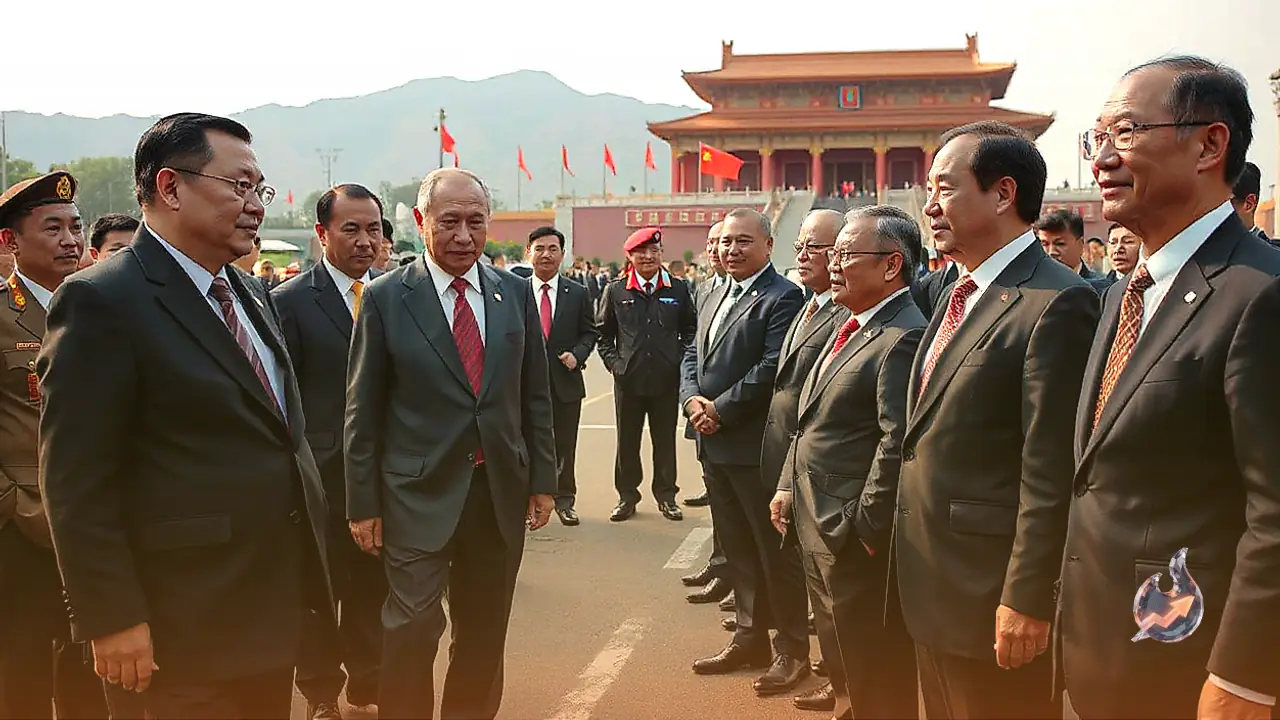

A high-stakes diplomatic undercurrent has gripped international capitals in the run-up to the Asia-Pacific Economic Cooperation gathering. With merely two weeks remaining before the major summit opens in the Chinese metropolis of Shenzhen, intense anticipation surrounds whether Chinese President Xi Jinping, Russian President Vladimir Putin, and US President Donald Trump will actually convene around a single conference table. Observers across global policy circles are closely monitoring the manoeuvring to see what specific priorities might emerge if these three dominant powers stage a face-to-face trilateral dialogue.
Behind-the-Scenes Negotiations for an Unprecedented Trilateral Gathering
Behind closed doors, senior diplomats representing Washington, Moscow, and Beijing have been engaged in rigorous preparatory discussions aimed at arranging a landmark tripartite summit among their top leaders. Should such a meeting materialize, it could mark one of the most consequential geopolitical shifts in modern diplomatic history. Many observers view the concept as a potential precursor to an informal G3 framework. Nevertheless, orchestrating a tripartite summit of this magnitude remains fraught with political minefields unique to each participant.
Kremlin spokesperson Dmitry Peskov recently confirmed that work is actively underway toward coordinating such an engagement between Xi Jinping, Vladimir Putin, and Donald Trump. Officials in both Washington and Moscow are understood to be persistently urging the Chinese government to formally grant its green light to the tripartite arrangement.
Beijing Weighs High Prestige Against Unpredictable Hazards
In stark contrast to the push from Moscow and Washington, the Chinese Ministry of Foreign Affairs has adopted an extremely calculated, measured, and defensive posture. While Chinese spokespersons state that they remain in constant dialogue with all relevant stakeholders, Beijing has deliberately stopped short of offering any binding commitment. Chinese authorities recognize that the geopolitical risks and rewards in this equation are immense.
On one hand, orchestrating a successful trilateral gathering in Shenzhen offers enormous political dividends directly to Xi Jinping. Hosting the leaders of the other two preeminent world powers on Chinese soil would serve as a powerful visual signal that the operational core of international diplomacy is shifting decisively eastward from the Western sphere.
On the other hand, the prospective summit poses substantial risks that Beijing cannot overlook. Chinese planners are acutely aware that sharing an open platform with figures as volatile as Trump and Putin could divert the global press corps away from the core economic objectives of the APEC framework. Instead, media scrutiny would inevitably fixate on the interpersonal friction and unpredictability of the three leaders. The Chinese leadership is reluctant to let a critical venue designed to support its domestic economy be transformed into a theater for high-drama political spectacle.
A Fundamental Divergence in Strategic Priorities
Even if negotiators manage to finalize logistics for a trilateral session, diplomatic analysts caution that forging substantive agreements remains a remote prospect. The three superpowers approach the conference table with objectives that are fundamentally misaligned.
- United States: Donald Trump remains fundamentally transaction-driven, concentrating his strategy on narrowing trade imbalances, leveraging broad tariff regimes, and reasserting American dominance across international commerce.
- Russia: Vladimir Putin seeks mechanisms to dismantle or soften severe economic sanctions imposed by Western nations following the Ukraine war, while simultaneously utilizing the summit to restore Moscow's contested standing on the global stage.
- China: Xi Jinping focuses primarily on revitalizing a sluggish domestic economy, securing breathing room from punitive American trade measures, and reinforcing strict diplomatic boundaries regarding Taiwan's sovereignty.
The Single Greatest Barrier That Could Derail the Summit
The foremost obstacle capable of scuttling this historic meeting at the eleventh hour is deep-seated mutual suspicion coupled with the total lack of consensus on a shared agenda.
Beijing harbors profound reservations regarding Donald Trump's inherent volatility, which could overturn negotiated protocol or diplomatic decorum without warning. If Chinese officials suspect that the session might be exploited to play to domestic American electoral audiences or subject Beijing to public embarrassment, they will promptly withdraw from the tripartite format. Under such circumstances, China would retreat to the safer, tightly scripted alternative of holding separate bilateral meetings.
With only two weeks left before the summit opens, the escalating diplomatic tug-of-war demonstrates that even amid profound geopolitical rivalry, communication channels between great powers remain operative. Whether this initiative culminates in an unprecedented trilateral G3 encounter or dissolves into standard bilateral exchanges will be decided over the coming days. What is undeniable is that Shenzhen stands poised to become the most closely watched diplomatic arena of 2026.