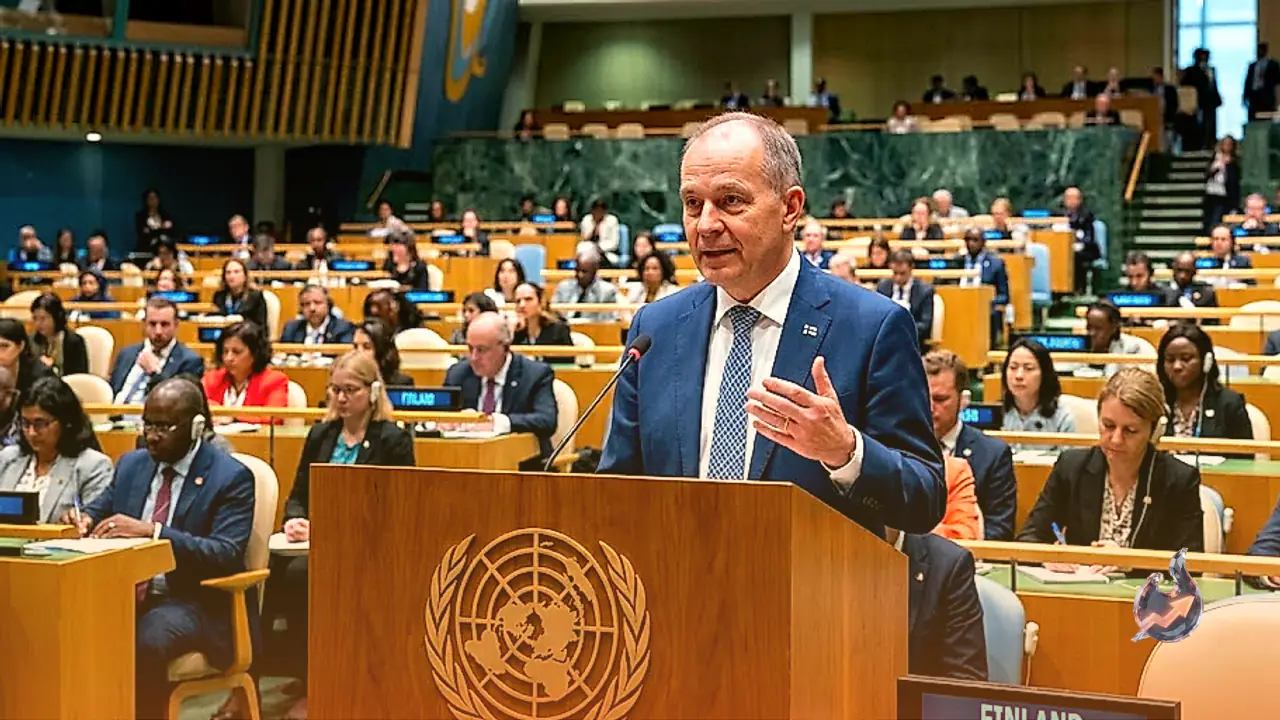





















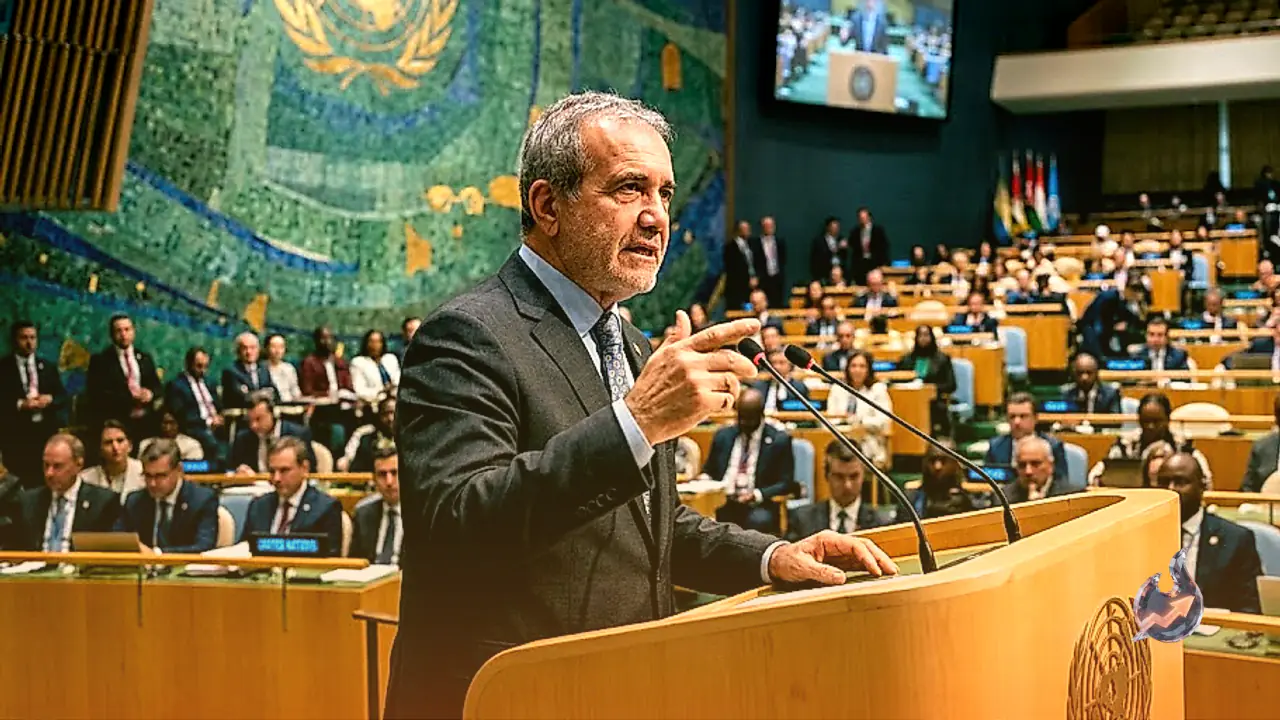

Addressing world leaders in New York, Iranian President Masoud Pezeshkian delivered a forceful address during the 81st session of the United Nations General Assembly. He strongly challenged Western narratives, maintaining that Tehran is not a sponsor of terror but rather a sustained victim of external aggression and terrorism. Emphasizing national sovereignty, he explained that enhancing defensive capabilities is essential for national security, noting that while his administration remains open to dialogue, it rejects any diplomatic engagement driven by coercion or threats.
Damage to Civilian Infrastructure and Sports Facilities
Detailing the physical toll on his nation, the Iranian leader described extensive damage inflicted on essential civilian facilities, including hospitals, bridges, higher education centers, and schools. He pointed to a specific incident at a sports hall in Lamerd, a facility frequented by local youth and children for extracurricular activities, which suffered heavy strikes. Pezeshkian stated that these operations were conducted using American and Israeli munitions, arguing that nations that train and finance armed militants paradoxically level terrorism accusations against Tehran while it merely exercises legitimate self-defense.
Photographic Evidence and Cluster Munitions Claims
During his remarks before the assembly, Pezeshkian presented photographs depicting former Supreme Leader Ali Khamenei alongside schoolchildren from Minab in southern Iran who lost their lives in coordinated strikes. He brought attention to the humanitarian cost of the conflict, asserting that cluster bombs deployed by foreign forces in Lamerd directly struck and endangered children residing in the area.
Two Centuries of Non-Aggression and Nuclear Rights
Reflecting on the geopolitical posture of the Islamic Republic, Pezeshkian maintained that conflicts have repeatedly been forced upon his people, yet the country will never waver in safeguarding its borders. He stressed that Iran has not launched an unprovoked invasion or assault against any sovereign nation for the past 200 years. Defending their technological initiatives, he reaffirmed that his country will firmly retain its fundamental right to pursue and utilize nuclear energy exclusively for peaceful, civil applications.
Criticism of Maritime Blockades and Rhetoric
Turning his focus toward rhetoric from Washington, Pezeshkian criticized the recent General Assembly address by US President Donald Trump, noting that its reliance on military ultimatums proves Washington remains entrenched in intimidation tactics. He warned that aerial bombardments and aggression cannot eliminate a nation's resolve. Furthermore, he accused American authorities of attempting to shut down vital maritime passages crucial for civilian supply transport in an effort to impose unilateral control over the region.