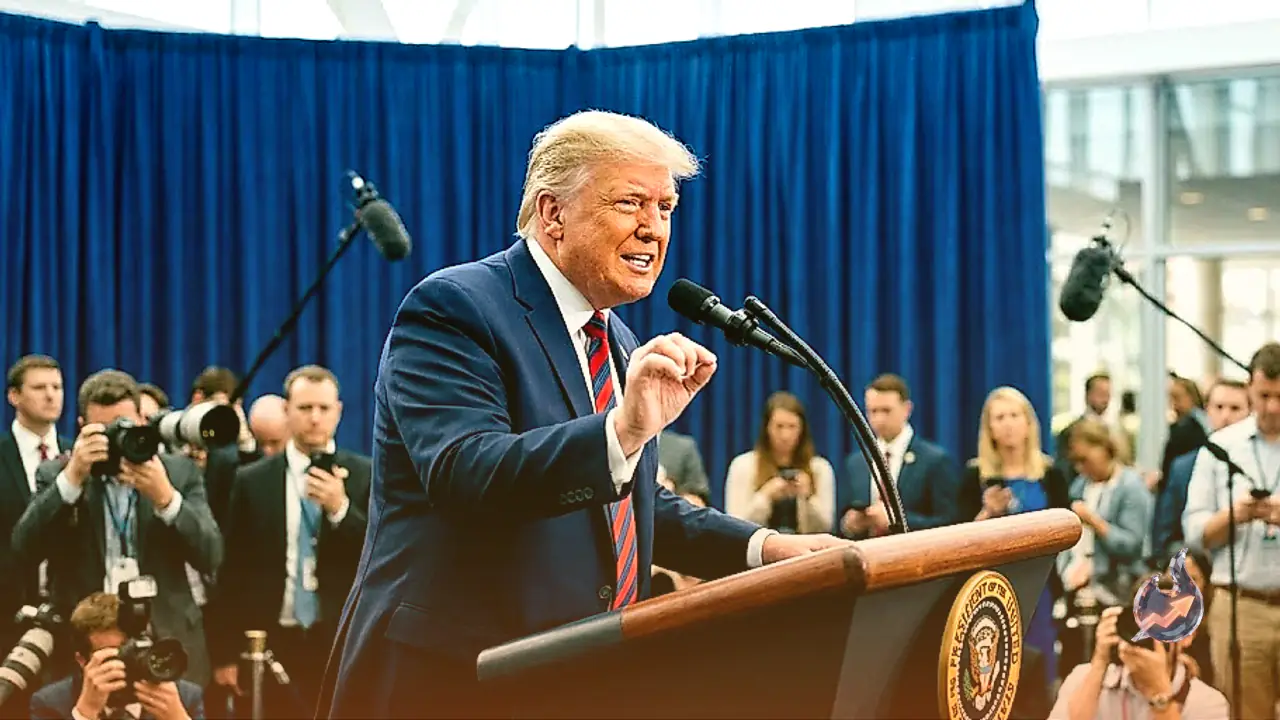























The Donald Trump administration's effort to restrict birthright citizenship in the United States has hit a major legal roadblock. A US District Court in Maryland issued a preliminary injunction halting the implementation of a new federal order designed to exclude certain infants born on US soil from receiving automatic citizenship. US District Judge Deborah L. Boardman issued the ruling on Wednesday, placing the executive directive on hold while a broader class-action lawsuit proceeds. The court challenge was brought by immigrant families alongside civil rights advocacy groups who argued that children born in the country cannot be arbitrarily denied their constitutional citizenship rights.
Government Cites 'Birth Tourism' Concerns
In defending the initiative, administration officials maintained that the directive was specifically formulated to curb what they classify as birth tourism. Under this practice, foreign nationals travel to the US on temporary non-immigrant visas for the primary purpose of delivering a child who would then acquire US citizenship at birth. The administration's policy explicitly defines a birth tourist as an individual entering the country on a non-immigrant visa specifically intended for childbirth. However, advocacy organizations contesting the measure contend that the broad terminology threatens the legal rights of numerous immigrant families lawfully residing in the country.
Judicial Rationale and Rejection of Federal Arguments
During the legal proceedings, Judge Boardman observed that the US Supreme Court has previously affirmed that children encompassed within the certified class hold birthright citizenship. In her judicial order, she emphasized that the administration's new regulation improperly obstructs federal agencies from issuing vital citizenship documents to several substantial groups of children. Government attorneys had urged the court not to issue an injunction, claiming such action was premature and assuring that federal agencies would establish fair procedures and formal implementation guidelines. Judge Boardman firmly dismissed those government arguments, ruling that immediate intervention was necessary to prevent irreparable harm.
Pattern of Executive Action and Ongoing Legal Battles
The latest court ruling represents another setback in a multi-year effort by Donald Trump to revise the long-standing principle of birthright citizenship. Previously, the administration introduced a broader executive order seeking to end automatic citizenship for children born to undocumented immigrants or temporary residents. That initial measure faced immediate judicial challenges, culminating in a June decision by the US Supreme Court that effectively blocked the effort. In August, the administration returned with a more narrowly tailored directive, but the Maryland federal court has now placed that revised measure on hold as well.
Understanding the Legal Scope of Birthright Citizenship
Under established US legal principles rooted in the Fourteenth Amendment, virtually any person born within the territorial jurisdiction of the United States automatically obtains citizenship at birth, with only rare statutory exceptions. While the administration contends that this framework is vulnerable to exploitation and demands policy intervention, legal scholars and immigrant rights groups argue that executive decrees cannot override constitutional protections. With the Maryland district court's latest injunction now active, federal agencies remain prohibited from enforcing the new birthright restrictions pending the outcome of the litigation.