























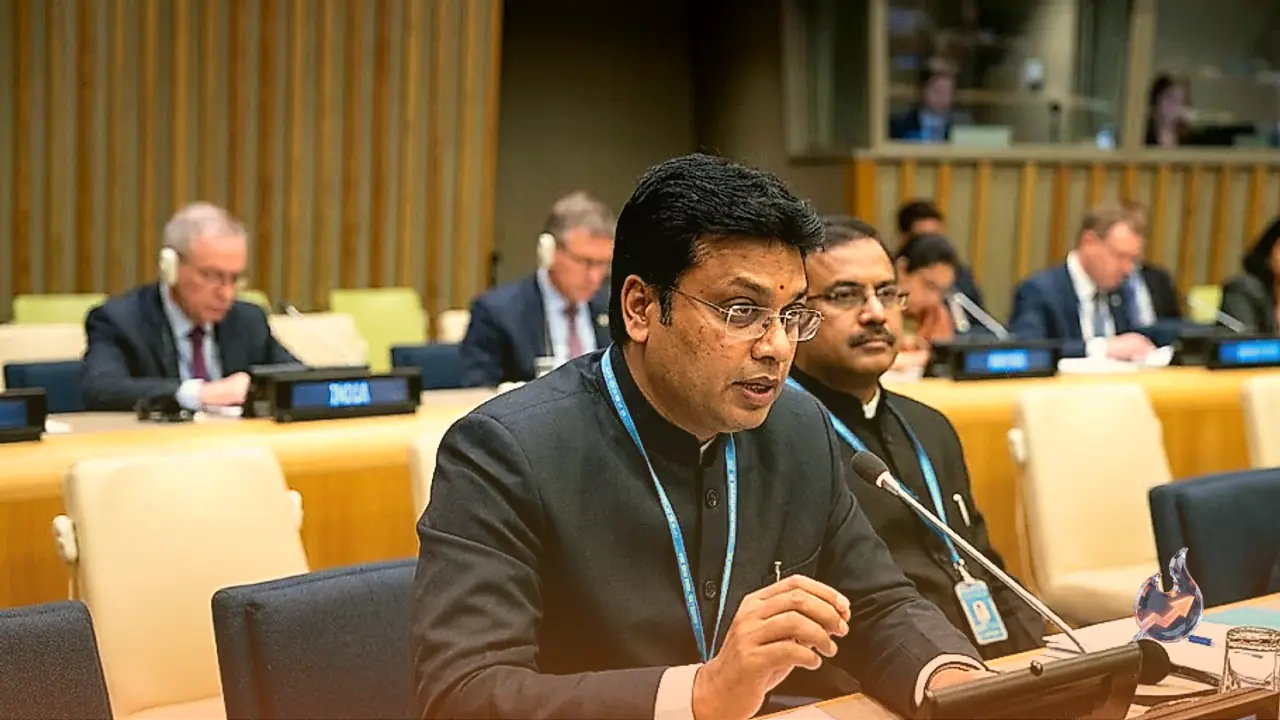

Taking a firm stance against violent extremism on the global stage, India has firmly dismissed selective approaches toward acts of violence. During the 81st session of the United Nations General Assembly in New York, parliamentary delegation member Biplab Kumar Deb presented the national statement before the Sixth Committee. The address emphasized that armed violence targeting peaceful populations poses a direct and pervasive danger to international stability, civic safety, economic progress, and basic human rights across the globe.
Rejecting Arbitrary Categories of Violence
Addressing the international gathering, the BJP lawmaker asserted that attacks against ordinary individuals cannot be justified under any circumstances or grievances. He challenged the tendency in some quarters to divide violent extremism into separate categories based on political convenience, stating clearly that targeting civilian populations admits no rationale and that violent acts cannot be sorted into acceptable or unacceptable brackets.
"आम नागरिकों को निशाना बनाने का कोई भी कारण या औचित्य नहीं हो सकता और 'अच्छे' या 'बुरे' आतंकवाद के बीच कोई फर्क नहीं होता।"
Misuse of Emerging Technologies and Digital Platforms
The presentation underscored growing alarm over how extremist organizations are increasingly exploiting emerging digital tools and platforms. These technological systems are actively leveraged to recruit followers, spread radical propaganda, organize hostile field operations, and gather operational funds across jurisdictions. In light of these digital threats, India called upon sovereign states to upgrade cross-border legal frameworks and deepen intelligence and technical collaboration.
Push for the Global Legal Treaty and Key Action Pillars
India renewed its long-standing appeal for the swift completion and adoption of the Comprehensive Convention on International Terrorism (CCIT). Finalizing this global instrument would establish a binding legal foundation to pursue offenders and dismantle support networks worldwide. The address also placed emphasis on India's strategic priorities for countering this challenge, specifically stressing domestic capability development alongside the systematic dismantling of extremist narratives and support infrastructure.
Accountability for the Pahalgam Attack and Cross-Border Networks
Reflecting on the severe human cost imposed by hostile cross-border operations, the delegate drew attention to the tragic incidents in Pahalgam, noting the April 2025 occurrence as well as the devastating assault in April 2026 that claimed the lives of 26 innocent civilians. He demanded that international mechanisms look beyond foot soldiers to penalize planners, financiers, and state sponsors enabling such tragedies. While reaffirming its commitment to multilateral cooperation, India maintained that it reserves the complete right to safeguard its citizens from cross-border violence.