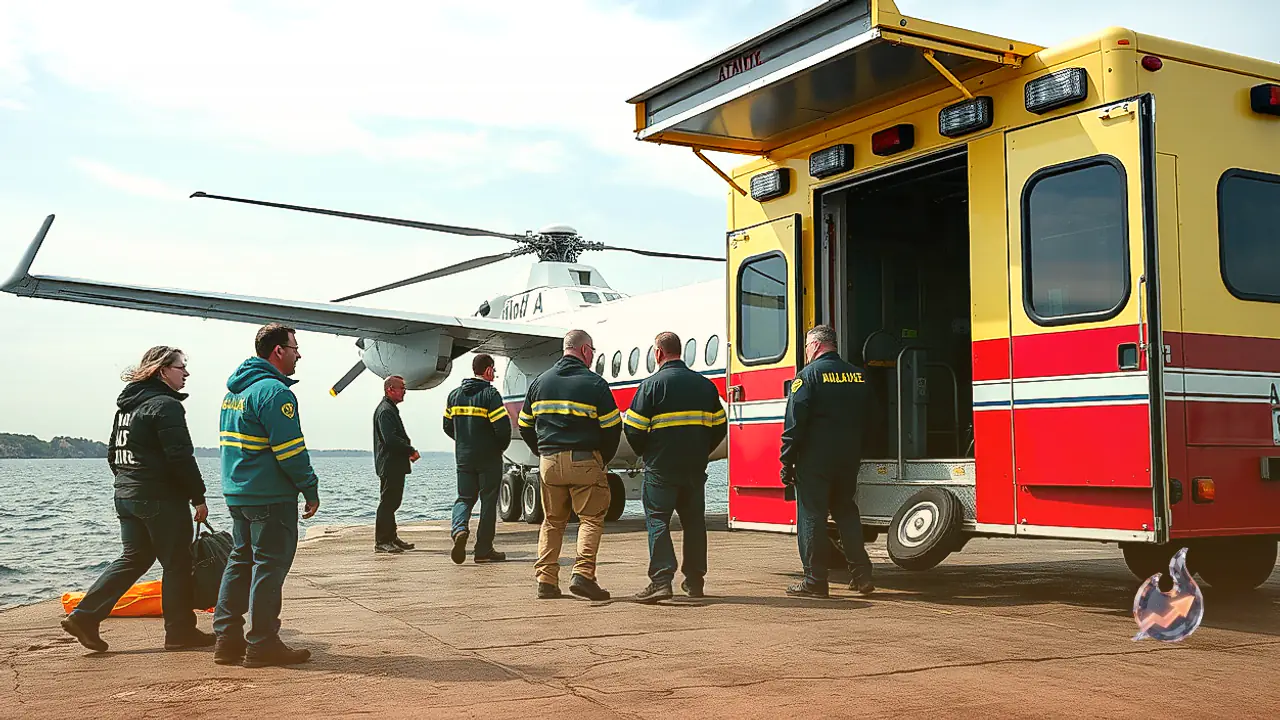

















The extreme measures undertaken by the United States Secret Service and military to protect sitting American presidents become evident when analyzing two highly secretive operations conducted across different eras. Whenever a credible and severe threat to a president's life emerges, security agencies execute complex decoy tactics designed to mislead global media, foreign intelligence, and potential attackers. The core objective of these undercover protocols is to safely transport the commander in chief to their destination while keeping their precise location and aircraft completely obscured. A recent secret swap involving Donald Trump at an airport in Turkey and a 25-year-old mission involving Bill Clinton in Pakistan illustrate how presidential protection relies on deceptive aviation strategies when danger is imminent.
March 2000 Pakistan Visit and the Air Force One Decoy
In March 2000, then US President Bill Clinton traveled to Islamabad, Pakistan, as part of his South Asian tour. During that period, American security officials faced credible intelligence indicating severe threats against President Clinton. To counter the risk, protective agencies formulated a specialized operational layout. Upon arrival at the airfield in Islamabad, an aircraft bearing official Air Force One markings landed in full view of waiting media personnel. A Secret Service agent carefully styled as a body double for Bill Clinton stepped off the plane. Observing from a distance, press members and cameras operated under the conviction that the American president had landed.
However, the actual events unfolded quite differently. Moments after the decoy plane taxied on the tarmac, a second, completely unmarked and ordinary plane touched down quietly at the same airport. It was from this unbranded aircraft that the real President Bill Clinton disembarked. By deploying a dummy plane and a lookalike agent in plain sight of the media, the Secret Service successfully shielded Clinton from potential security breaches. Knowledge of this covert plan was strictly limited to a tiny circle of officials. Prior to departing India for Pakistan, White House representatives provided a confidential off-the-record briefing to accompanying journalists, informing them that security circumstances dictated the president would not land via the standard Air Force One protocol.
Veteran journalist Susan Page subsequently disclosed details of this briefing, recalling how officials emphasized that extraordinary safety arrangements were being enforced for both the president and the press contingent traveling with him in Pakistan. Because the briefing was delivered strictly off the record at the time, the details remained unpublicized for decades. Now, over 25 years later, the mechanics of that high stakes decoy mission have been fully revealed.
The Secret Plane Swap for Donald Trump in Turkey
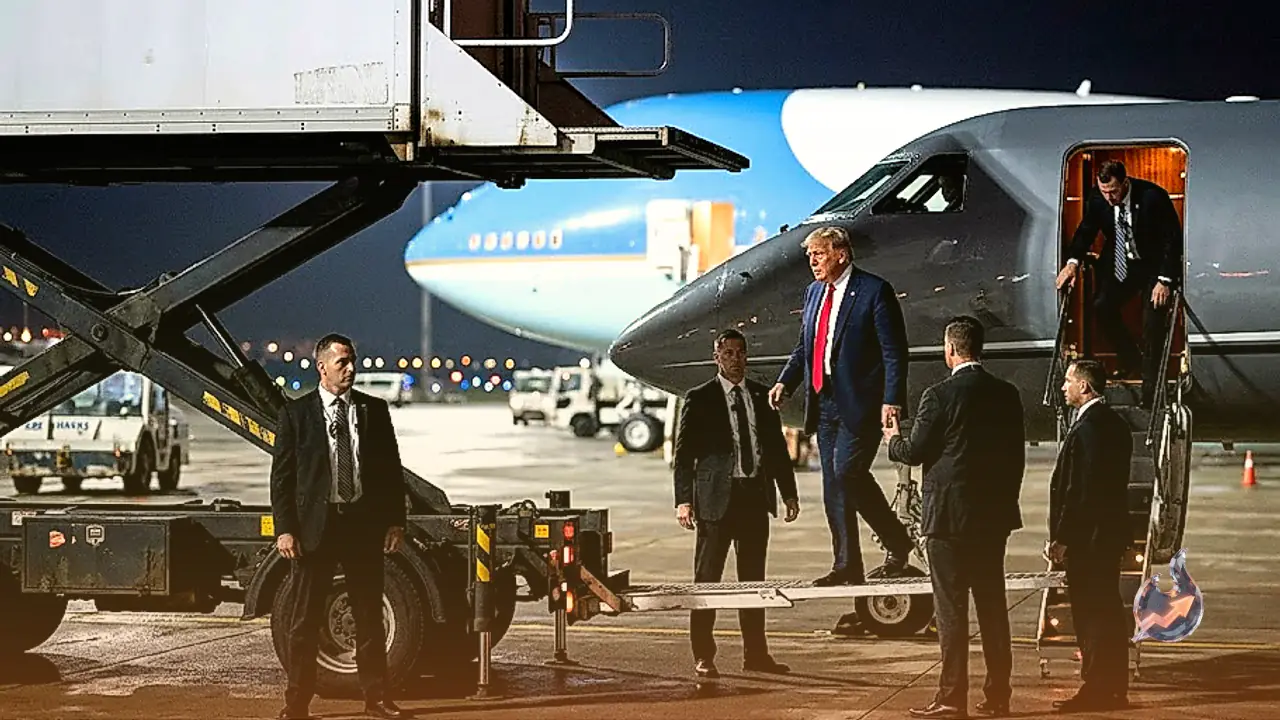
A quarter century after Bill Clinton's mission in Pakistan, a strikingly similar clandestine procedure was carried out in Turkey to protect Donald Trump. Recent reports indicate that intelligence authorities identified a credible threat originating from Iran targeted against Donald Trump. Upon evaluating the risk, protective personnel determined it was unsafe for Trump to remain aboard the primary presidential jet. Consequently, security teams quietly transferred Donald Trump out of Air Force One and into a smaller, unmarked aircraft.
The aircraft transfer was orchestrated with meticulous secrecy. Security teams utilized an airport catering truck to move Donald Trump discreetly between the two airplanes under cover. Throughout the swap, over 100 officials, staff members, and journalists aboard Air Force One remained oblivious to the change as their plane continued its scheduled flight toward Britain. Most individuals on board had no knowledge that Donald Trump had exited the primary aircraft.
During the operation, journalists and other passengers on Air Force One were instructed to keep their window shades lowered to block any view of the airfield activities. Key administration figures traveling for the NATO summit, including Secretary of State Marco Rubio and Treasury Secretary Scott Bessent, stayed aboard the large Air Force One jet. This allowed the primary aircraft to maintain its path to Britain, effectively acting as a decoy to conceal Donald Trump's actual location aboard the smaller, secondary plane.
Donald Trump's Confirmation of the Security Protocol
Donald Trump later confirmed the incident, verifying that Secret Service and military leadership directed him to change planes. Protective officials advised him that the initial aircraft faced an elevated threat level. Donald Trump noted that he consistently follows the directives of security agencies and military personnel. Upon being notified of an active threat, he complied with the order to switch planes, observing afterwards that the secondary aircraft was likely the safer option given the circumstances.
Two Eras Connected by a Singular Security Philosophy
While 25 years separate Bill Clinton's trip to Islamabad in 2000 and the recent operation involving Donald Trump in Turkey, the overarching rationale of the Secret Service remains identical. In both instances, the primary intent was to deny adversaries knowledge of the president's true position and aircraft identity. Where Clinton's security team deployed a marked decoy Air Force One alongside a lookalike agent, Trump's protective detail utilized an airport catering truck to facilitate a stealth plane change. Both cases highlight how US presidential security agencies rely on strategic deception to neutralize threats in high risk environments around the world.