






















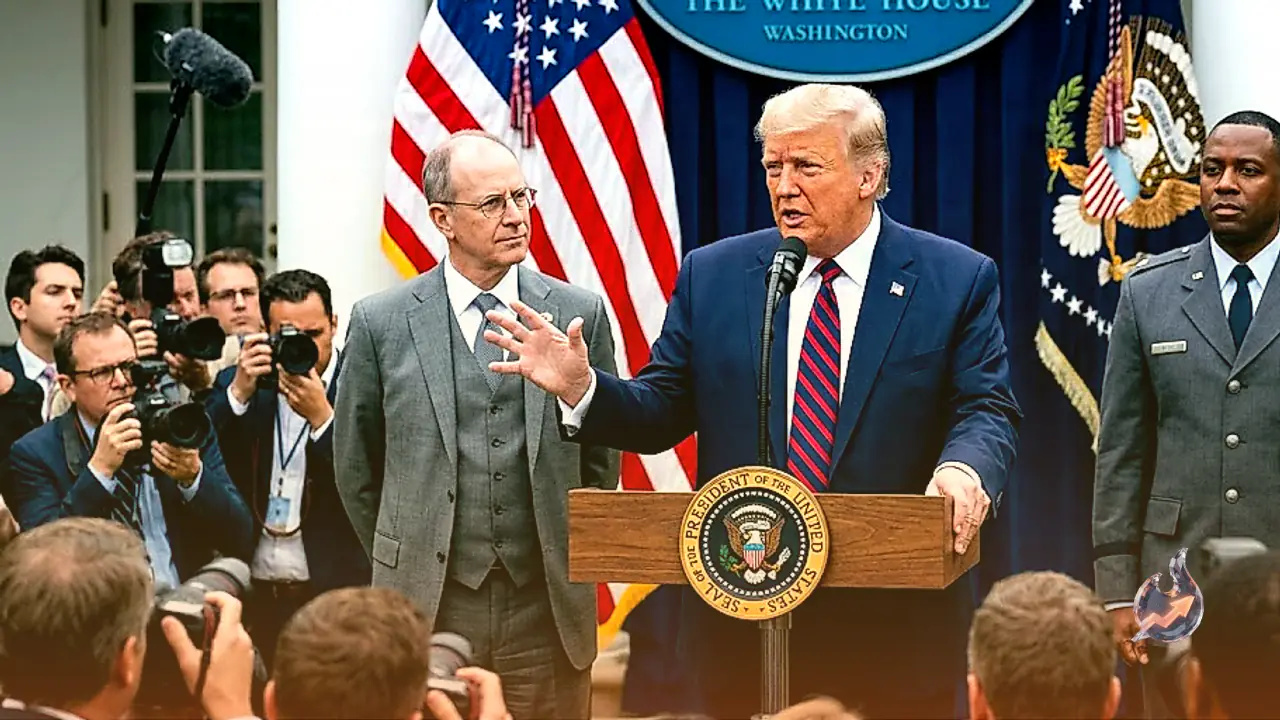

Signaling an aggressive pivot toward securing technological dominance, Donald Trump announced on Saturday that the United States will establish a dedicated AI Force focused on advancing and protecting artificial intelligence capabilities. Alongside the planned unit, leadership will be entrusted to a newly designated AI Czar tasked with guiding federal policy and deployment. Conveying his decision through a post on Truth Social, he insisted that efforts aimed at undermining or diminishing the trajectory of artificial intelligence would be firmly blocked, pointing fingers at political adversaries whom he blamed for trying to derail the sector's momentum inside the country.
Drawing Parallels with the Space Force Model
Framing the organizational model for this ambitious project, Donald Trump directly compared the upcoming initiative to the Space Force enacted during his earlier term in office. Highlighting that earlier defense formation as a proven operational triumph, he asserted that machine learning and synthetic intelligence now demand a similarly specialized, dedicated framework to safeguard national priorities. The prospective coordinator leading this apparatus must exhibit exceptional analytical capability, with the criteria explicitly seeking candidates who possess high-level intelligence. An official announcement detailing who will assume the helm of this operation is expected in the near future.
Projected Twenty-Five Percent Share in National Output
Looking ahead at the macroeconomic implications, artificial intelligence was characterized as nothing short of the next industrial revolution for American enterprise. Projections outlined during the announcement suggested that the emerging technology could fundamentally transform domestic commercial activities, eventually generating up to twenty-five percent of the country's total gross domestic product. Nevertheless, the preliminary outline left several institutional elements undefined, including the specific federal department responsible for overseeing the new force, its total personnel size, and the legal framework that will govern its daily regulatory duties.
Balancing Economic Ambition Against Emerging Risks
The strategic deployment comes at a juncture when artificial intelligence tools are spreading rapidly across healthcare, manufacturing, defense, educational infrastructure, and enterprise computing. This rapid integration has simultaneously intensified debates regarding job displacement, automated disinformation, cybersecurity hazards, and corporate data safeguards. While industry researchers and lawmakers continue advocating for responsible governance frameworks, Trump placed sharp criticism on political opponents without presenting underlying documentation. The blueprint demonstrates that the administration views advanced computational capabilities not merely as commercial innovations, but as pivotal elements of national economic supremacy.