
























The United States Congress has granted final legislative approval to the Lindsay O. Graham Sanctioning Russia and Iran Act of 2026, advancing the measure to President Donald Trump for his executive signature. Designed to systematically drain Moscow of its fossil fuel revenue streams, the statute establishes a sweeping framework allowing Washington to levy punitive tariffs of up to 100% on merchandise entering the American market from nations that continue purchasing crude oil and natural gas from Russia. Because India and China rank as the globe's foremost buyers of Russian crude, the passage of this legislation has ignited significant deliberations regarding potential economic headwinds. In response to the legislative development, New Delhi has reiterated its longstanding sovereign stance, underscoring that the energy security of 1.4 billion citizens remains non-negotiable and that hydrocarbon procurement will continue to align strictly with domestic economic requirements.
Legislative Mechanics and Executive Authority
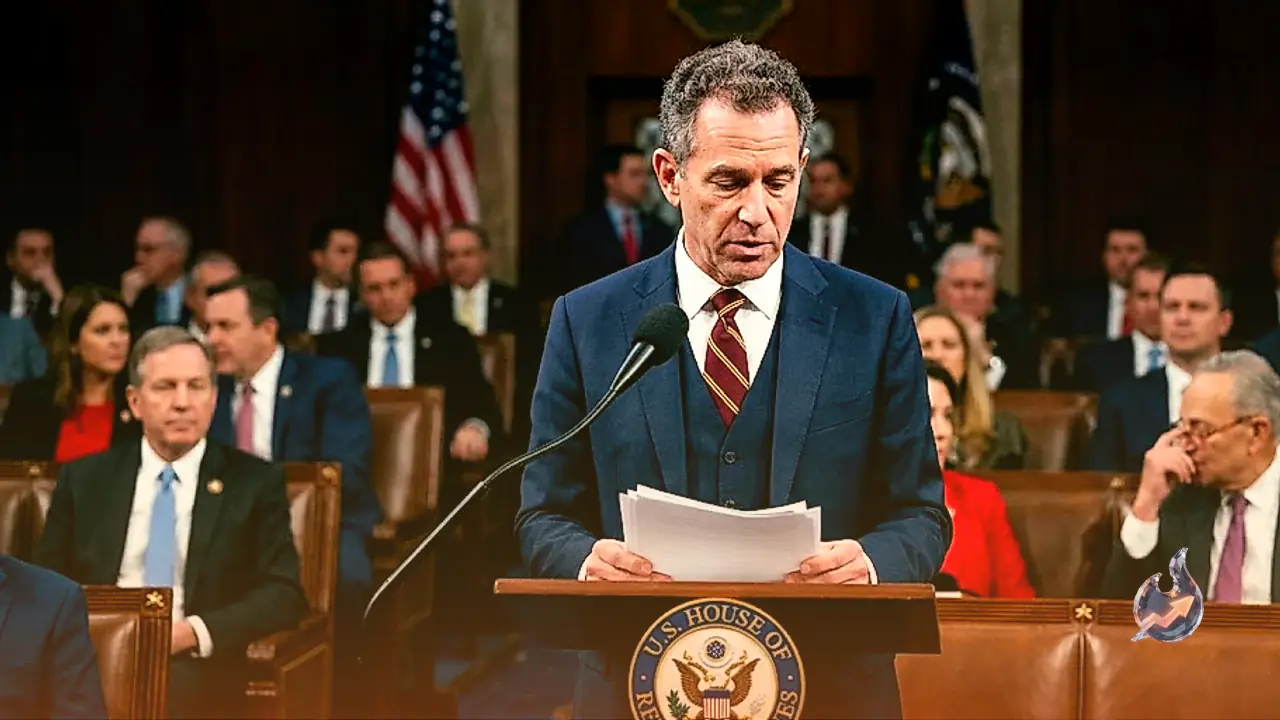
The legislative package cleared both chambers of Capitol Hill following structured debate, securing approval in the House of Representatives by a 262-159 margin after earlier advancing through the Senate. Grounded in the foreign policy blueprints formulated by former Senator Lindsey Graham, the act directly targets the commercial lifeblood of the Russian economy. Once signed into law, it confers explicit statutory authority upon the US President to mandate tariff escalations of up to 100% on goods originating from countries importing Russian fossil fuels. The law specifically outlines the top five buyers of Russian energy as primary targets of regulatory scrutiny, placing India and China at the forefront, alongside European and Asian recipients such as Slovakia, Hungary, and Azerbaijan.
Under prior trade enforcement regimes, executive administrations were often compelled to invoke broad national emergency powers to impose unilateral tariffs, mechanisms that were repeatedly subjected to challenges across US federal court dockets. The newly approved statutory framework bypasses these procedural hurdles by creating a targeted, codified trade weapon. The legislation mandates that the United States Trade Representative submit a formal review every 180 days identifying nations procuring Russian crude oil and gas, thereby institutionalizing persistent diplomatic and trade leverage over major global importers.
Tariff Mathematics and Immediate Economic Implications
Following the legislative vote in Washington, concerns emerged across commercial markets regarding the immediacy of potential trade penalties. However, trade policy analysts and the Global Trade Research Initiative have noted that the operational reality of the bill is far more nuanced, emphasizing that the immediate rollout of an across-the-board 100% tariff remains improbable.
The statutory enactment grants executive power rather than issuing an automatic tariff directive. The determination of whether, when, and to what extent these duties are activated rests entirely with Washington. The real-world impact on partner economies will depend heavily on the specific tariff rates selected, the precise product categories designated for penalties, and the designated enforcement timelines. Furthermore, the statute incorporates an essential national interest waiver provision, granting the US President discretionary authority to exempt individual trading partners if broader strategic interests warrant such relief.
Should incremental duties eventually be levied on select Indian exports, categories such as apparel, pharmaceuticals, and IT services would encounter increased price barriers within American consumer markets. Such adjustments would compress operating margins for Indian exporters while simultaneously placing upward pressure on retail prices for consumers inside the United States.
Energy Realities and Reliance on Russian Crude
India currently sources more than 88% of its domestic crude oil demand from overseas suppliers. Securing competitively priced feedstocks is therefore an economic imperative rather than an ideological choice, serving as the primary buffer shielding 1.4 billion people and the broader macroeconomy from domestic retail fuel shocks. Trade data illustrates that during July 2026 alone, Indian imports of Russian crude totaled $7.27 billion, representing approximately 51.1% of the country's aggregate monthly crude import bill of $14.21 billion.
Prior to 2022, India relied on Middle Eastern Gulf nations for roughly half of its total crude requirements, with Russian oil accounting for less than 15% of the overall import basket. As geopolitical volatility in the Gulf introduced price shocks and maritime supply risks, New Delhi diversified its procurement strategy, establishing Russia as its largest and most consistent energy supplier. An abrupt cessation of these imports under secondary tariff pressure would inevitably drive domestic retail prices of petrol and diesel higher, triggering broad-based inflationary pressures across the domestic supply chain.
Trade Balance and Strategic Export Stakes
While Russia serves as India's premier crude provider, the United States remains India's single largest trading partner, presenting New Delhi with a delicate bilateral balancing act. Trade flows remain robust; across the first five months of the current 2026-27 financial year between April and August, Indian merchandise shipments to the United States reached $42.8 billion.
The composition of these exports includes textiles, finished pharmaceuticals, IT services, gems and jewelry, and precision engineering components. These labor-intensive sectors support millions of industrial and commercial livelihoods across India. As a consequence, policymakers on both sides continue to scrutinize the systemic trade consequences before any formal tariff mechanisms are triggered.