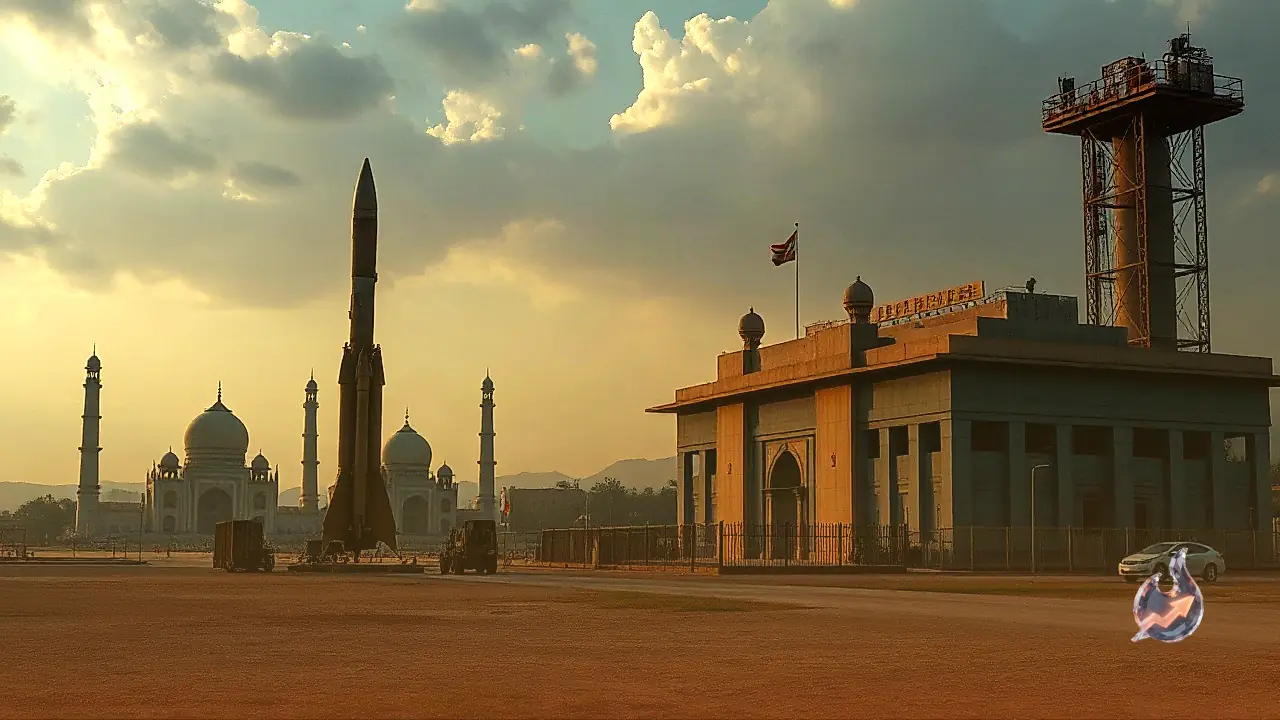























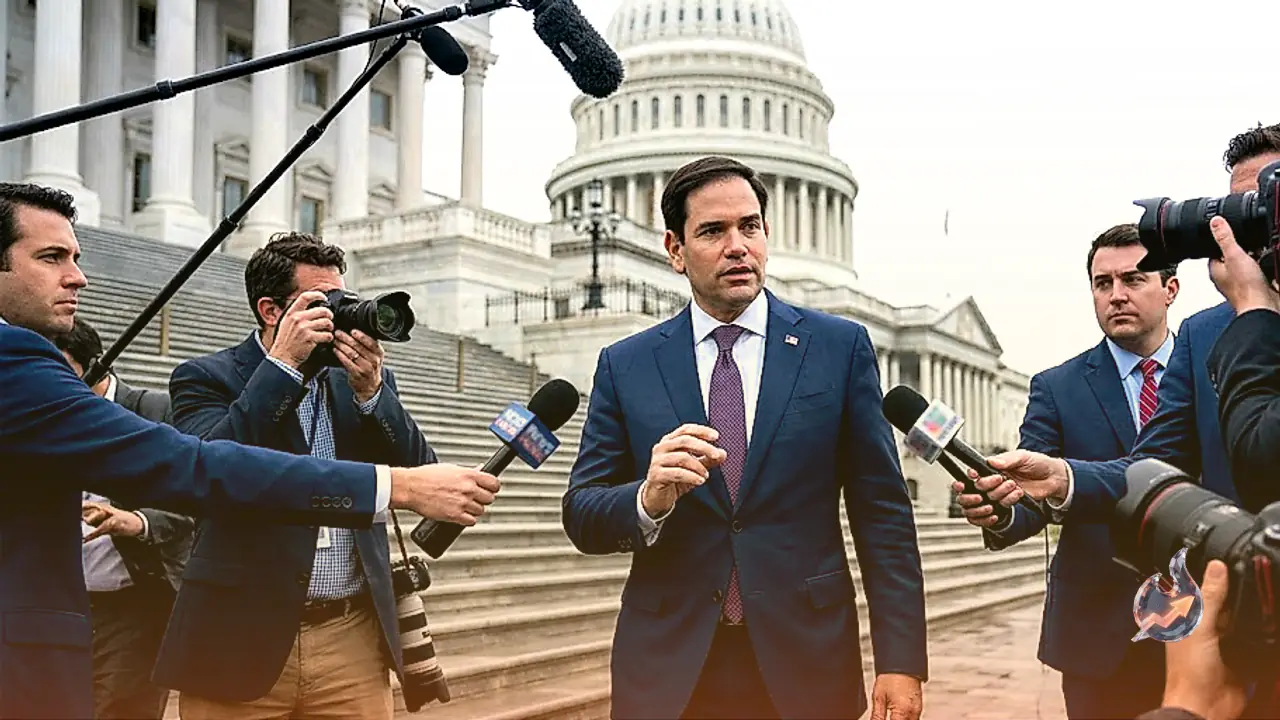

Tensions between the world's two largest economic and military superpowers, the United States and China, remain a defining feature of modern geopolitics. From the Taiwan Strait to the South China Sea, both nations regularly display their strategic power. However, despite intense friction, Washington consistently refrains from engaging in direct military or economic conflict with Beijing. US Secretary of State Marco Rubio issued a stern assessment during an interview with Lara Lea Trump, using terms such as 'God forbid' and 'catastrophic' when asked about potential open conflict between the two giants. Rubio emphasized that any military or economic clash would prove devastating on a global scale, adding that Washington's core challenge is managing this complex bilateral relationship without sacrificing US national interests. Despite maintaining unmatched global power, the United States weighs several critical factors before contemplating direct warfare with China.
1. The Threat of Nuclear Escalation and Mutually Assured Destruction
Both the United States and China possess extensive arsenals of nuclear weapons. If a direct military confrontation were to break out and escalate beyond conventional warfare into nuclear exchanges, the outcome would not be a conventional victory for either side. In military strategy, this scenario is understood as Mutually Assured Destruction (MAD). Under MAD, neither combatant survives, both nations are reduced to ruin, and global civilization faces immediate existential peril. This certainty of total destruction serves as the ultimate deterrent against crossing the threshold into direct war.
2. Deep Economic Interdependence and Supply Chain Risks
The economies of the US and China are tied together in a complex network of global trade. A vast proportion of consumer goods sold across the United States bear the 'Made in China' tag, while Beijing holds trillions of dollars in US government Treasury bonds. Should a direct conflict erupt, the global financial architecture would face immediate collapse. Supply chains powering American commerce would freeze, causing inflation to skyrocket and severely disrupting daily life. Neither country is willing to inflict deliberate ruin upon its own economy.
3. Lessons from Historical Conflicts in Vietnam, Iraq, and Afghanistan
American military history offers clear warnings regarding the toll of prolonged overseas warfare. Extended engagements in Vietnam, alongside multi-decade campaigns in Iraq and Afghanistan, extracted a heavy toll on American resources, resulting in significant military casualties and trillions of dollars spent. Defense analysts recognize that a full-scale conflict with a technologically advanced power like China would dwarf the scale and difficulty of past foreign interventions. The strategic lessons learned from those historical engagements reinforce Washington's reluctance to enter direct war.
4. Geographic Superiority and Home-Turf Advantage for China
From a operational standpoint, China maintains a distinct geographical advantage within East Asia. Key flashpoints like the Taiwan Strait and the South China Sea lie directly adjacent to the Chinese mainland. Beijing has fortified these areas with land-based missile batteries, coastal naval installations, and short-range defense systems. In contrast, the United States would be forced to project military power across thousands of miles of the Pacific Ocean. Maintaining supply lines over such vast distances poses immense logistical challenges compared to China operating from its home turf.
5. Cyber Infrastructure Destruction and Global Network Disruption
A contemporary war between major technological powers would extend far beyond traditional battlefields. Both nations hold advanced capabilities in artificial intelligence, cyber warfare, and space technology. An open conflict would likely trigger massive cyber strikes against critical infrastructure, navigation systems, and satellite communications. The destruction of space assets and global communication links would disable global banking, internet access, and transportation grids worldwide, severely impacting nations across Europe, Asia, and the Americas.
The Balance of Military Power and the Strategy of Containment
When evaluated globally, the United States retains its status as the world's premier military force, anchored by an extensive budget, global network of military bases, and advanced carrier strike groups. However, China holds significant regional military strength. Beijing maintains an active military force of approximately 2 million (20 lakh) personnel, outnumbering US active-duty troops. Furthermore, China continues to rapidly upgrade its military capabilities with advanced assets such as the J-20 stealth fighter jet, sophisticated drone fleets, and an expanding nuclear stockpile.
While China's military has not engaged in direct large-scale combat in recent decades, making its full warfighting performance untested, its regional defensive capabilities pose a formidable deterrent near its borders. Consequently, Washington relies on strategic containment measures rather than direct military engagement. This approach includes proxy deterrence, economic sanctions, technology export controls, and supplying defensive weaponry to Taiwan while avoiding the direct deployment of US military forces into open conflict.