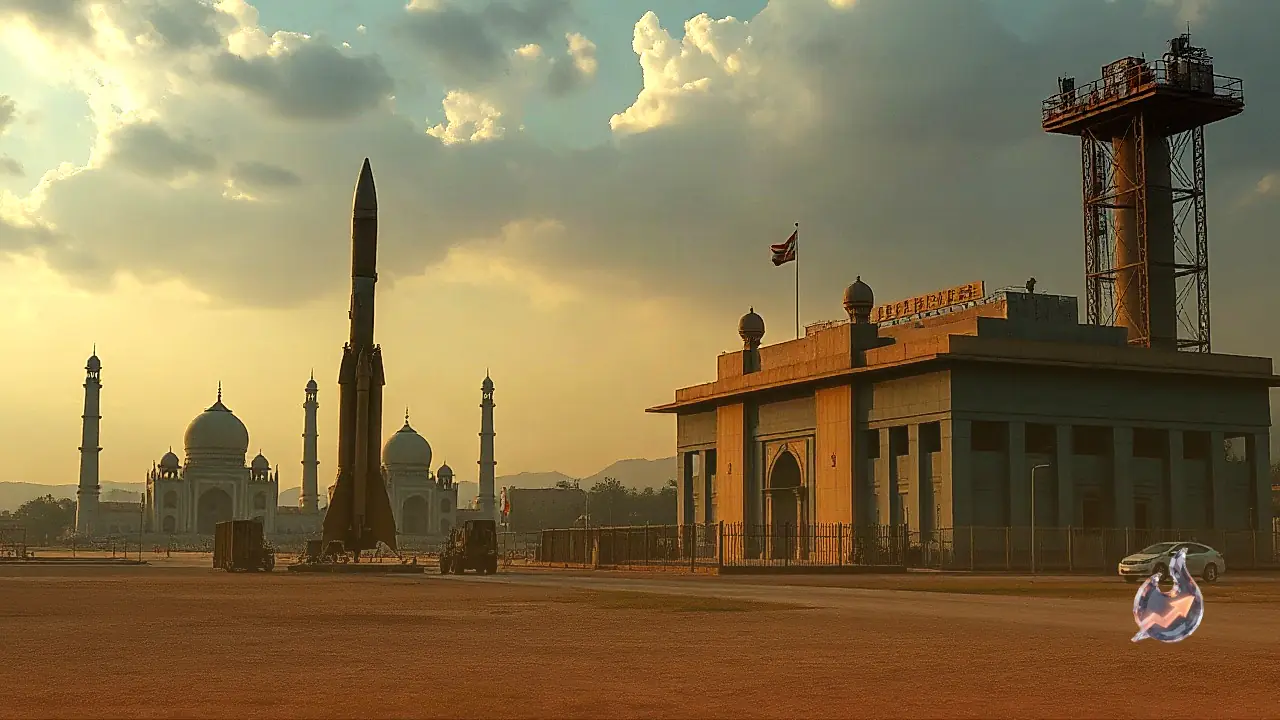
























Washington: India's nuclear stockpile is estimated to stand at approximately 190 weapons, which includes 30 additional warheads currently being produced for upcoming missile systems. This claim has been made in a newly released report by the Federation of American Scientists (FAS). The assessment was formulated by analyzing open-source data, government figures, and commercial satellite imagery.
According to FAS, India currently operates nine nuclear-capable systems. This operational inventory comprises two aircraft, six land-based ballistic missiles, and one sea-based ballistic missile. Furthermore, at least two additional systems are reported to be nearing completion.
Modernization of Delivery Systems
The findings were detailed in an article titled 'India's Nuclear Weapons-2026' authored by Hans Kristensen, the director of the FAS Nuclear Information Project. Based on public availability regarding India's strategy and capacity to arm missiles with nuclear payloads, the organization estimates that the nation has manufactured roughly 190 nuclear warheads. The report notes that this stockpile incorporates over 160 warheads designated for launchers alongside supplementary warheads intended for incoming missile additions.
Records indicate that India continues to actively modernize its nuclear weapons architecture. Several novel weapon platforms have been deployed in recent years, while others remain under active development to refine or replace existing nuclear-capable aircraft, surface-to-surface missiles, and maritime deployment mechanisms.
Plutonium Production and Arsenal Growth
The evaluation suggests that India has likely generated sufficient military-grade plutonium to construct between 140 and 225 nuclear weapons, having finalized around 190 thus far. With multiple additional weapon platforms currently progressing through development pipelines, the nation's nuclear inventory is expected to expand further.
The publication also highlights that regardless of specific weapon designs, India is unlikely to have converted its entire plutonium supply directly into warheads, potentially maintaining a portion in reserve. Moreover, the ultimate scale of India's nuclear arsenal is closely tied to the quantity and variety of operational launchers available to transport them, as exceeding the carrying capacity of these systems remains an improbable scenario.
India's Nuclear Doctrine and Stance
Meanwhile, India maintains its long-standing no-first-use policy regarding nuclear deterrence. The Indian government recently reaffirmed to Parliament its steadfast commitment to maintaining a credible minimum deterrent alongside the policy of not employing nuclear weapons first. In a broader global context, comprehensive data concerning worldwide nuclear warhead inventories was also recently published by SIPRI.