






















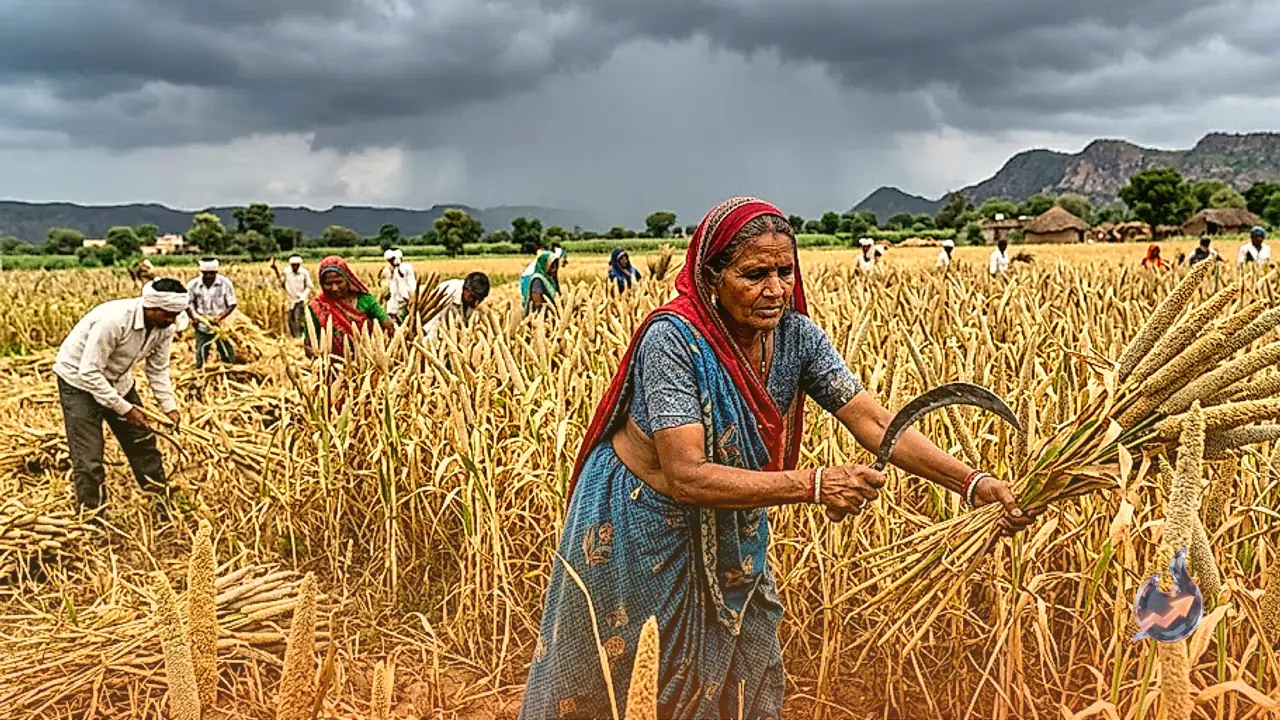

Farming activity across the districts of Alwar and Khairthal-Tijara has reached a critical phase as growers hustle to clear their ripe millet fields ahead of impending rains. With the crop fully matured and grain heads heavy in the fields, farming families are spending long hours engaged in harvesting and threshing operations. To secure their produce before the weather turns, many cultivators are deploying specialized harvesting machines brought in from neighboring districts, which significantly reduces the time required and saves substantial labor costs.
Better Yields and Mechanized Harvesting
Farmers are heading out to their fields early every morning to accelerate the gathering process. Timely rainfall throughout the growing season provided adequate moisture, setting expectations for a robust harvest this year. Growers including Habli Yadav, Virender Singh, Chatar Singh, and Karan Yadav noted that the millet crop is in excellent condition, yielding approximately 15 man per bigha of land.
Shifting Weather Patterns Raise Anxiety
Despite the promising yields, erratic weather shifts have heightened anxiety within the farming community. Persistent overcast conditions and high humidity levels in the air are making it difficult to properly dry the harvested millet heads. Instead of leaving the cut crop out in the open for extended periods, cultivators are promptly gathering and moving the produce to covered, secure locations.
The Threat of Rain and Threshing Complications
Growers emphasize that any delay in harvesting could prove disastrous if heavy rains strike, potentially ruining both the standing crops and the cut bundles left in the fields. Furthermore, residual moisture from recent rains in the soil is creating complications during mechanical threshing, causing grains and stalks to break and resulting in additional losses for farmers.
Departmental Guidelines and Crop Importance
Millet remains one of the most vital kharif crops across rural communities in the region. With agricultural authorities advising farmers to expedite harvesting whenever the skies clear, growers continue keeping a close watch on weather developments to safeguard their hard-earned yield before any unseasonal precipitation arrives.