





















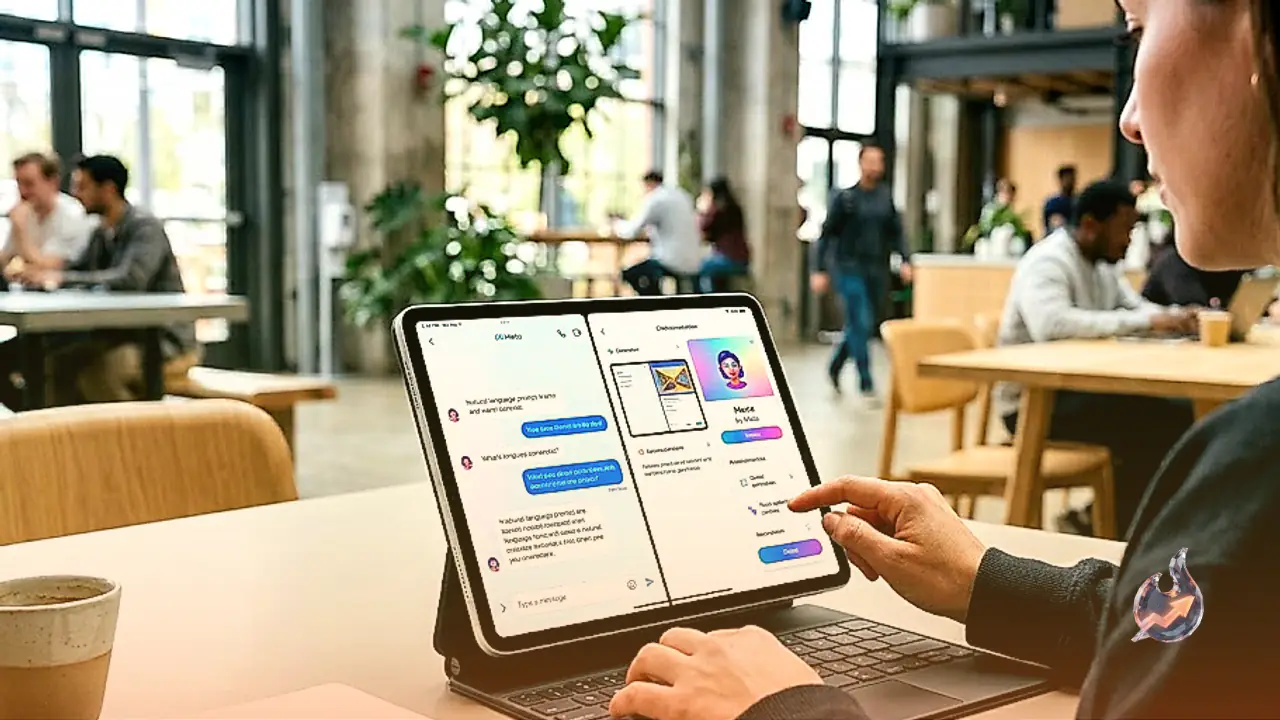

Meta has signaled an aggressive push to put its artificial intelligence tools across major device platforms. Just one month after debuting on smartphones, the company announced on Wednesday that its assistant, Muse, is now officially available as a standalone iPad app. The rapid arrival stands in stark contrast to Instagram, which spent some 15 years before reaching Apple tablets despite persistent user requests. Muse relies primarily on a text-driven workflow, where scaling the interface does not run into the resolution and formatting hurdles typical of rich media formats like images and video.
Rapid Adoption and Everyday Productivity Tasks
Adoption has grown quickly since the software made its dual debut on iOS and Android on September 8. Market intelligence figures from Sensor Tower estimate that installs have already surpassed 6.6 million. Muse functions alongside a crowded field of consumer AI agents, enabling users to link accounts so the assistant can monitor upcoming meetings, organize incoming emails, keep track of household bills, reserve tables at restaurants, schedule grocery deliveries, set personal goals, and complete transactions.
Business Integrations and E-Commerce Partnerships
The system connects to external platforms through modular links termed connectors, which people can activate selectively depending on how much personal data they feel comfortable delegating. Along with the tablet launch, the integration roster expanded to include tools popular with small business owners, including Asana, Canva, Dropbox, Figma, QuickBooks, GitHub, Klaviyo, and Zoom, as well as Meta ad accounts, Notion, and Granola. On the consumer side, retail integrations include Best Buy, Gap, Sephora, Walmart, and Wayfair, permitting the agent to browse merchant catalogs and place orders directly on behalf of consumers.
Bot Detection Challenges and Standardized Protocols
Because autonomous agent transactions represent an evolving technology, the automation frequently encounters roadblocks when commercial websites mistake helpful automated software for abusive bots and sever access. To resolve this friction, Meta confirmed Tuesday that it is developing an open standard alongside industry partners. The shared protocol will provide personal AI agents with a consistent method to verify their identity to commercial platforms, helping digital storefronts distinguish legitimate assistive software from malicious scrapers.