






















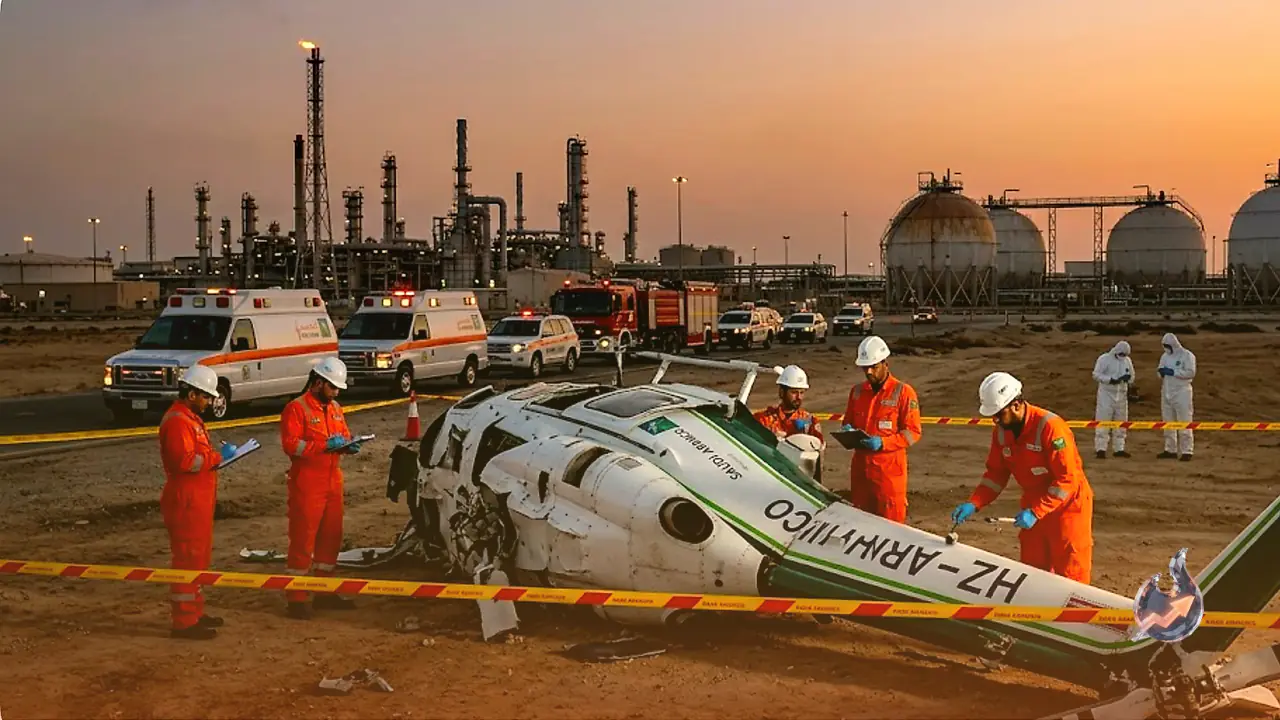

A major helicopter tragedy in the industrial port of Ras Tanura has resulted in the tragic deaths of 14 people, all of whom have been identified as Saudi nationals. The aircraft involved in this weekend disaster belonged to Saudi Aramco, the country's state-backed energy giant. While the exact conditions under which the flight went down remain unclear, authorities have launched an immediate investigation into the incident. Representatives have not yet released specific details regarding the names of the victims or the circumstances of the flight.
Investigation Underway in Ras Tanura
Following the catastrophic crash, aviation safety teams and security forces secured the site to begin gathering forensic evidence. Government representatives noted that speculating on the cause of the disaster would be premature at this stage, but more details are expected to emerge as the probe advances. In response to the loss, the Saudi Ministry of Energy expressed deep sorrow and extended its heartfelt condolences to the families affected by the tragedy.
In an official statement distributed through the SPA, the ministry offered prayers for the deceased, asking for peace and mercy upon them, and wishing strength to their grieving relatives. The location of the accident, Ras Tanura, holds immense strategic value as it houses the largest oil refinery in West Asia and serves as one of Saudi Aramco's most critical operations hubs. The city is globally recognized as one of the premier crude oil export terminals. Because of the vital nature of this infrastructure, security and transport protocols in the region are strictly monitored.
The Legacy of Saudi Aramco's Aviation Network
Saudi Aramco has a long-standing history of incorporating aviation into its daily industrial activities, a practice that began back in 1934 when the firm deployed a single aircraft for aerial desert mapping. Over the decades, this corporate flight department expanded significantly to meet the growing demands of its energy empire. In 2023, the aviation division was restructured into a distinct subsidiary and eventually renamed Aloula Aviation to streamline its widespread operations.
Today, the subsidiary manages a highly advanced fleet of more than 60 aircraft, including both fixed-wing planes and helicopters. These aerial assets are vital for supporting offshore drilling platforms in the Persian Gulf, carrying out urgent medical evacuations from remote sites, and managing complex logistics across the kingdom. Aloula Aviation transport engineers, workers, and resources to remote field environments safely under normal circumstances, making this recent crash an unusual and serious incident for this heavily regulated corporate network.