














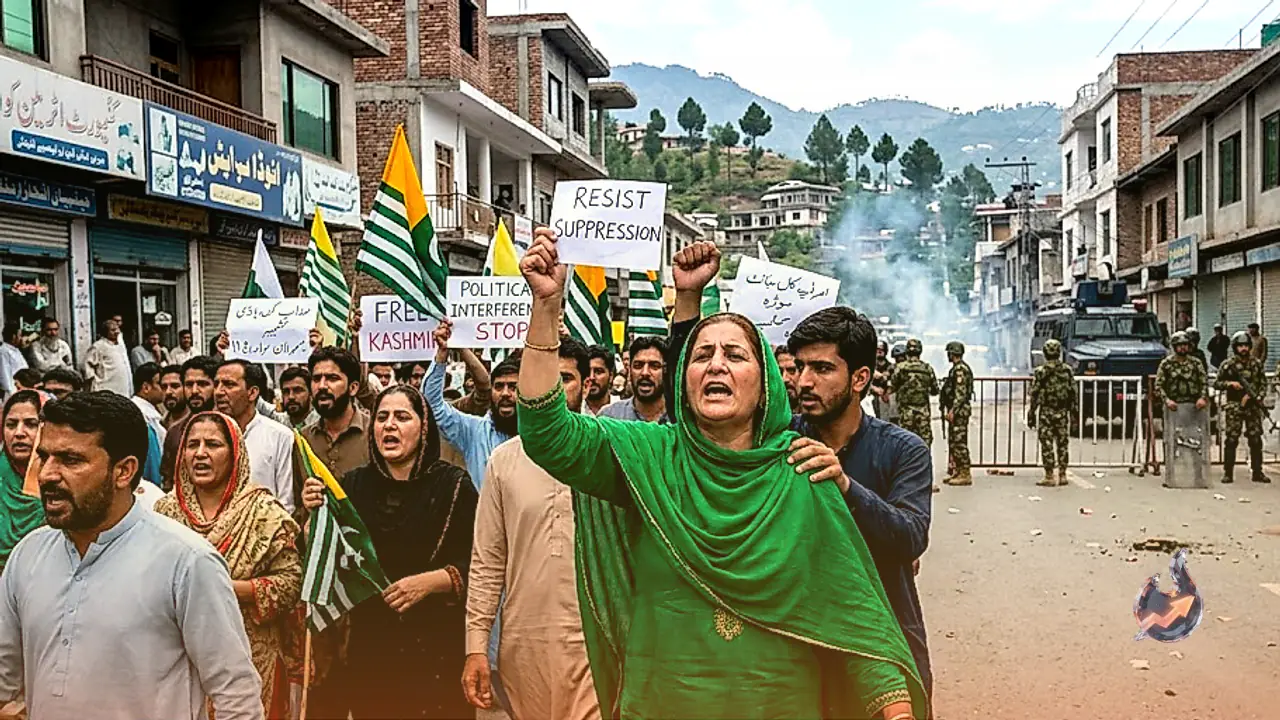

The situation in Pakistan-administered Kashmir has reached a boiling point, with local residents openly defying the ruling administration in Islamabad. Late-night security operations in Rawalakot saw forces resorting to gunfire as widespread protests gripped the region. Despite heavy deployments, demonstrators continued raising anti-government slogans, prompting the military action. Local witnesses reported a massive security presence around protest sites, with the sound of gunshots echoing through the area. However, these reports of firing have not been acknowledged by any mainstream Pakistani media outlets.
This surge in friction comes as agitation surrounding upcoming legislative assembly elections intensifies across the territory. Rawalakot has emerged as the epicentre of these demonstrations, where crowds faced heavy gunfire from security personnel. The Jammu and Kashmir Joint Awami Action Committee, which is spearheading the movement, accuses the government of manipulating the electoral process and attempting to silence the public. As voting rounds proceed, accompanying reports of violence have drawn widespread international condemnation.
Defiant Protesters Stand Ground Despite Military Pressure
Demonstrators have initiated a sit-in at Rawalakot and announced plans for a march toward Muzaffarabad. Organizers emphasized that their agitation goes beyond local grievances to target overarching political interference from Islamabad. Protesters remain firm that they will continue their campaign regardless of arrests, crackdowns, and heavy-handed tactics by security forces.
Recent clashes between security forces and protesters have severely destabilized the region. Activist groups and local organizers report that at least 20 people have lost their lives in Rawalakot and surrounding areas, with numerous others sustaining injuries. While the government has acknowledged casualties and injuries, it has rejected multiple allegations raised by the protest leaders.
Global Scrutiny and Deep-Rooted Grievances
The unrest has drawn significant international attention, with organizations like Amnesty International highlighting how the elections have been marred by rigging allegations, violence, and direct confrontations between citizens and security personnel. This movement stems from long-standing systemic issues rather than isolated grievances. Locals point to a severe lack of development, poor governance, and the exploitation of assembly seats reserved for refugees from Jammu and Kashmir by authorities to influence regional politics. The Jammu and Kashmir Joint Awami Action Committee has been leading this charge, prompting the government to ban the organization earlier this year.