






















Patients across Assam suffering from cancer may soon need to travel far less for advanced treatment, as the state government builds out a three-tier care network designed to keep both diagnosis and treatment closer to home. Chief Minister Himanta Biswa Sarma announced the update on Saturday, describing the initiative as central to the state's approach to affordable and patient-friendly cancer care.
Three layers, one continuous chain of care
In a post on X, Sarma explained that the expanding network was built not just around cost but also around comfort, aimed at supporting patients and their families through what is often a long and difficult treatment journey. The three-tier design splits cancer services into distinct layers: community-level screening and early detection, followed by diagnosis and active treatment, and finally continued follow-up care once treatment ends. By spreading these functions across different levels of the healthcare system rather than concentrating them in a handful of large hospitals, the state hopes to shorten the distance between a patient and the nearest point of care at every stage of the disease.
Kokrajhar centre held up as a working model
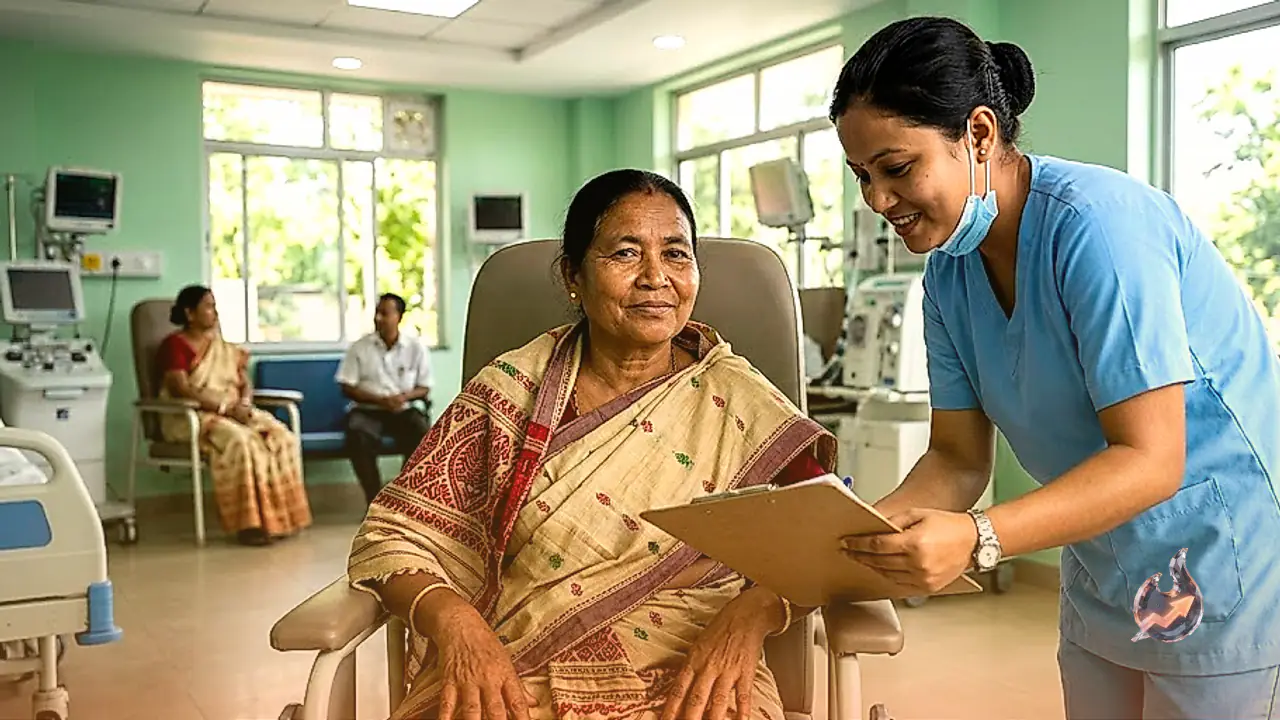
Sarma pointed to the Kokrajhar Cancer Care Centre as proof that the model already works on the ground. He wrote on X that the three-tier cancer care grid was "helping patients receive the best care at the most affordable prices with a caring approach for patients and attendants," tagging the state's cancer-care agency, @CareAssam. Officials expect the Kokrajhar facility to particularly ease the burden on patients from western Assam and the districts around it, cutting down the travel currently needed for cancer-related diagnosis and treatment.
Built with Tata Trusts, spread across the state
The expansion has been carried out in partnership with Tata Trusts, with new cancer-care facilities coming up at multiple locations across Assam rather than being limited to one or two large cities.
A response to the Northeast's cancer burden
The push comes as Assam and the wider Northeast continue to report a high cancer burden, a trend that has long forced patients to travel outside the region entirely, often to major cities elsewhere in the country, to access specialised treatment. That kind of travel adds cost, time and stress to an already difficult diagnosis, and the government's decentralised model is intended to close that gap by placing more of the necessary services within reach of local communities instead of leaving patients dependent on a small number of specialised hospitals far from home.
Early detection gets equal weight
Alongside the physical infrastructure, the state government is also putting emphasis on screening, early detection and public awareness, treating these as just as critical to outcomes as the treatment itself. The long-term goal, officials say, is an integrated cancer-care ecosystem covering prevention, early diagnosis, specialised treatment and follow-up together, extending affordable, accessible services to patients in both urban centres and rural parts of the state.