























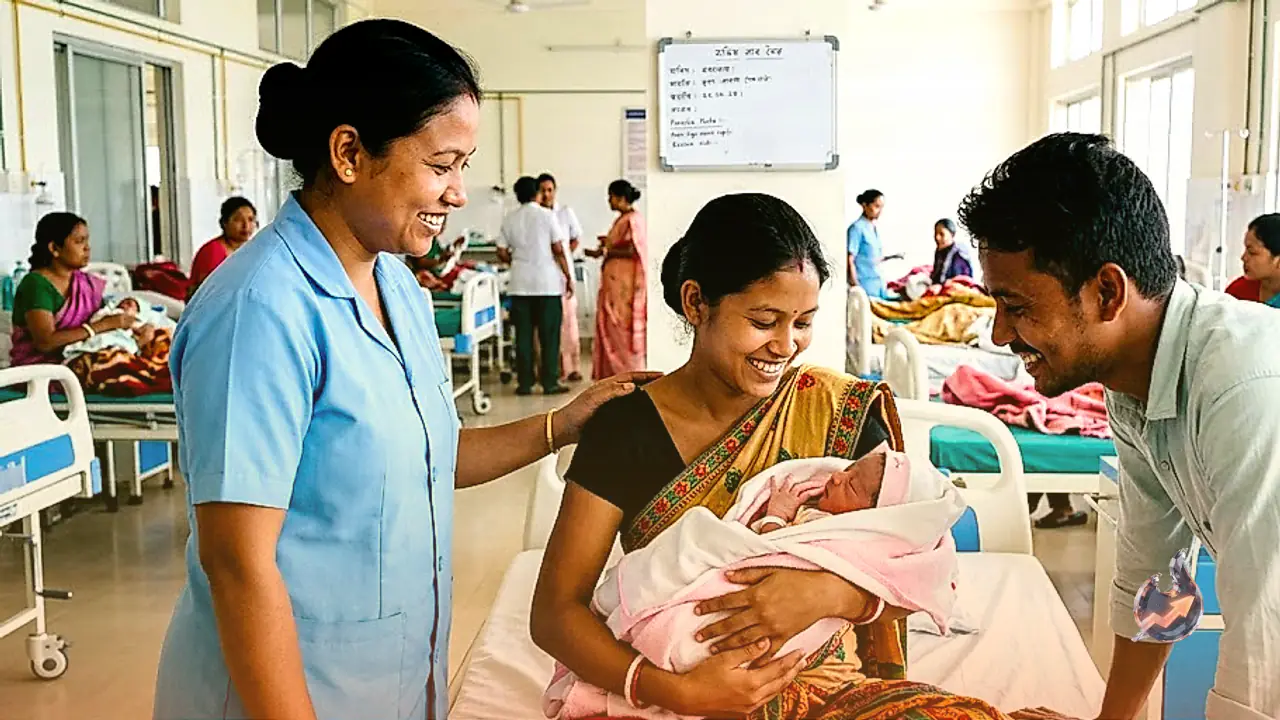

Bajali district in Assam has achieved a major healthcare milestone by recording a complete hundred percent rate in institutional deliveries during the initial four months of the current financial year. Official district health records confirm that not a single home birth took place in the area between the months of April and July.
Consistent Growth Over Recent Years
Data released by the district health department shows that the proportion of institutional deliveries has maintained a steady upward trajectory over the past few years. The completion rate stood at 99.65 percent in 2024-25, subsequently rising to 99.81 percent in 2025-26, before finally attaining the hundred percent mark in the opening months of the current fiscal year.
Looking at the absolute figures, the district documented 3,167 institutional deliveries throughout 2024-25, which further increased to 3,321 cases in 2025-26. During the specific window between April and July of the current year, a total of 713 institutional deliveries were successfully reported across the region.
Sharp Decline in Home Births
Alongside the rise in hospital deliveries, the district has witnessed a substantial drop in home births. While the administration noted 11 home deliveries in 2024-25, that figure dropped down to six in 2025-26. Notably, zero home births were logged during the April to July 2026 timeframe.
Health experts emphasize that hospital deliveries guarantee that mothers and newborns receive immediate attention from trained medical professionals, ensuring timely intervention during any potential complications and significantly boosting maternal and child safety standards.
State Leadership Acknowledges Progress
The Chief Minister’s Office drew public attention to these milestones, pointing out the complete absence of home births in the district during this operational period. The administration characterized this development as another successful chapter in the state's healthcare journey, driven by sustained initiatives to expand institutional childbirth access and reinforce maternal care infrastructure.
This positive outcome highlights broader regional efforts aimed at elevating maternal and newborn health standards while eliminating the severe medical risks linked to unsupervised deliveries.