





















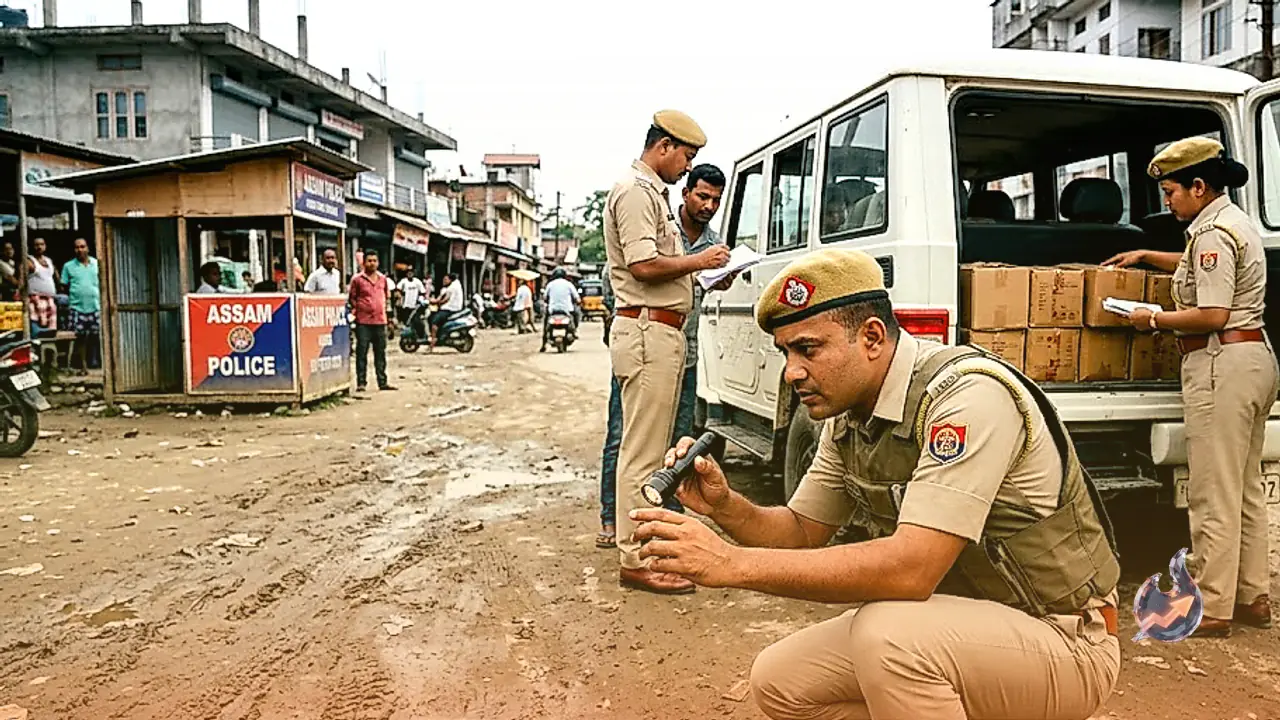

Guwahati: A comprehensive strategy is being deployed in Assam to dismantle illegal drug trafficking networks, with the state administration announcing the creation of a dedicated specialized unit. The initiative follows the conclusion of a two-day conference involving top police officials, aimed at bolstering enforcement capabilities and securing state borders against the influx of narcotics.
Assam Chief Minister Himanta Biswa Sarma informed media personnel that the specialized Anti-Narcotics Task Force is slated to be operationalized within the state police department over the coming month. He noted that the establishment of this focused unit aligns with recommendations previously suggested by the central government to strengthen anti-drug operations.
Targeted Legal and Financial Operations
The proposed task force will incorporate multiple specialized verticals, including dedicated legal and financial branches. These specialized divisions are tasked with preventing individuals accused of drug offenses from easily obtaining bail, while simultaneously dismantling the financial networks that fund and sustain narcotics cartels.
Furthermore, the enforcement unit will ensure the rigorous implementation of the Narcotic Drugs and Psychotropic Substances Act. By enforcing statutory provisions strictly, the administration aims to eliminate leniency and disrupt the operational capacity of criminal syndicates operating within the region.
Enhancing Conviction Rates and Investigation Speed
The state government has established clear targets regarding judicial outcomes for pending criminal matters. Authorities are aiming to achieve a 35 percent conviction rate by the end of the current year for cases where chargesheets have been successfully filed by investigators.
The current conviction rate stands at 29.3 percent, marking a substantial improvement from the roughly seven percent recorded in 2020. Officials attribute this progress to streamlined investigative processes, noting that chargesheets are currently filed within the stipulated timeframe in approximately 80 percent of all registered cases.
Interstate Coordination and Force Expansion
Deliberations during the two-day Superintendents of Police conference focused heavily on mapping supply chains and identifying transit corridors utilized by traffickers. Police leadership emphasized that blocking these corridors requires active operational cooperation with the neighboring states of Mizoram, Manipur, and Arunachal Pradesh.
Addressing administrative matters, the chief minister stated that pending departmental promotions will be addressed to clear career advancement pathways and generate new recruitment vacancies. The state administration intends to induct approximately 5,000 personnel into the police force during the upcoming year. This builds upon previous recruitment drives over the past five years, which have added around 21,000 personnel, with plans to incorporate an additional 15,000 to 20,000 individuals over the remainder of the current governmental term.