






















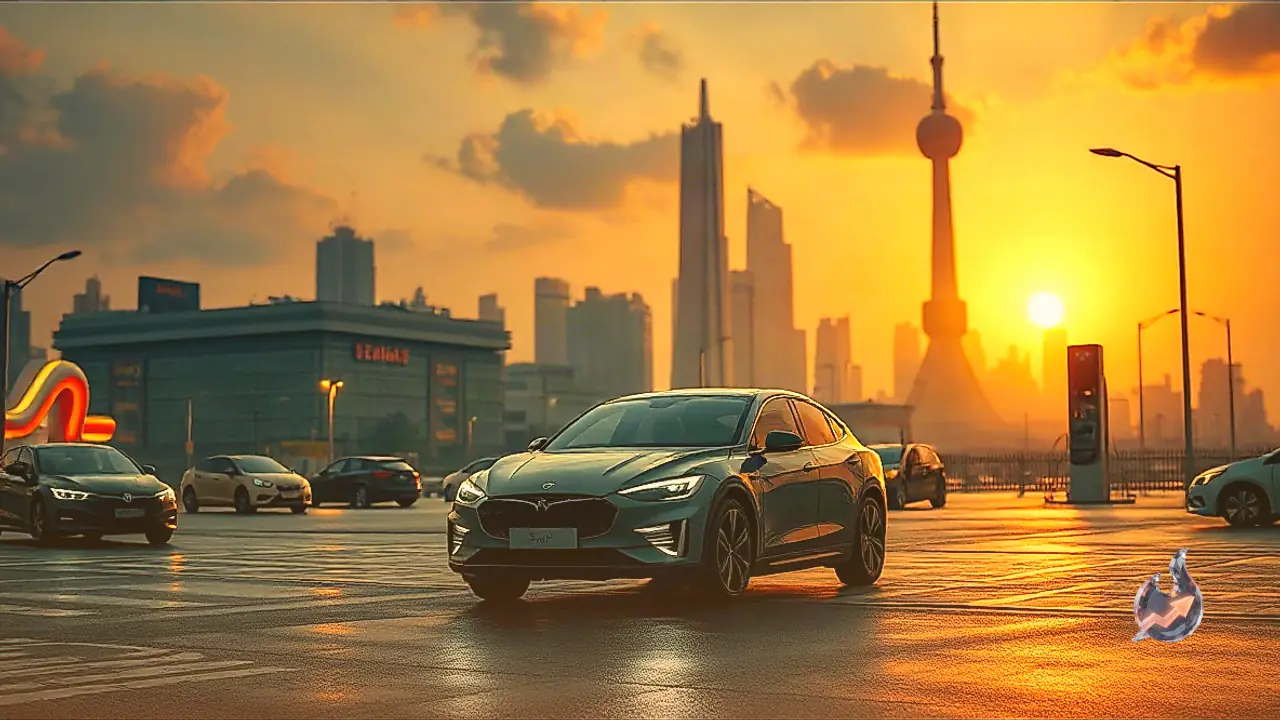

The automotive landscape in China is undergoing a massive transformation, with electric vehicles capturing a dominant share of total car sales in the country. According to a recent report by the South China Morning Post, out of the 1.54 million cars sold in China in August 2026, a remarkable 65.2 percent consisted of pure electric or plug-in hybrid vehicles. This figure successfully surpasses the previous month's record of 65.1 percent. Surging fuel prices have driven consumers away from traditional petrol and diesel vehicles at a rapid pace. Sales of petrol cars plummeted by 40 percent year-on-year, whereas electric vehicles experienced a much smaller decline of just 10 percent.
A notable reduction in range anxiety, the introduction of hundreds of new models, and advanced technology have accelerated this industry shift. In stark contrast, India's total electric vehicle market share currently hovers around 8 to 10 percent, with two-wheelers and three-wheelers driving the majority of that volume. The adoption rate within passenger cars is significantly lower. A direct comparison between the two nations highlights that China has surged far ahead of India in terms of supportive policies, charging infrastructure, and large-scale manufacturing capabilities.
Data compiled by the China Passenger Car Association indicates that the market share of new energy vehicles has consistently remained above the 60 percent threshold. Consumers have fully embraced the benefits of driving electric vehicles. The number of operational charging points across the country has scaled into the millions. Battery production costs have dropped significantly, and prominent domestic companies such as BYD, Geely, and Leapmotor now dominate the market landscape. Meanwhile, the crisis involving Iran pushed oil prices higher, further accelerating this technological transition. Despite a general slowdown in the broader auto market, the share of electric vehicles continues to expand as petrol cars are left behind.
In India, total electric vehicle sales crossed the 2.45 million unit milestone during the 2026 financial year, accounting for roughly 8.3 percent of overall auto sales. While the penetration of electric options in the two-wheeler and three-wheeler segments is quite robust, adoption in passenger cars remains confined between 4 and 8 percent. Domestic manufacturers like Tata, Mahindra, and MG are leading the charge, but the overall sales volume remains relatively small. Government initiatives such as production-linked incentive schemes and state-level subsidies have provided some momentum, but charging infrastructure is still restricted and upfront vehicle acquisition costs remain high.
China secured its dominant market position by implementing strong subsidies, fostering robust battery manufacturing ecosystems, and building dependable domestic supply chains over several years. India, on the other hand, remains in the nascent stages of this transition. Range anxiety has been nearly eradicated in the Chinese market, whereas it continues to serve as a major bottleneck for Indian buyers. Global geopolitical issues, such as the situation in Iran, push China further toward rapid electrification, while fuel price dynamics have a more subdued effect on India's adoption timeline.
If India sharpens its focus on expanding the public charging network, scaling domestic battery production, and introducing affordable vehicle models, the nation could catch up in the coming years. At present, however, China stands firmly as the world's largest electric vehicle market, leaving India with significant room for improvement across all key metrics.