























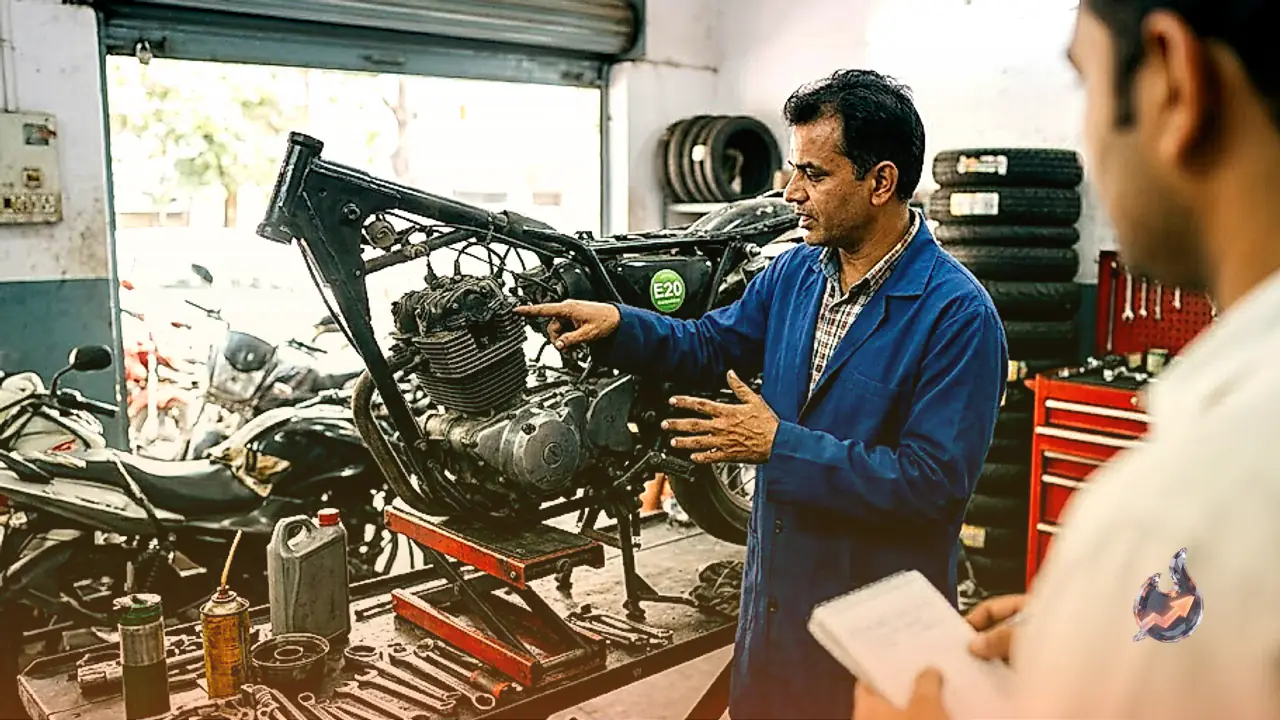

Discussions regarding fuel prices and motorcycle fuel efficiency remain a constant priority for vehicle owners. With the growing prevalence of ethanol blended petrol, specifically E20 fuel, two wheeler riders are confronted with several practical questions. Chief among them are whether E20 petrol truly compromises motorcycle performance, how carbon deposits form within the combustion chamber, and whether commercial fuel cleaner additives serve a genuine purpose. Daniyal, an automobile expert operating from the Chungi locality in Ghazipur, shared key technical perspectives addressing these issues.
The Practical Impact Of E20 Fuel On Motorcycle Mileage
According to Daniyal, vehicle owners must focus equally on fuel quality and overall engine maintenance. Following the adoption of ethanol blended petrol, some riders might observe minor variations in engine responsiveness and overall mileage. However, the sweeping assumption that E20 petrol degrades the power output of every single motorcycle is unsupported by technical reality.
Official technical data indicates that using E20 fuel in certain older vehicles can lead to a slight drop in fuel economy, estimated between 3 and 5 percent. Real world mileage, nevertheless, depends heavily on multiple external factors including the exact model of the vehicle, its native fuel system compatibility, service discipline, tyre pressure, and individual riding behaviour. When confronted with reduced pickup or a drop in fuel efficiency, blaming the petrol outright without undergoing a systematic mechanical check is an incomplete approach.
Understanding Carbon Buildup And Mid-Ride Engine Stalling
The accumulation of carbon residue inside an engine over extended periods of operation is an ordinary mechanical phenomenon. This buildup typically stems from incomplete fuel combustion or prolonged gaps in routine maintenance. When a motorcycle abruptly stalls during operation, attributing the failure solely to carbon buildup is often an inaccurate diagnosis.
Several interconnected components can cause mid-ride engine stalls. Disruptions in the fuel delivery line, a choked air filter, a fouled spark plug, or internal carburettor irregularities are equally capable of cutting power. Identifying the genuine underlying fault requires an inspection conducted by a trained professional mechanic rather than relying on guesswork.
What Fuel Cleaners Are And How They Function
Daniyal explains that a fuel cleaner is a specialised chemical additive formulated to be mixed into the petrol tank in strict accordance with manufacturer instructions. Specific variants of these additives are designed to target and dissolve stubborn residues like gum, varnish, and carbon deposits that gradually build up inside fuel delivery passages.
Once dissolved into the fuel, the cleaner travels throughout the entire fuel path. Depending on the product formulation, it works to clear deposits clogging critical metering sections within the carburettor or the fine nozzles of a fuel injector. By freeing these passages, the additive helps restore an even spray pattern and consistent air-fuel atomisation.
Does Pouring A Fuel Cleaner Guarantee Higher Mileage?
Daniyal emphasizes that maintaining an uncluttered fuel delivery circuit using a cleaner can support better engine combustion and efficiency under certain circumstances. However, claiming that a fuel cleaner will automatically boost the mileage of any given motorcycle is fundamentally inaccurate.
A fuel cleaner can prove beneficial only if the vehicle is struggling directly with residue and dirt deposits choking its fuel line. Conversely, if poor mileage is being caused by an air filter clogged with dirt, underinflated tyres, poor carburettor tuning, or deeper mechanical wear within the engine, simply adding a bottle of fuel cleaner will fail to resolve the problem.
Measuring The Correct Additive Ratio In Petrol
Citing an illustrative example, Daniyal mentioned that a 50 ml bottle of fuel cleaner is typically formulated to treat approximately five litres of petrol. Nevertheless, this proportion is not universal across all additive brands, as chemical concentrations and application methods vary considerably across different manufacturers.
Consequently, riders must strictly follow the dilution ratio printed directly on the product label. It is equally essential to verify whether the chemical additive is formally compatible with your motorcycle engine architecture and fuel setup. Adding an unverified additive or exceeding recommended dosages without reading instructions risks damaging sensitive fuel components.
Managing Air Filter Health On Dust-Heavy Routes
For motorcycles operating across dust-prone roads in areas such as Ghazipur, regular inspection of the air filter becomes essential for engine longevity. Fine airborne dust settling across the filter membrane gradually restricts the volume of intake air, forcing the engine to work under strain and hampering combustion efficiency.
To avoid unneeded mechanical stress, riders should ensure the air filter is routinely cleaned or completely replaced according to service intervals specified by the manufacturer. A clean air filter guarantees unrestricted airflow, keeping the engine running smoothly.
Best Practices For Extending Two Wheeler Engine Life
Sustaining long-term motorcycle health demands adhering to scheduled servicing timetables and consistently using engine oil of the grade specified by the manufacturer. Maintaining optimal tyre pressure and keeping the fuel line free from contaminants are equally vital habits. Before introducing any aftermarket fuel additive or cleaning agent, riders must consult both vehicle manuals and product instructions. When faced with sudden drops in acceleration or fuel mileage, visiting an authorised service centre for expert diagnosis is far safer than resorting to personal experiments.