








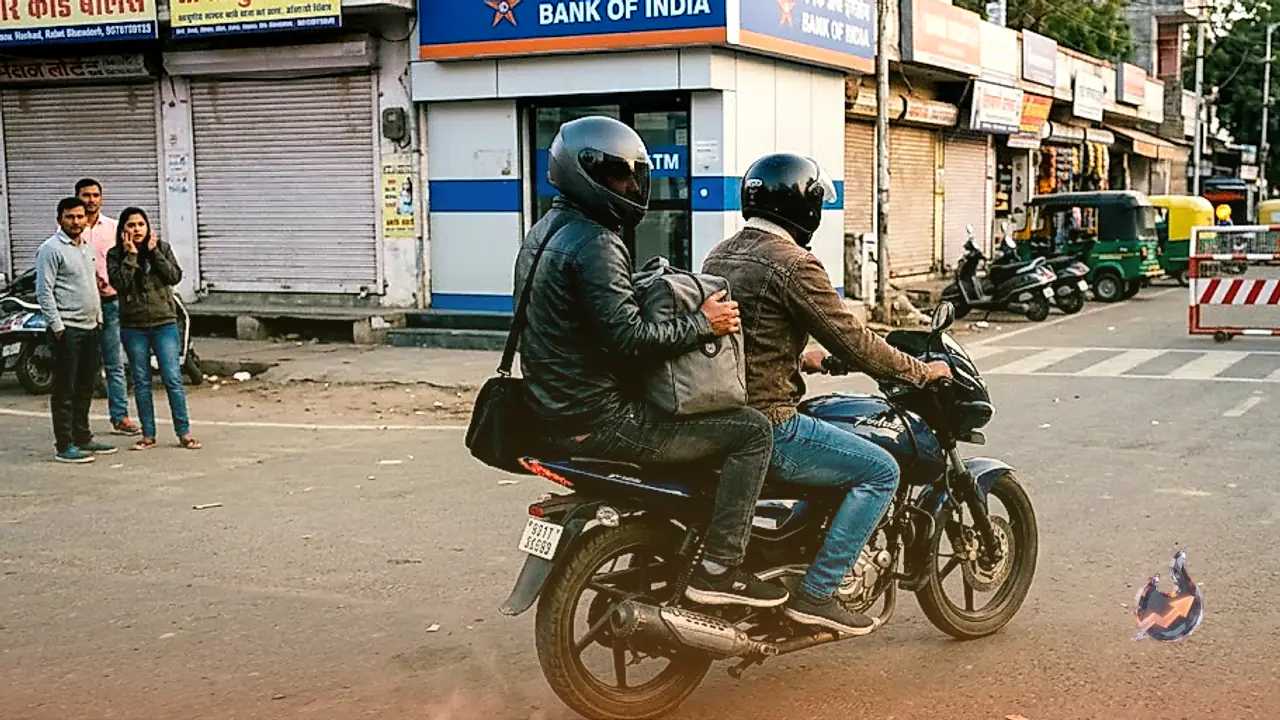
















Tubeless tyres are widely used in both cars and bikes today. Their biggest advantage is that when a puncture occurs, air escapes very gradually, which significantly reduces the sudden risk of an accident. Many drivers assume that getting a puncture fixed and continuing the journey is all that is required. However, every single puncture weakens the core strength of the tyre. Repeated repairs degrade the structural strength of the tyre, thereby increasing the risk of a blowout.
When a Tyre Becomes Unsafe
The situation becomes even more critical when punctures occur outside the tread area or are clustered close together. Experts and tyre manufacturers advise that beyond a certain limit, replacing the tyre is the safest option. Changing tyres at the right time not only maintains your safety on the road but also provides peace of mind during long trips. Let us explore exactly how many punctures a tubeless tyre can sustain before it must be replaced.
The Recommended Puncture Limit
According to most experts, a tubeless tyre should generally be replaced after 3 to 4 punctures. If the punctures are small holes located strictly within the tread area and have been repaired correctly, up to 2 to 3 repairs are considered safe. However, once the number of punctures exceeds 3 to 4, the tyre weakens substantially, increasing the risk during high-speed driving or long-distance travel.
Never Repair Sidewall Punctures
A puncture on the sidewall or shoulder area of the tyre should never be repaired under any circumstances. The sidewall flexes continuously while the vehicle is in motion, meaning any patch or plug applied there can easily dislodge. In such cases, replacing the tyre is the only safe option available.
Mind the Distance and Size of Punctures
There should be a minimum distance of at least 150 millimeters, which is roughly 6 inches, between two punctures. If the holes are larger than 6mm or if there are multiple repairs close to one another, the overall strength of the tyre is compromised. Under such conditions, installing a new tyre becomes necessary.
Other Conditions Requiring Tyre Replacement
Even if the puncture count is low, you should replace your tyre if the tread depth falls below 1.6 mm, if bulges or cuts appear on the tyre surface, if air pressure drops repeatedly, or if the tyre is 5 to 6 years old. Worn-out tyres are much more susceptible to frequent punctures.
Best Practices for Tyre Maintenance
Check your tyre pressure regularly, avoid sharp road debris, and have a professional thoroughly inspect any tyre after a puncture. Opting for cheap repairs can prove costly in the long run. Keep yourself and your family safe by changing your tyres at the appropriate time.