


















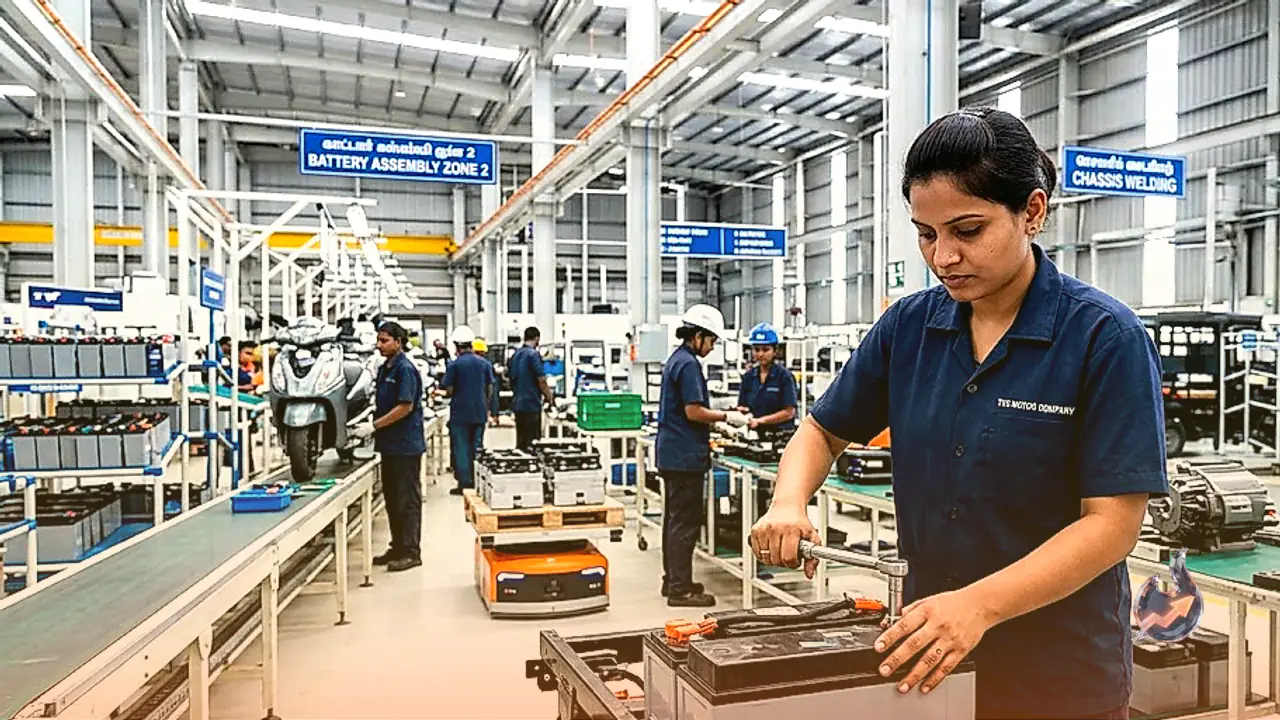

India's electric vehicle sector is preparing for a major structural transformation over the coming decade, positioned to emerge as a key catalyst for national economic growth and large-scale employment. Speaking at an industry conference, Union Minister for Road Transport and Highways Nitin Gadkari announced that the Indian electric vehicle (EV) market is projected to reach an estimated valuation of Rs 20 lakh crore by the year 2030. Alongside this rapid market expansion, the clean mobility ecosystem holds the potential to generate approximately 5 crore new jobs across manufacturing, infrastructure, and service sectors, establishing EVs as a primary engine for career generation and industrial advancement in India.
Addressing a gathering organized by the CII-ITC Centre of Excellence for Sustainable Development on Wednesday, Nitin Gadkari presented updated metrics reflecting the current penetration of clean transport technology in the country. He informed that India currently records around 57 lakh registered electric vehicles nationwide. Within the broader domestic automotive sector, electric vehicles presently command a market share of roughly 7 percent. However, propelled by ongoing technological developments, favorable regulatory support, and expanding charging networks, consumer demand for electric vehicles is expected to rise sharply in the near future.
Widening Disparity Between Electric Bus Demand and Manufacturing Capacity
Focusing on public transit modernization, the Union Minister highlighted a critical supply-demand gap in the electric bus segment. India experiences an annual requirement of nearly 1 lakh electric buses to upgrade public transport fleets across state and municipal corporations. However, domestic vehicle manufacturing plants currently possess the cumulative capacity to produce only 50,000 to 60,000 EV buses per year. Gadkari pointed out that this substantial mismatch between annual demand and local production capacity offers a strong incentive for commercial vehicle manufacturers to scale up domestic assembly lines and supply chain capabilities.
Ambitious Target to Make Indian Auto Industry Global Rank One
Outlining the federal government's long-term vision, Nitin Gadkari emphasized the target of transforming India's overall automotive industry into the world's number one market within the next 5 years. While acknowledging that achieving this goal presents significant competitive hurdles, he stressed that it remains entirely achievable due to India's inherent industrial advantages. The country benefits from a large, highly trained technical workforce, while domestic vehicle manufacturing delivers a rare balance of global quality standards and highly competitive production costs.
Tracing the historical expansion of the sector, Gadkari recalled that when he assumed charge of the road transport portfolio, the Indian automotive industry was valued at approximately Rs 14 lakh crore. Sustained growth and expanding domestic demand have since elevated the industry's total valuation to between Rs 22 lakh crore and Rs 23 lakh crore. Placing these figures in a global context, he noted that the automotive market in the United States currently stands at approximately Rs 78 lakh crore, while China's automotive industry is valued at roughly Rs 47 lakh crore.
Curbing Expensive Fossil Fuel Imports and Reducing Logistics Expenses
Addressing national macroeconomic stability, the minister underscored the urgent necessity of decreasing reliance on imported fossil fuels. India currently expends around Rs 22 lakh crore annually on importing foreign crude oil and fossil fuels, a recurring cost that weighs heavily on the national import bill while intensifying urban air pollution. Transitioning toward electric vehicles, expanding biofuel integration, and implementing efficient mass transit solutions are vital measures to ensure long-term energy security and environmental health.
Simultaneously, government policies are focused on streamlining nationwide supply chain efficiency by driving down total logistics costs from the current level of about 10 percent to a target of 8 percent. Citing findings from a joint research report conducted by IIT Chennai, IIT Kanpur, and IIM Bengaluru, Gadkari stated that the strategic development of expressways and dedicated economic corridors has already successfully reduced Indian logistics costs from a historical high of 16 percent down to approximately 10 percent.