























Confronted with the surging speed of Chinese automotive competitors, Suzuki Motor Corporation has unveiled an ambitious plan to revamp its engineering and manufacturing operations. Speaking in Tokyo on Friday, the automaker's Chief Executive Officer Toshihiro Suzuki stated that the company intends to nearly halve its new vehicle development cycle by the end of the current decade in 2030. Under existing processes, developing a new vehicle requires roughly 40 to 48 months, a timeline the Japanese manufacturer now aims to compress down to just 24 months. The executive emphasized that the extraordinary momentum of Chinese automakers necessitates a decisive acceleration in Suzuki's own operating tempo.
The Shifting Benchmark Driven by Chinese Automakers
For decades, global automotive manufacturing was measured against the standards of Japanese manufacturing efficiency and German precision engineering. That long-standing dominance is now being reconfigured by Chinese enterprises such as BYD, Leapmotor, and Xiaomi. By deploying ultra-fast vehicle development cycles, software-first vehicle architectures, rapid update protocols, and cutting-edge battery technology, these newer entrants are establishing aggressive benchmarks across the sector. Consequently, legacy automotive brands worldwide are being compelled to restructure their established production and design ecosystems to keep pace.
Implementing Parallel Development and Digital Engineering
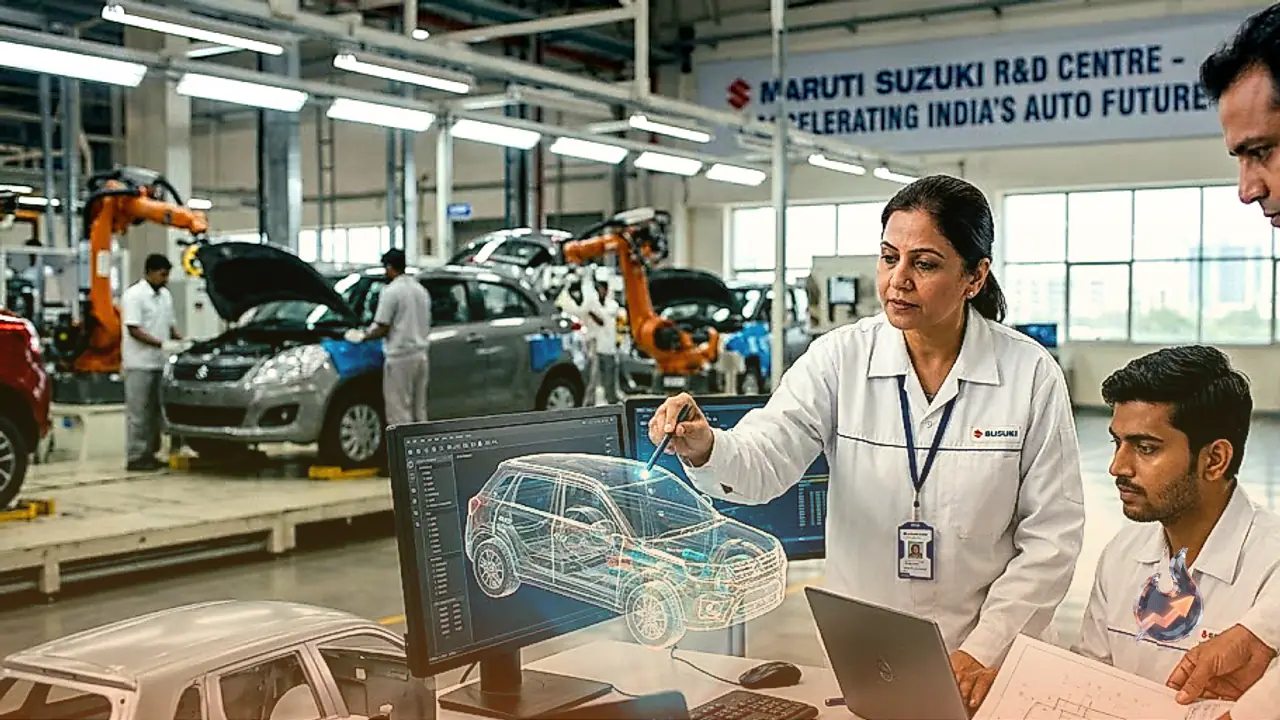
To cut delivery timelines so drastically, Suzuki is overhauling its sequential workflows in favor of an integrated approach designated as 'parallel development.' Previously, departments covering strategic planning, styling and design, manufacturing engineering, quality control, and component procurement operated step by step in linear succession. Under the reorganized model, all of these internal units will coordinate and work concurrently from the initial kickoff of a project. Suzuki will also increase its reliance on digital design spaces, drawing upon historical design parameters, extensive evaluation expertise, and empirical telemetry gathered from real vehicles on the road. Expanding shared modules across vehicle series will allow development and mass manufacturing to be tailored simultaneously. Through these technical adjustments, the company expects to raise development efficiency by 30 percent and production efficiency by 50 percent, particularly across shared-platform vehicle lineups.
India Emerges as the Central Pillar of Suzuki's Expansion
Having previously pulled out of the United States automotive market in 2012 and subsequently departing China in 2018, Suzuki has anchored its international future on India, which now serves as its single largest consumer market. The creator of the compact Jimny SUV intends to scale up annual vehicle manufacturing capacity in India from below three million units currently to four million units per year by 2030. Backing this capital expansion is the projection that the passenger vehicle sector in India could expand two to three times over coming decades. Under this operational roadmap, core automotive technology will be transferred and shared between facilities in Japan and India, while final vehicle designs and configurations will remain tailored to distinct regional consumer preferences.