






















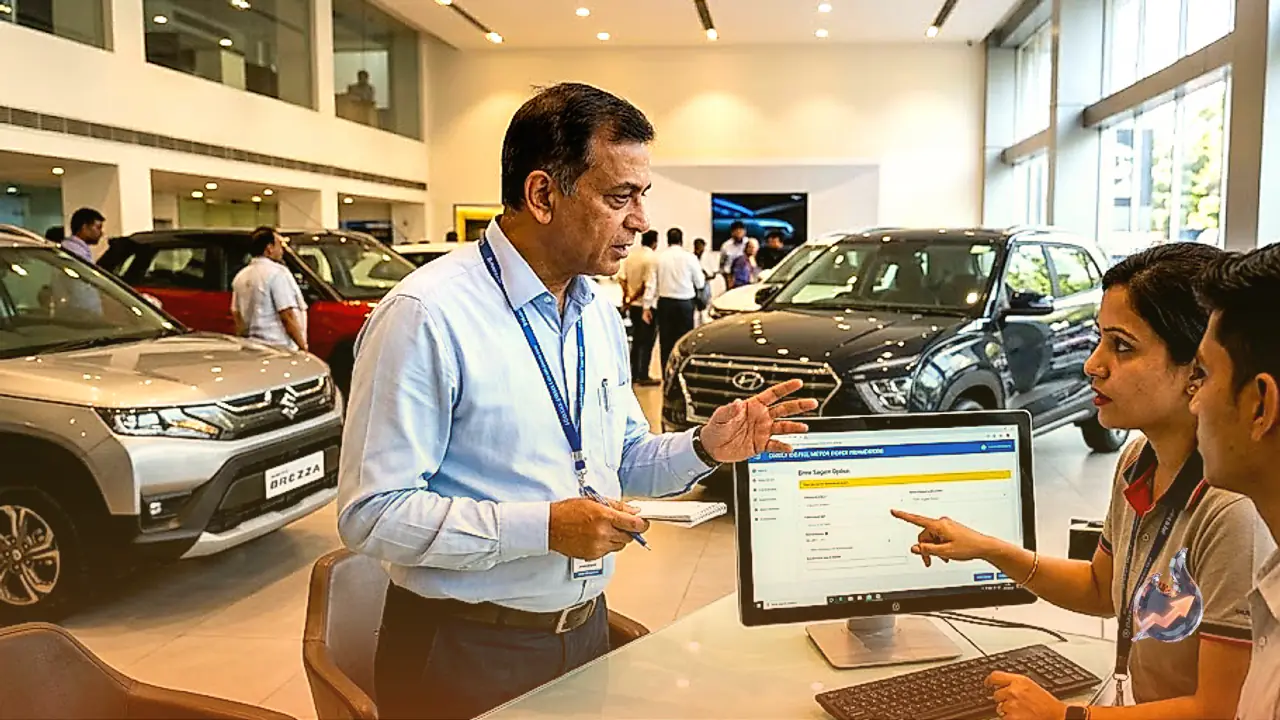

Purchasing a motor insurance policy directly from an automobile showroom may soon cease to be an expensive obligation for vehicle buyers. The Insurance Regulatory and Development Authority of India (IRDAI) has drafted a comprehensive regulatory overhaul aimed at restructuring the vehicle insurance purchasing journey. Under the newly proposed framework, the regulator intends to break the near-monopoly of auto dealerships by mandating accessible digital purchasing alternatives such as the non-profit Bima Sugam platform. In tandem with curbing distribution payouts on mandatory third-party policies, the proposals aim to improve premium pricing transparency and eliminate aggressive sales tactics. Industry metrics reveal that while total motor insurance premium collections expanded by 34 percent between FY23 and FY25, distribution commissions surged by an astonishing 259 percent over the identical timeframe.
Commission Imbalances Across Distribution Channels
During FY25, the average commission paid across the motor insurance spectrum stood at approximately 24 percent, with individual payouts fluctuating between 13 percent and 50 percent. Original Equipment Manufacturer (OEM) brokers alongside Motor Insurance Service Providers (MISPs) commanded nearly 30 percent of the overall market volume. Together, these entities mobilized roughly Rs 29,000 crore in gross insurance premiums, generating an estimated Rs 7,050 crore in commission earnings. A granular breakdown shows that OEMs collected an average commission of 27 percent on new vehicle policies, whereas MISP entities earned up to 38 percent on new cars. Conversely, MISP commission earnings on pre-owned vehicles averaged merely 12 percent. The supervisory authority classified mandatory third-party policies for brand-new vehicles as zero-effort products, while designating own-damage and comprehensive insurance covers as low-effort products.
Mandatory Digital Portals and Direct QR Integration
According to the regulatory draft, motor insurance policies for both brand-new and used vehicles must be made readily available through open digital portals like Bima Sugam. Dealerships will be required to showcase this alternative clearly within their showroom premises, accompanied by prominent QR codes. This setup allows prospective buyers to compare offerings and purchase their chosen policy digitally, either while finalizing vehicle documentation at the desk or remotely from home. Dealership staff will be obligated to proactively inform prospective buyers about these direct digital channels. Operating costs on these non-profit portals will be strictly capped at no more than 5 percent of the policy premium, reducing customer dependency on proprietary dealership networks.
Restructuring Dealership Intermediary Roles
Auto dealerships fulfilling regulatory criteria will need to register formally as Insurance Distribution Entities (IDEs). Facilities unable to meet the stipulated baseline will have to operate either as a Point of Sales Person (PoSP) affiliated with a certified IDE or as an exclusive associate of a single insurance firm. The regulator has strictly prohibited volume-driven promotional structures, specifically performance-linked incentive bonuses that risk compromising consumer welfare. Eliminating these incentive models aims to remove the financial motivation that drives showrooms to steer buyers toward high-commission insurance packages.
Cashless Repair Guarantees and Verification Safeguards
To prevent dealership retaliation against vehicle owners who secure coverage externally, the new guidelines explicitly prohibit authorized workshops from rejecting cashless claims or repair work on vehicles insured outside the showroom network. To safeguard policy integrity, the buyer's registered mobile number will be tied directly to the Policy Issuance Request (PIR). This contact detail will be validated against the national VAHAN vehicle registry, generating an immediate electronic confirmation message for the consumer to ensure complete transparency throughout the issuance procedure.
Prospects for Lower Third-Party Premium Costs
Commissions tied to mandatory third-party liability insurance previously climbed from 4.3 percent to 22 percent. IRDAI plans to drastically rein in these payouts, a move expected to reduce the initial acquisition costs for motorists registering a new vehicle. All these proposed adjustments currently remain in the consultation phase and will be evaluated against stakeholder feedback before final regulatory notification.