




















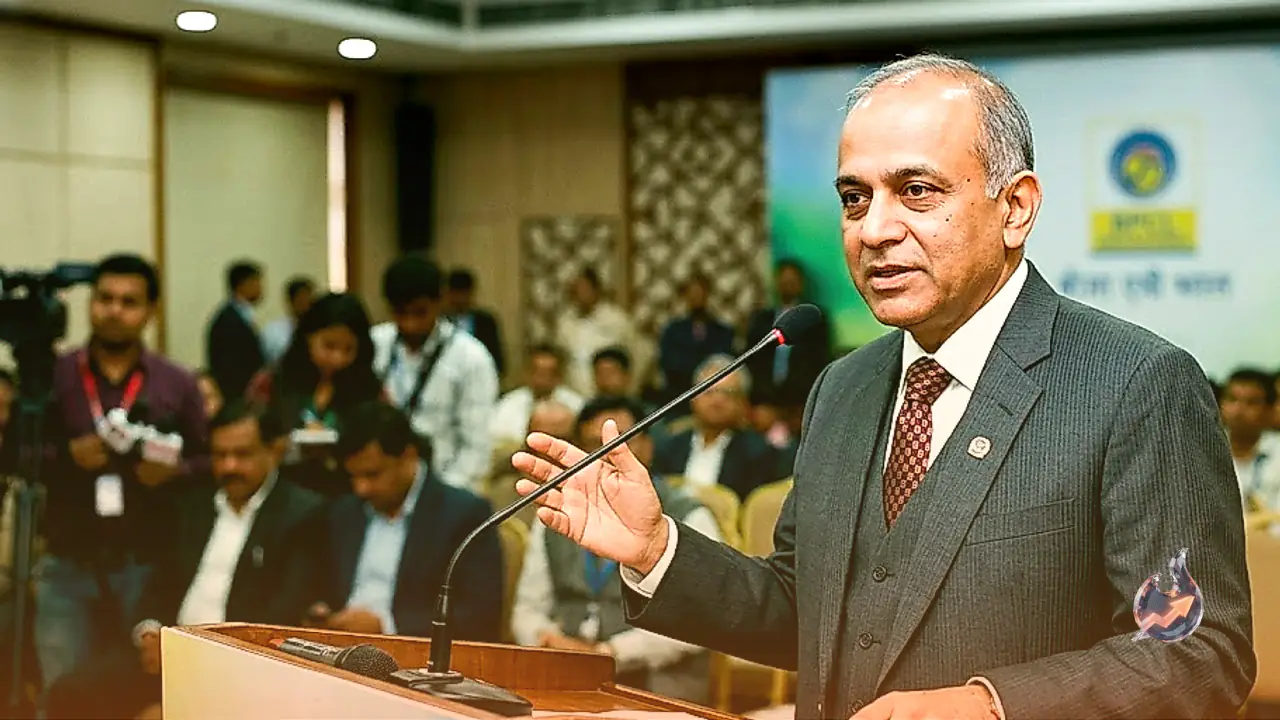

Amid growing discussions nationwide regarding E20 petrol compatibility and its impact on older automobiles, Bharat Petroleum Corporation Limited (BPCL) has clarified the official stance on fuel blending. The state-run oil marketing company confirmed that the government has taken no final decision to replace E20 petrol with E10 across the country. Company leadership noted that while discussions are occurring at certain policy levels to explore offering lower ethanol blended petrol for older vehicles, it does not imply an immediate national rollout of E10 or a complete withdrawal of E20 fuel.
Why Lower Ethanol Fuel Is Being Considered for Older Vehicles
India adopted an aggressive ethanol blending policy to diminish reliance on crude oil imports, curb vehicular emissions, and support domestic agricultural and biofuel production. Standard E10 fuel contains approximately 10 percent ethanol blended with petrol, whereas E20 fuel contains 20 percent ethanol. However, automotive experts and vehicle owner associations have expressed concerns regarding older vehicle fleets. Estimates indicate that India has nearly 7.5 to 8 crore (75 to 80 million) pre-BS-IV two-wheelers currently in operation, a substantial portion of which rely on traditional carbureted engines. Industry specialists suggest that making lower ethanol blended petrol like E10 available could mitigate long-term engine component wear for these legacy vehicles.
Logistical and Distribution Challenges of Dual Fuel Supply
BPCL Chairman and Managing Director Sanjay Khanna explained that transitioning production operations from E20 to E10 would not pose a significant technical challenge for oil refining and marketing companies. The primary bottleneck lies in nationwide logistics and dual fuel distribution management. India currently operates a vast retail network comprising over 1,00,000 petrol pumps fed by an interconnected system of refineries, storage depots, supply terminals, and cross-country pipelines. Simultaneously distributing two distinct base fuels across this massive infrastructure would significantly escalate inventory handling complexity, transport allocation challenges, and tank management at retail outlets.
Government Policy Outlook and Advice for Motorists
Government authorities are currently evaluating multiple operational options to balance green energy targets with vehicle fleet durability. BPCL emphasized that vehicle owners should not arrive at hasty conclusions regarding the removal of E20 or the definitive return of E10 until the Ministry formally updates its ethanol blending policy. Any future policy adjustment will be communicated officially, and oil marketing infrastructure will adapt accordingly.