



















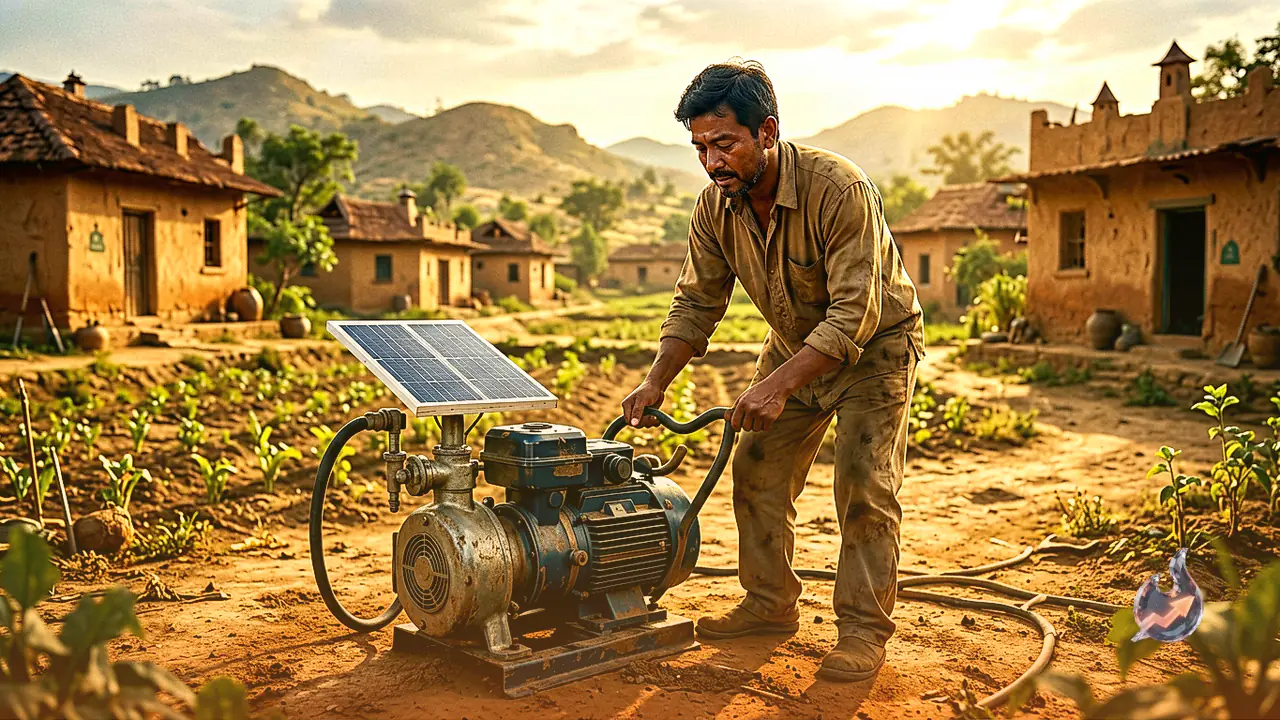

Uncertain electricity supply during crop irrigation has long posed a severe challenge for agricultural communities. Lokesh Kumar, a progressive farmer residing in Nagla Radhe village of Firozabad district, Uttar Pradesh, has implemented a permanent remedy to this recurring hurdle. Moving away from total dependence on conventional tubewells and diesel engines, he transitioned to solar energy. By tapping into the PM Kusum scheme administered by the Agriculture Department, Lokesh Kumar successfully setup a solar-powered irrigation pump that reduced production costs while saving considerable time.
Freedom from Power Outages and Seamless Watering
Prior to installing the solar setup, Lokesh Kumar had to wait endlessly day and night for electrical power to run his pump. Farmers were often forced to spend entire nights in the fields waiting for grid electricity to arrive. Upon learning about the government initiative through the local Agriculture Department, he promptly submitted his application and secured a 5 HP solar pump. Ever since the equipment became operational, irrigation tasks are conveniently completed during daylight hours without needing grid electricity.
75 Percent Subsidy Reduces Financial Burden
Setting up a 5 HP solar pumping system involves an overall cost of 5 lakh rupees. Under the promotional guidelines of the welfare scheme, the Agriculture Department offers up to a 75 percent subsidy to eligible farmers. Consequently, Lokesh Kumar only needed to fund 1 lakh 25 thousand rupees from his personal savings. Recognizing his effective adoption of clean technology, official agricultural authorities also formally honored him.
Beneficial for Dark Zones and Small Holdings
This solar pumping technology serves as an ideal solution in designated dark zones where groundwater levels are critically low and new tubewell drilling is restricted. Smallholder farmers cultivating two bighas or five bighas of vegetables, fruits, or horticulture can readily adopt this setup. The system eliminates risks associated with snapped overhead electric cables and requires virtually zero routine maintenance. In the event of any operational breakdown, farmers can register a complaint via a toll-free helpline number, prompting a specialized service engineer to visit the location and rectify the issue.
Inclusive Farming and Water Conservation via Sprinklers
Practicing an inclusive farming model, Lokesh Kumar grows a diverse mix of seasonal vegetables and flowers on his land. To maximize water efficiency, he integrated a sprinkler system obtained through the Horticulture Department alongside his 5 HP solar pump. This combination has drastically lowered water consumption while delivering optimal moisture to crops. Inspired by his operational success, neighboring farmers in nearby villages are now coming forward to apply for solar pumps, effectively ending their long reliance on grid electricity.