






















Strategic discourse and regional water geopolitics have intensified following indications that India may consider scrapping or suspending the Indus Waters Treaty in the aftermath of Operation Sindoor. For over six decades, this bilateral agreement has served as the foundational pillar of Pakistan's agricultural economy and water security. A complete repudiation of the pact by India could trigger catastrophic agricultural and economic fallout across Pakistan. However, due to a lack of immediate storage infrastructure and diversion channels, border regions such as Jammu, Kashmir, and Ladakh could also face short-term ecological and flood-related vulnerabilities.
The 1960 Historic Accord and Allocation of Six Rivers
Signed on September 19, 1960, in Karachi under the mediation of the World Bank, the Indus Waters Treaty established a comprehensive legal framework for distribution of river waters between India and Pakistan. The landmark document was signed by India's then Prime Minister Jawaharlal Nehru and Pakistan's President Ayub Khan. Under the structural provisions of the treaty, six major rivers flowing through the subcontinent were split into two distinct geographical groups.
India received full control and 100 percent water rights over the eastern rivers, namely the Ravi, Beas, and Sutlej. In contrast, Pakistan was allocated approximately 80 percent of the water volume from the western rivers, including the Indus, Jhelum, and Chenab. India was granted strictly circumscribed rights on these western rivers, restricted primarily to non-consumptive uses, minor irrigation, and 'run-of-the-river' hydroelectric projects that do not alter natural river flows.
Immediate Challenges Facing Jammu, Kashmir, and Ladakh
Political expert Rashid Rahil from Jammu and Kashmir expressed deep concern regarding the immediate ground realities if the accord were to be dismantled. Rahil highlighted that the primary impact of treaty revocation would be felt directly in Jammu, Kashmir, and Ladakh. Halting river flows without preparation could heighten flood hazards across the valley while simultaneously worsening diplomatic and military friction between the neighboring nations. Nevertheless, he noted that the future restoration of the treaty framework remains a potential possibility.
Reflecting on historical context, Rashid Rahil explained that during partition in 1947, natural resources were divided across borderlines, with water being the most essential asset flowing from upper-riparian Indian territories through Pakistan toward the sea. He emphasized that water is a natural resource whose primary rights belong fundamentally to the populations who rely on it as their core baseline for survival, before extending to downstream recipients.
Technical Constraints and Ecological Considerations
While scrapping the treaty might theoretically leave all river waters under Indian command, domestic infrastructure limitations present severe practical constraints. Major storage reservoirs and diversion dams along the massive Indus, Jhelum, and Chenab rivers remain unfinished. Abruptly blocking the water flow without adequate holding capacity risks causing destructive downstream flooding in the Kashmir Valley and low-lying plains of Jammu. Furthermore, constructing mega-dams and engineering diversion structures will demand billions of dollars in financial capital and span several decades. Unplanned interference with natural river flows also poses significant risks of ecological disruption to local aquatic ecosystems and regional farming patterns.
Devastating Economic and Energy Fallout for Pakistan
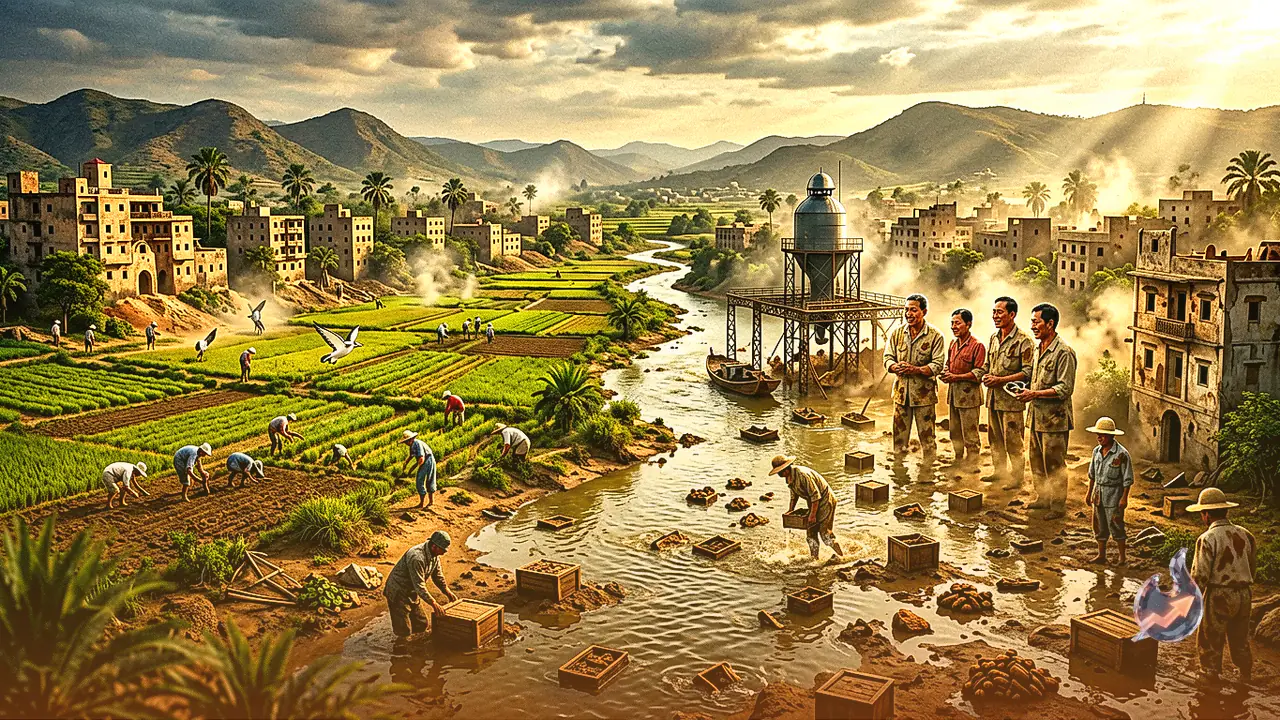
From Pakistan's perspective, the termination of the Indus Waters Treaty represents an unprecedented socio-economic emergency. Approximately 80 percent of Pakistan's agricultural land and over 90 percent of its total food production are directly reliant on the Indus river basin. Should India restrict or regulate these flows, arable farmlands in the vital provinces of Punjab and Sindh face the prospect of severe desiccation and desertification.
Compounding Pakistan's ongoing economic hardship and water stress, any disruption in river supply could severely exacerbate drinking water shortages and lead to acute famine-like conditions. Furthermore, Pakistan generates a substantial portion of its hydroelectric power from the Jhelum and Chenab rivers. Curtailing these flows would cripple Pakistan's national power grid, triggering widespread energy blackouts and industrial stagnation.
Long-Term Hydropower and Irrigation Prospects
Despite immediate technical and infrastructural bottlenecks, long-term investments in water storage could yield substantial strategic gains for India. Once robust engineering infrastructure and holding reservoirs are operational, Jammu and Kashmir could unlock over 4,000 MW of additional hydroelectric power generation. In addition, the region would secure reliable, year-round irrigation, providing lasting support to local agriculture and strengthening regional energy independence.