























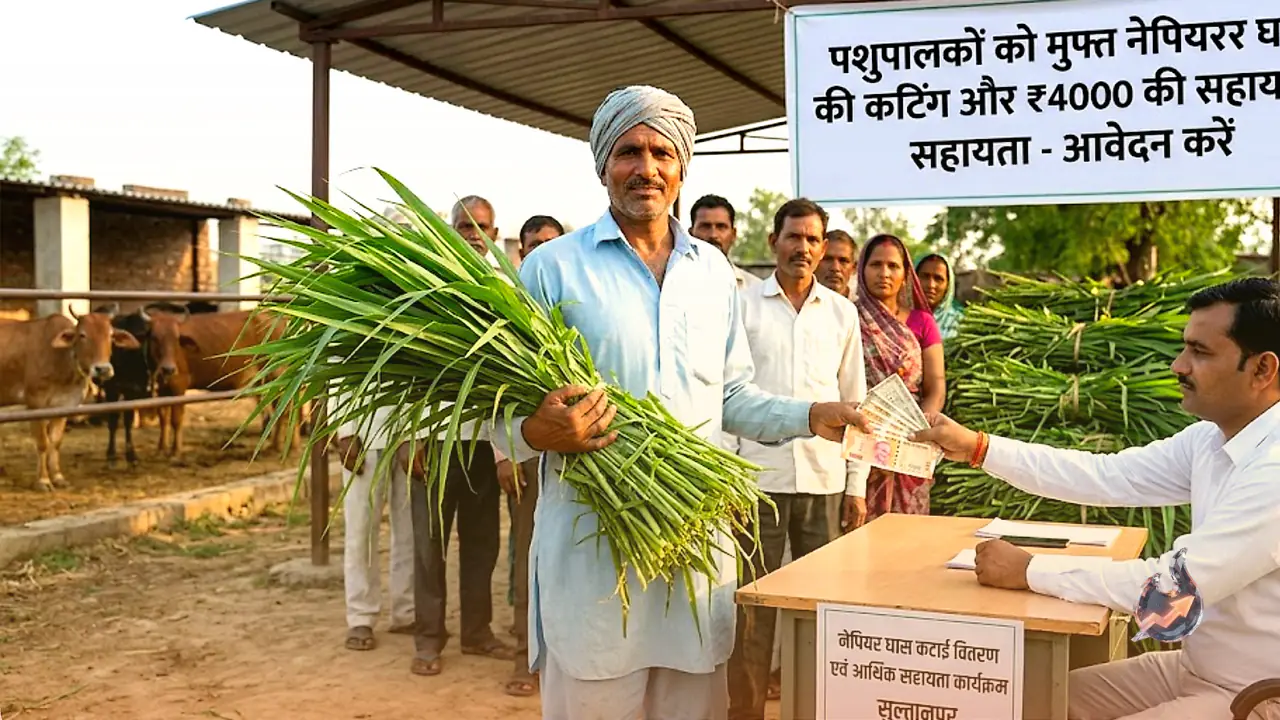

Cattle farmers in Sultanpur have reason to cheer, as a new scheme aims to promote cultivation of the nutritious, fast-growing perennial Napier grass in the district, offering selected farmers both free grass cuttings and cash support.
Production across four hectares, 20 beneficiaries to be picked
Chief Veterinary Officer Dr Pramod Kumar Sharma said that under this scheme, Napier grass will be cultivated across a total of four hectares in the district. Twenty beneficiaries will be selected for this purpose. The initiative is being run under the Chara Niti Yojana, or fodder policy scheme, aimed at increasing the availability of green fodder for animals in the district.
How and where to apply
Farmers and cattle owners who wish to grow Napier fodder can contact their nearest veterinary officer to apply. Applications can also be submitted directly at the office of the Chief Veterinary Officer located in the Vikas Bhawan in Sultanpur. Applications have been invited from interested farmers, and the selection process will be based on these applications.
Free bundles plus Rs 4,000 in assistance
Farmers who are selected for fodder production will receive Napier grass bundles completely free of cost. In addition, each beneficiary will get Rs 4,000 in financial assistance for planting and maintaining these cuttings across a 0.2-hectare area. This will significantly cut down the initial cost for farmers and make it easier for them to prepare fodder for their animals.
Priority for women and SC/ST applicants
Under this scheme, priority will be given to applications from women, and from Scheduled Caste and Scheduled Tribe category applicants. This makes it a good opportunity for farmers from these categories who are engaged in animal husbandry. Applicants will need to bring their Aadhaar card, khatauni (land record) and a passport-size photograph at the time of applying, as these documents are required for the application to be accepted.
Why Napier grass matters
Napier grass is a perennial, fast-growing fodder crop that is rich in nutrients. Once planted, it continues to provide green fodder consistently for several years. This is why the grass is considered highly beneficial for farmers engaged in dairy and animal husbandry work. Farmers looking to benefit from this scheme are advised to apply in time so they can arrange nutritious green fodder for their animals throughout the year.