






















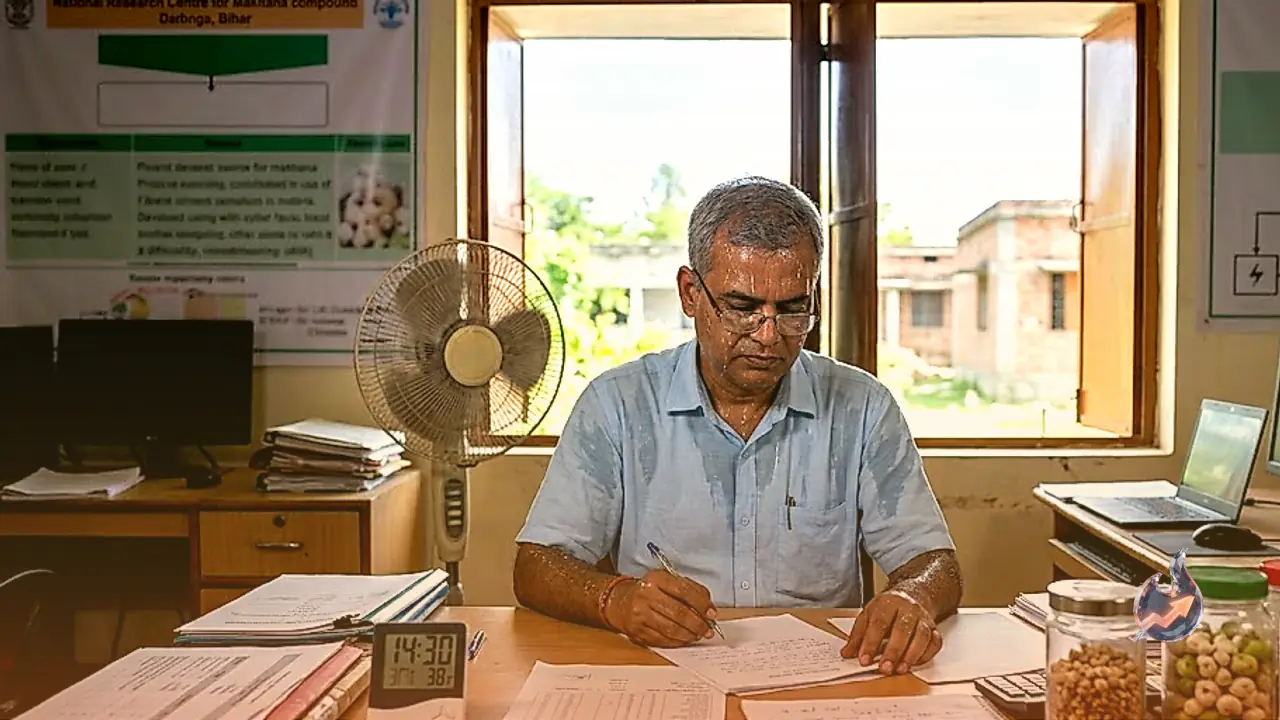

Amid the growing global threat of climate change, an impactful environmental initiative has emerged from Darbhanga in Bihar. Dr. Manoj Kumar, a senior scientist at the National Research Centre for Makhana in Darbhanga, chose not to turn on his office air conditioner even once during the peak summer heatwave. Holding a PhD in climate change, Dr. Kumar strongly believes that combating environmental degradation requires concrete personal choices over grand public declarations. By relying on natural ventilation and minimal electrical usage throughout the summer, he successfully cut power consumption while highlighting the urgent need to address personal carbon footprints.
Understanding the Math Behind Global Warming and Carbon Emissions
Addressing the mechanics of rising global temperatures, Dr. Manoj Kumar emphasizes that carbon dioxide is the single largest contributor to climate change, accounting for approximately 60% of greenhouse emissions, followed closely by methane. Mitigating these hazardous impacts demands a systematic reduction in human-generated emissions. While afforestation is widely promoted as a solution, Dr. Kumar points out that planting trees must be matched by a scientific understanding of daily pollution levels.
According to Dr. Manoj Kumar, "Tree plantation is necessary, but it should not be done merely for photo opportunities." He breaks down the environmental equation using clear data: a mature 10 to 15-year-old mango tree absorbs roughly 40 grams of carbon dioxide (CO2) per day. In contrast, an average Indian citizen releases about 5 kilograms of CO2 daily into the atmosphere through routine activities. Based on this ratio, balancing the daily carbon emissions of just one individual requires planting and sustaining around 100 trees. Consequently, reducing daily emissions at the source remains just as vital as tree planting drives.
Workplace Discipline Yields 177 Units in Power Savings
Translating scientific knowledge into personal accountability, Dr. Kumar instituted strict energy-saving measures in his workplace throughout the summer. Instead of cooling his office with air conditioning, he opened windows to allow natural airflow and operated ceiling fans and lights only when absolutely required.
For the month of June, he established a target to reduce office electricity consumption by 20% compared to June of the previous year. Although the overall reduction reached roughly 1.52%, missing the 20% mark, his effort resulted in a direct saving of 177 units of electricity. He noted that had the air conditioner been operated continuously through the summer months, total power consumption and associated emissions would have escalated dramatically higher.
Small Daily Actions Key to Preventing Environmental Catastrophe
Through his initiative, Dr. Manoj Kumar underscores that curbing global warming cannot rely solely on policy speeches or public campaigns; it demands an active, everyday commitment from every citizen. Cutting unnecessary power usage, turning off idle electronics, and ensuring long-term care for planted trees are practical steps that can be adopted in every home and office. His action serves as a powerful reminder that meaningful environmental protection begins with individual choices right at home.