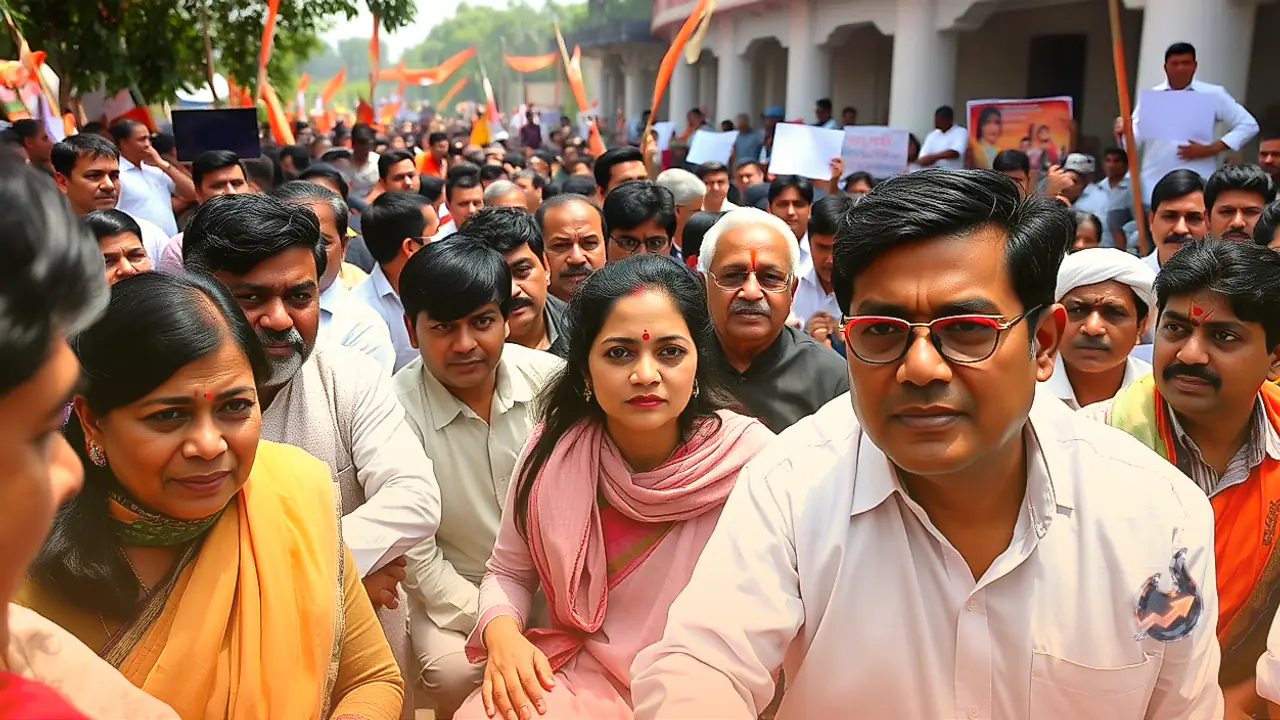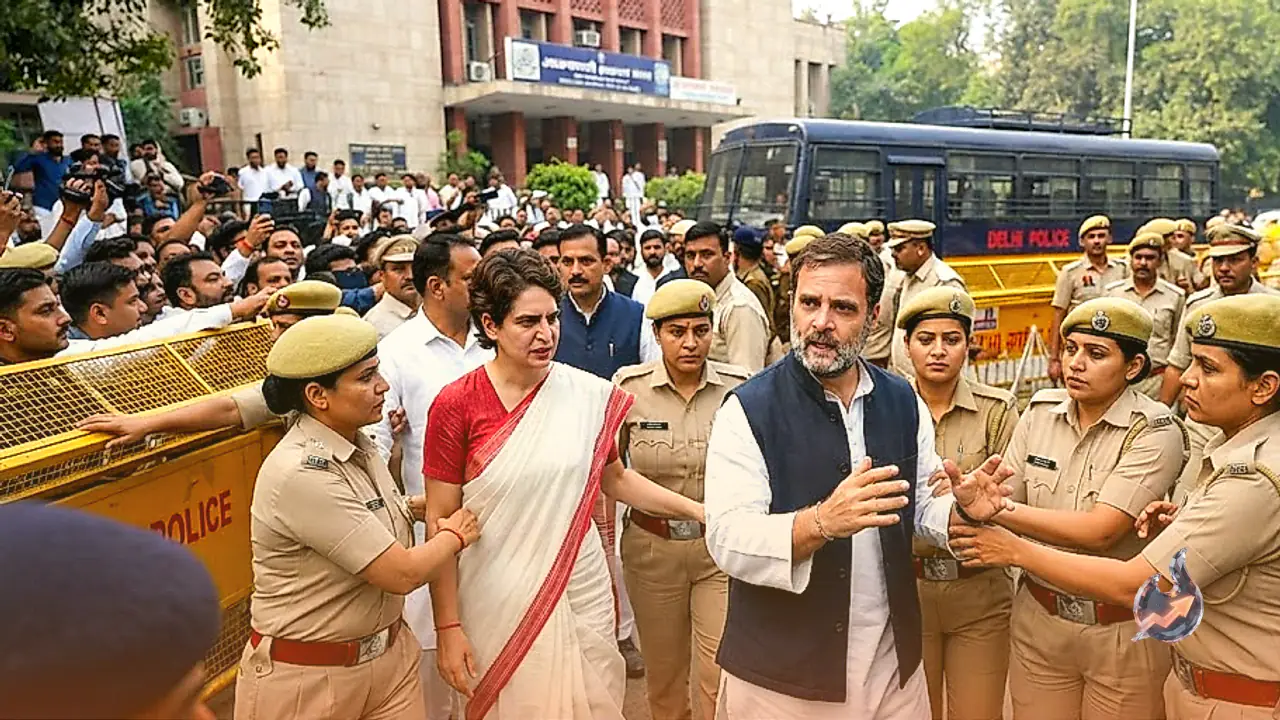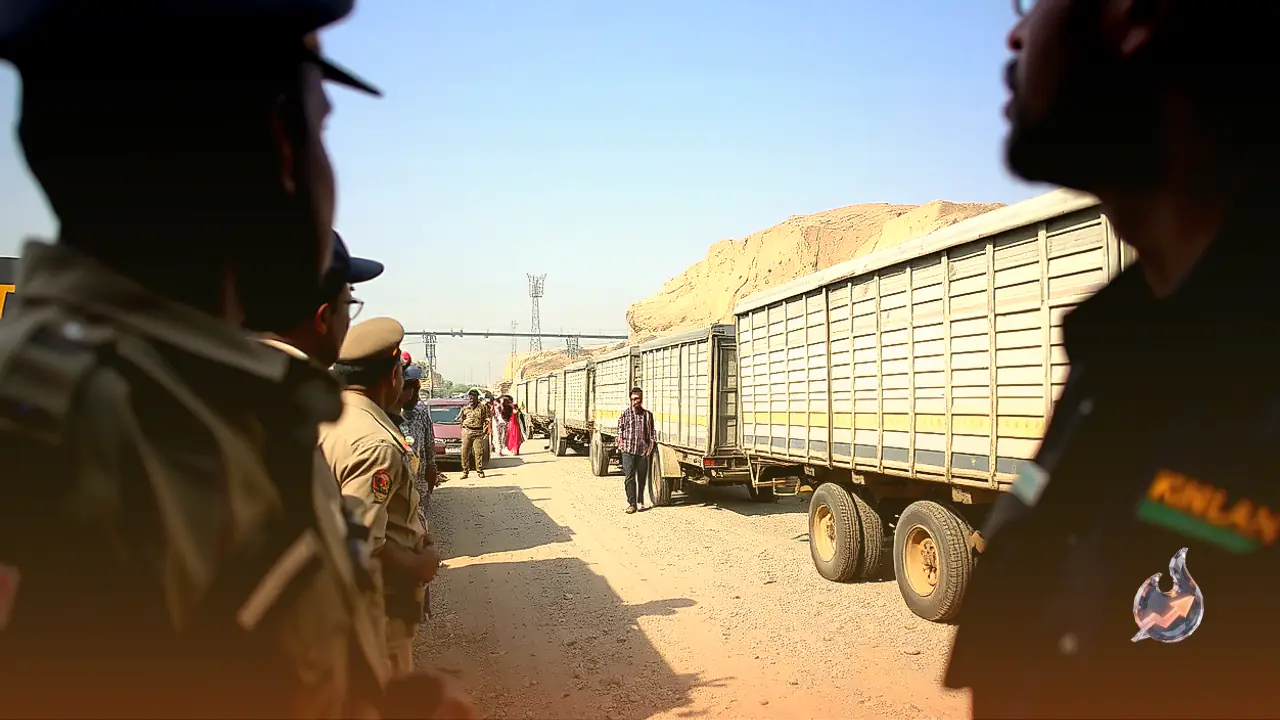

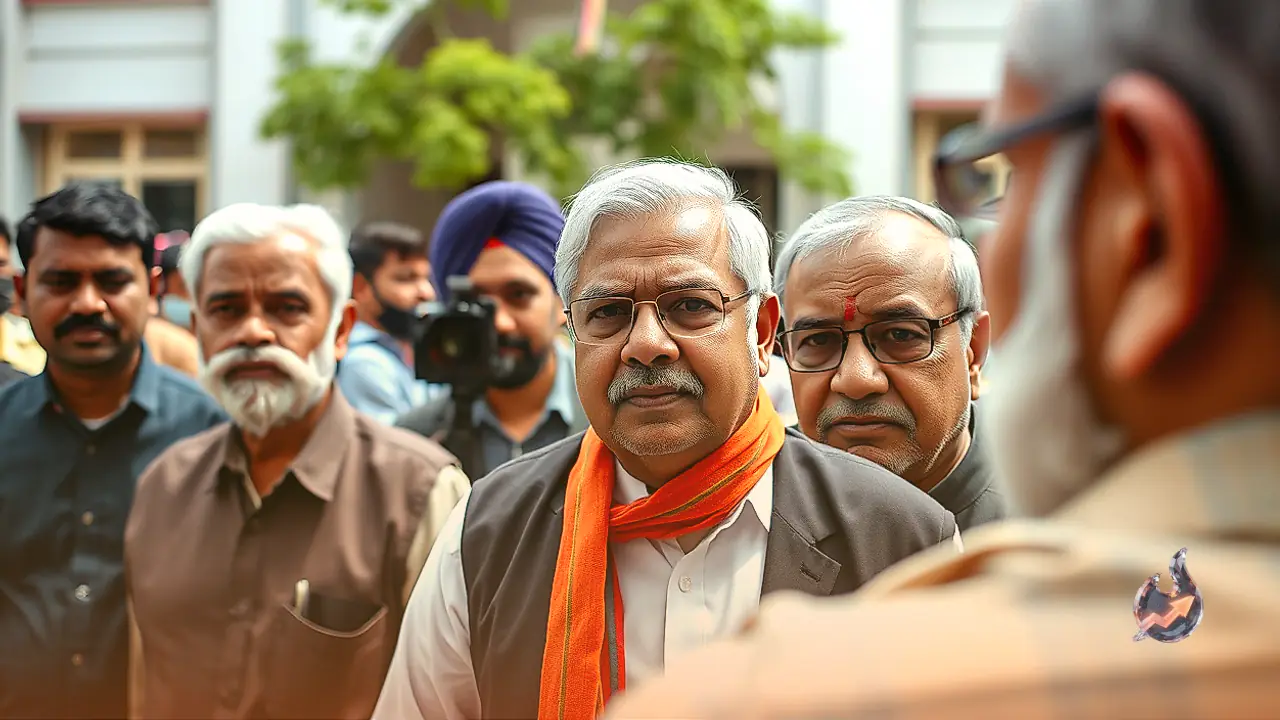



















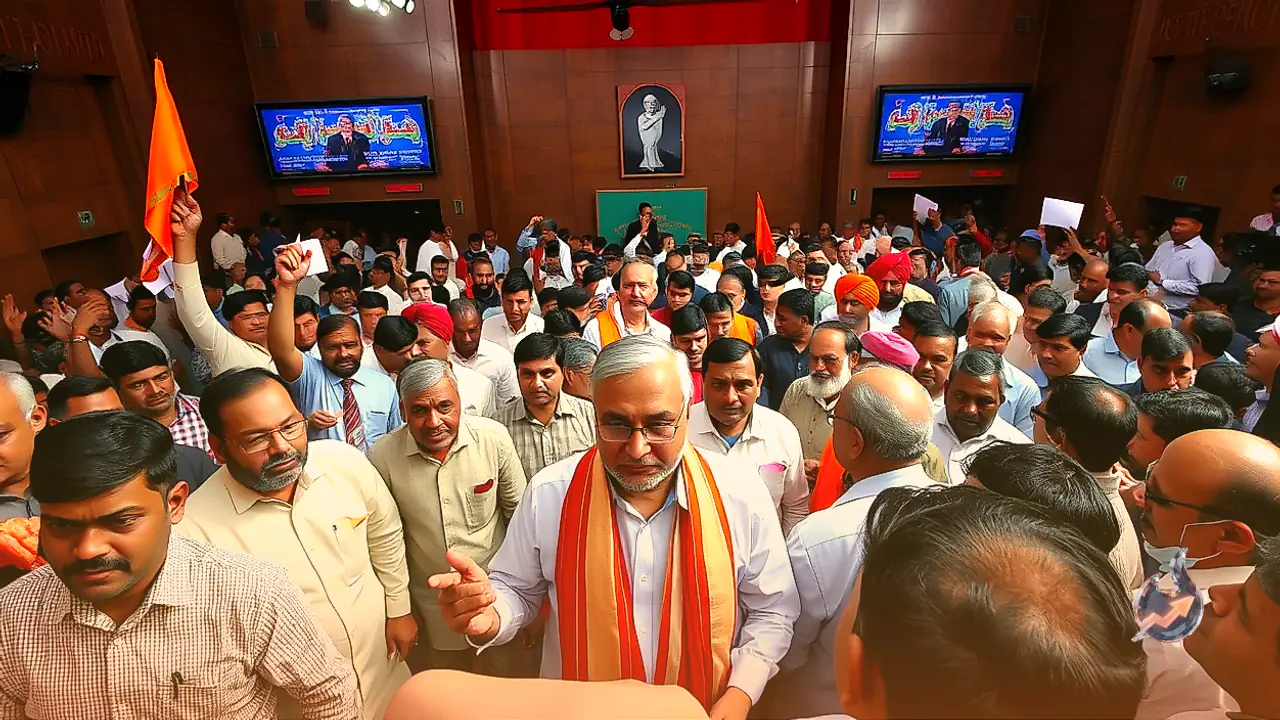

A day after dramatic political confrontations unfolded along Sansad Marg, Leader of Opposition Rahul Gandhi hosted a lunch meeting in Delhi for opposition lawmakers to formulate a unified strategy regarding the Chief Election Commissioner. On the preceding day, prominent opposition leaders including Akhilesh Yadav and Abhishek Banerjee staged a protest march alongside fellow parliamentarians before being picked up in police buses and subsequently released. Concurrently, Rahul Gandhi, Priyanka Gandhi, and several senior Congress leaders entered the Akashvani Bhavan complex and staged a continuous eight-hour sit-in beneath a banyan tree, demanding that all 240 opposition parliamentarians be granted an in-person audience with the three election commissioners. The opposition requested that this meeting take place at the Parliament Annexe.
The Eight-Hour Standoff at Akashvani Bhavan
The three election commissioners turned down the request to meet all 240 MPs at the Parliament Annexe, citing established protocol, convention, and standard institutional practices. The Commission indicated that it remained open to receiving a memorandum from a designated delegation instead. Unmoved by this stance, Rahul Gandhi and Priyanka Gandhi pressed ahead with their demonstration inside the Akashvani Bhavan premises. Preparations had been set up to prolong the agitation through the night, complete with mattresses, pillows, bedsheets, and food supplies, as leaders insisted they would not budge until all three commissioners met them face to face. Congress functionaries described the confrontation as a surprise political move, but the standoff ended abruptly when Delhi Police intervened, clearing the site within 15 minutes, detaining Rahul Gandhi, Priyanka Gandhi, and other leaders, and escorting them to Kingsway Camp police station late in the evening.
Scrutiny Over Gyanesh Kumar and Electoral Timeline
The core grievance raised by the opposition centers on Chief Election Commissioner Gyanesh Kumar, whom Rahul Gandhi has repeatedly targeted, accusing him of favoring the ruling party and damaging democratic norms. Observers, however, have questioned why the opposition did not seek an advance formal appointment if a substantive meeting was the genuine objective. The demonstration is widely viewed as an effort to build a public narrative suggesting that successive electoral reversals are the outcome of partisan institutional support. Electoral timelines show that Gyanesh Kumar assumed office as Chief Election Commissioner on February 19, 2025. Long before his appointment, the Congress had already suffered defeats in three general elections alongside numerous state assembly polls. Furthermore, with Gyanesh Kumar scheduled to retire before the next parliamentary elections take place, the opposition's voter theft narrative faces deep skepticism among the wider electorate.
The Three Key Allegations and Ruling Party Counterarguments
Opposition parties have outlined three primary accusations against the current leadership of the Election Commission. First, they allege that Gyanesh Kumar disregarded the opinions of fellow election commissioners to make unilateral determinations regarding SIR. Second, critics point to modifications made to Form 6, alleging that the rules were improperly altered to systematically disenfranchise younger voters. Third, the opposition claims that as many as 130 million voter names were purged from electoral rolls to deliver an electoral advantage to the ruling party. Countering these claims on behalf of the ruling party, Sambit Patra offered a point-by-point rebuttal, noting specifically that the opposition had been consistently losing elections well before Gyanesh Kumar assumed the helm of the Election Commission.
Institutional Trust and the Demand for Transparency
Political commentators note that the explanations provided by ruling party spokespersons should ideally have been articulated directly by the Chief Election Commissioner much earlier. The constitutional duty of the Election Commission extends beyond merely conducting free and fair voting; it must also ensure that every operational decision is visibly transparent and instills broad confidence across the political spectrum. Executing procedures like SIR or removing deceased and relocated individuals from electoral registers is a standard administrative requirement that opposition parties themselves have supported over the years. However, executing such comprehensive roll revisions requires actively consulting and persuading political stakeholders to safeguard democratic norms. Merely issuing formal notifications falls short of fulfilling institutional obligations when cultivating shared trust across all political factions remains vital for democratic credibility.