






















In a major boost to wildlife conservation in Uttar Pradesh, a female leopard rescued from the buffer zone of Dudhwa National Park has been successfully relocated to the Ranipur Tiger Reserve in Chitrakoot. The animal, which had been preying on domestic livestock in the rural belts of Lakhimpur Kheri for nearly a month, was safely transported under official supervision and released into the dense forests of the Manikpur division. With the introduction of this female leopard, the official count of leopards residing within the reserve has reached 83.
A Month of Terror in Murtihya Village
According to forest department officials, the female leopard had been actively roaming the Gauriphanta buffer area of Dudhwa National Park in Lakhimpur Kheri district. Over the course of approximately one month, the predator ventured frequently into Murtihya village, located within the Belraya forest range. During this period, the leopard preyed upon numerous domestic animals, triggering widespread panic and fear among local residents and farmers who feared for their livestock and safety.
Strategic Rescue Operation Using Live Bait
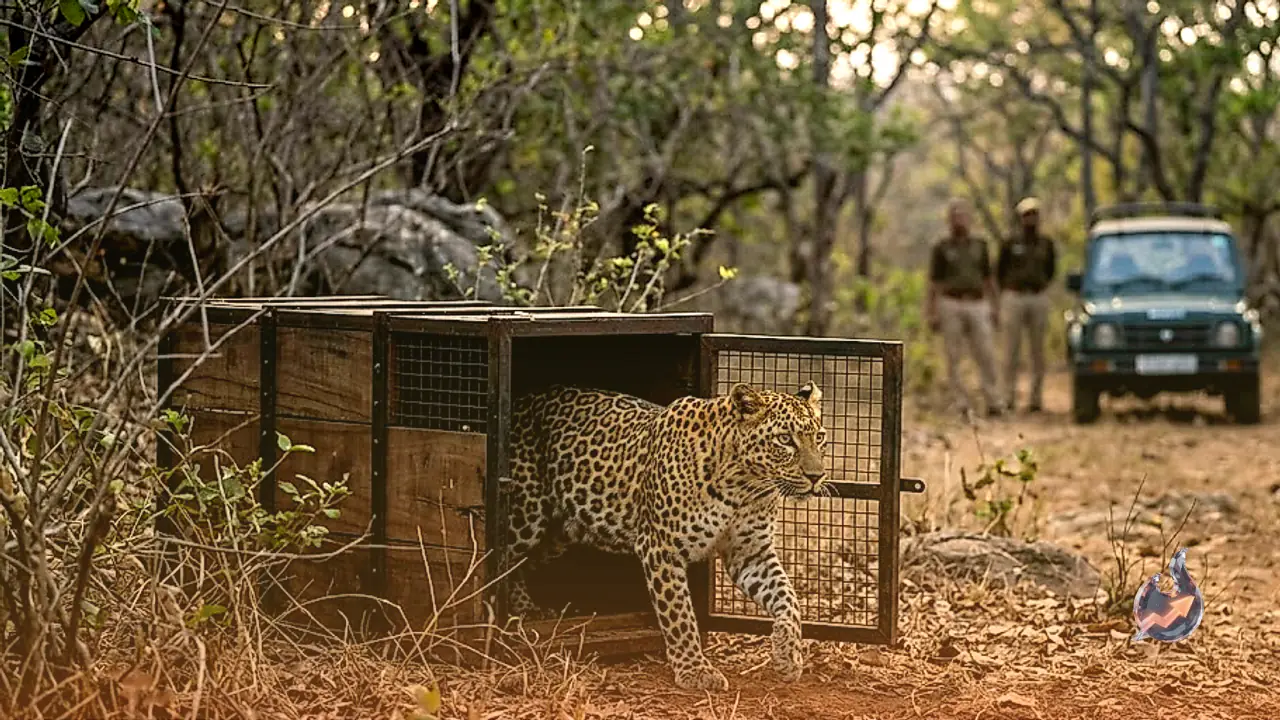
To prevent further attacks on livestock and protect human habitations, the forest department dispatched a specialized rescue team to conduct a strategic trapping operation. The team positioned a cage near the village boundaries and secured a live goat inside as bait. The strategy proved effective, as the leopard entered the cage without sustaining any injury and was safely trapped. Subsequently, a team of officials from Dudhwa National Park transported the big cat in a specially designed transit cage to the Manikpur forest division of Ranipur Tiger Reserve.
Release into the Chawari Belt of Kalyanpur Forest
Upon arriving in Chitrakoot, the Dudhwa team collaborated with local officers and field staff at the Ranipur Tiger Reserve. The vehicle carrying the leopard was navigated into the Chawari area of the Kalyanpur beat, situated within the Kalyanpur-Dharkundi forest stretch. Known for its dense canopy and natural habitat suitable for big cats, the location provided an ideal environment for release. In the presence of senior forest officials, the cage door was opened, allowing the female leopard to sprint quickly into the deep jungle.
Official Leopard Count Rises from 82 to 83
Providing details on the wildlife inventory, Regional Forest Officer Sushil Kumar Srivastava stated that camera trap monitoring had previously documented 82 leopards within the Ranipur Tiger Reserve. Following the successful introduction and rehabilitation of this female leopard, the recorded leopard population in the sanctuary has officially risen to 83. Wildlife officials regard this successful translocation as a significant step forward for species conservation and ecological balance in the region.
Growing Tourist Appeal for Uttar Pradesh’s Fourth Tiger Reserve
Situated in the historic region of Bundelkhand, Ranipur Tiger Reserve holds the distinction of being the fourth tiger reserve established in Uttar Pradesh. The sanctuary has witnessed a steady increase in populations of key wildlife species, including tigers, leopards, and sloth bears. This rising biodiversity is attracting an increasing number of tourists seeking jungle safari experiences. Forest authorities project that within the next few years, the reserve will transform into a prominent eco-tourism hub, drawing nature enthusiasts from across the nation to Chitrakoot.